 Skip to content
Get the Popular Science daily newsletter💡
Breakthroughs, discoveries, and DIY tips sent every weekday.
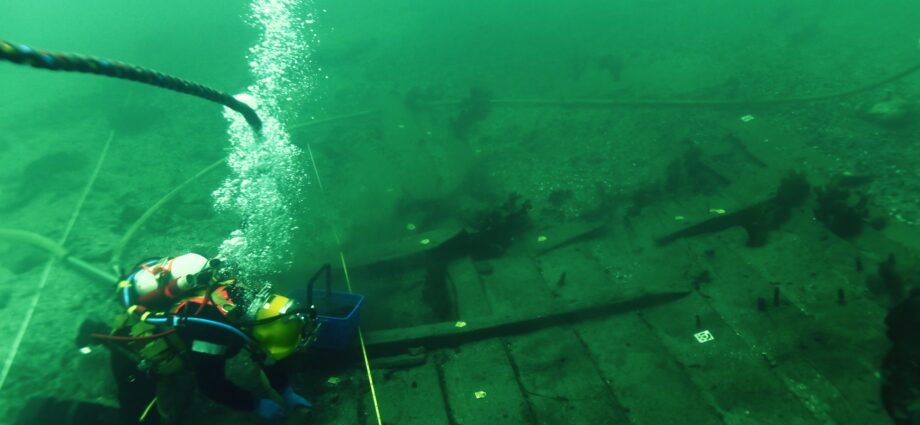
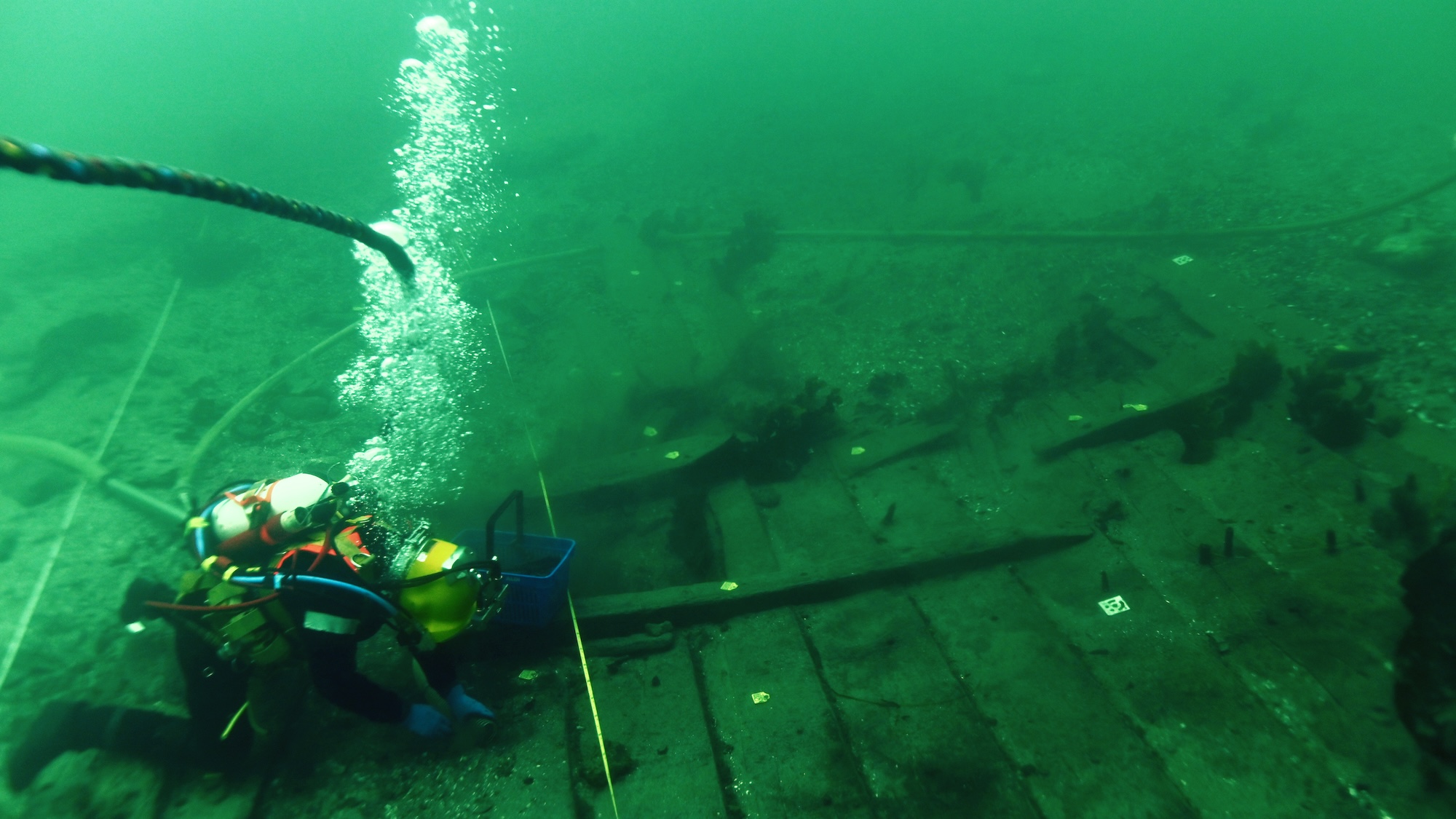
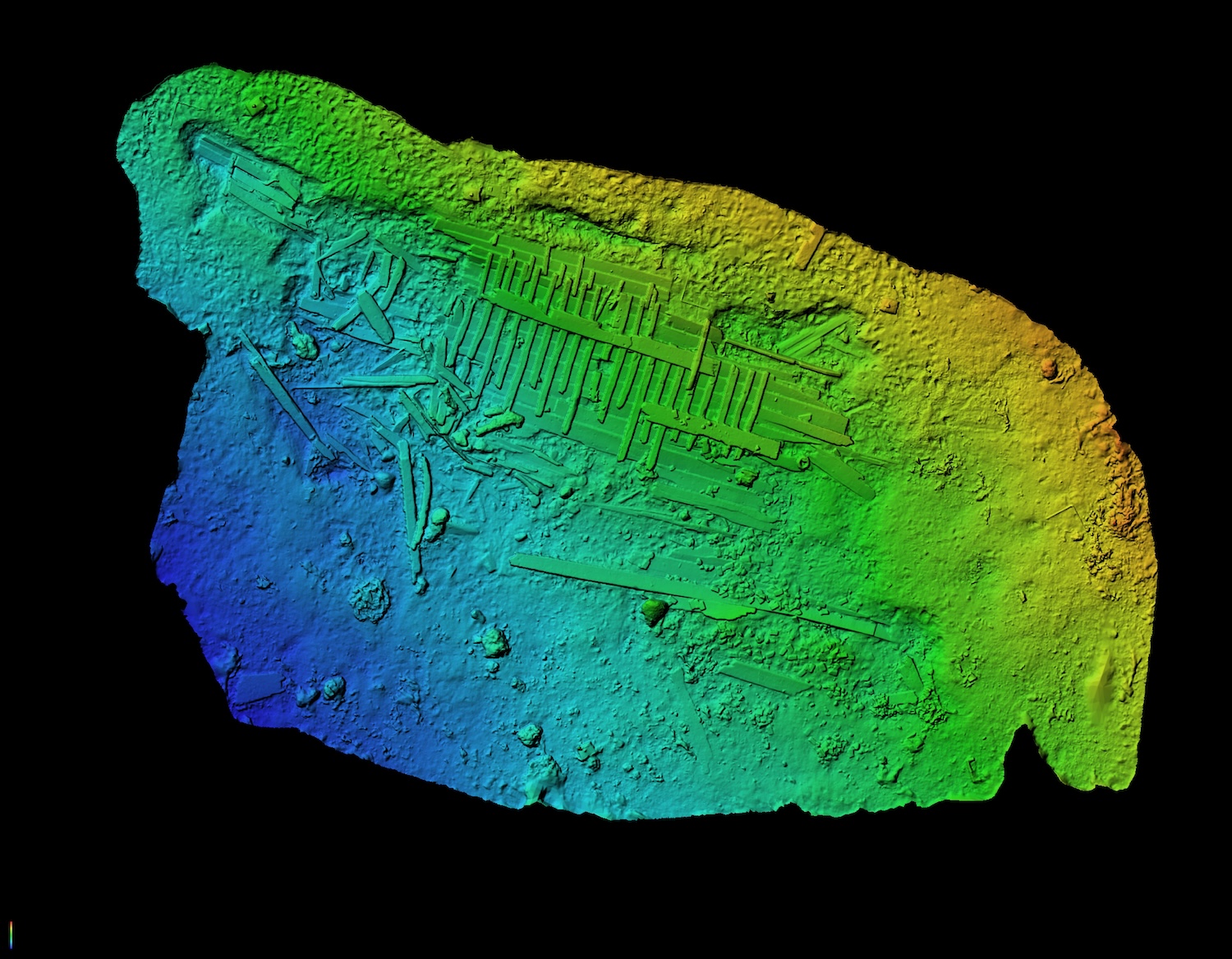
Archaeologists in Denmark say a sunken Viking ship near Copenhagen is the largest boat of its kind ever discovered—and that’s saying something. At nearly 92 feet long, the 600-year-old vessel is also one of the best preserved examples of a cog, a “super ship” whose advanced design and carrying capacity helped transform trade in medieval Europe.
“The find is a milestone for maritime archaeology,” excavation lead Otto Uldum said in a statement, adding the boat now offers a “unique opportunity to understand both the construction and life on board the biggest trading ships of the Middle Ages.”
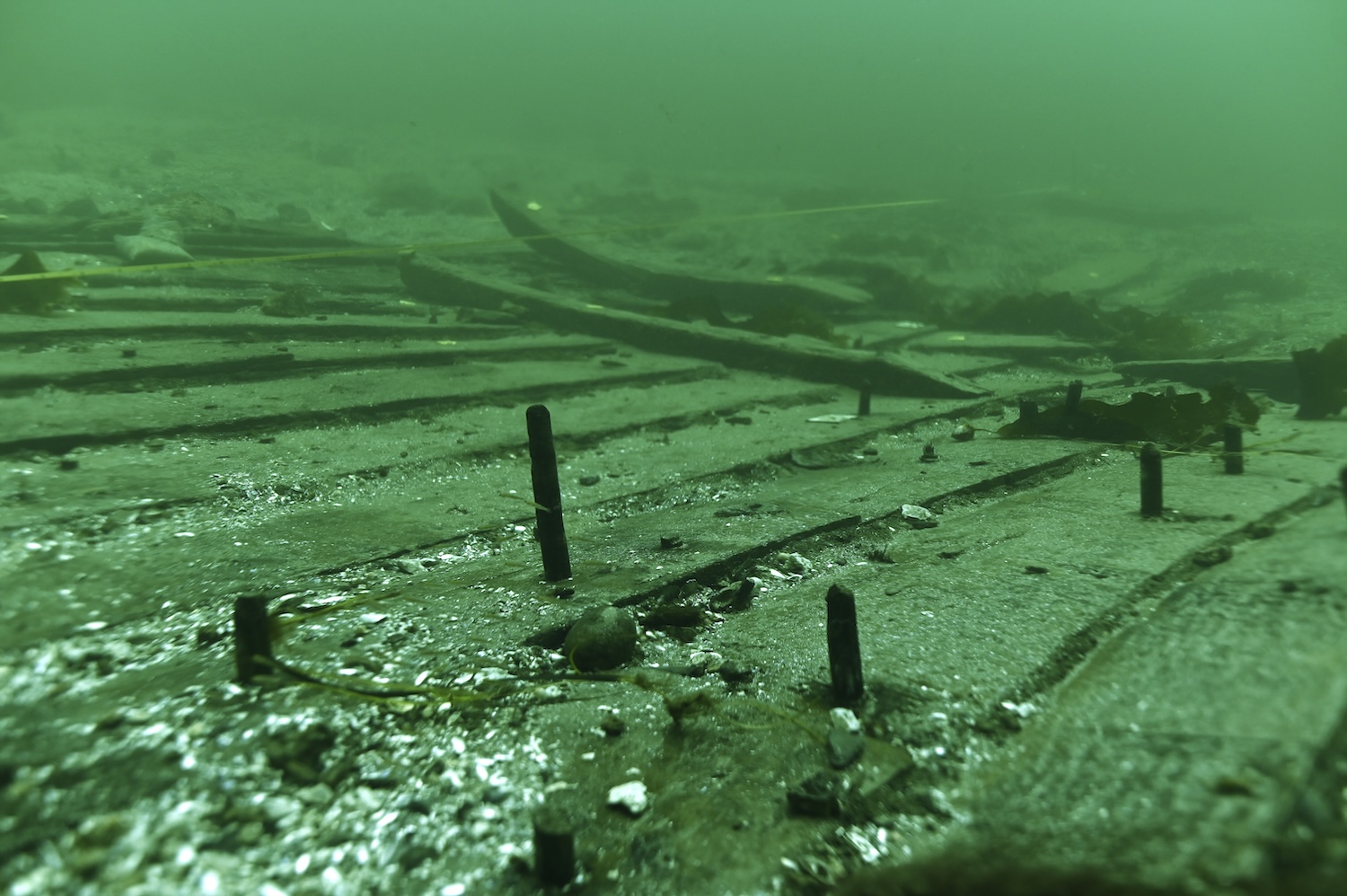
Named after the channel in which it resides, Svælget 2 was longer than two school buses and nearly as wide as one. Archaeologists analyzed tree rings in its timber to estimate that Viking artisans constructed the cog in the Netherlands around 1410 CE. Almost 40 feet of sand and silt had buried the ship since it sank centuries ago, protecting much of it from underwater conditions that normally destroy similar relics. Svælget 2 is so well-preserved that it still contains evidence of its rigging.
“It is extraordinary to have so many parts of the rigging. We have never seen this before, and it gives us a real opportunity to say something entirely new about how cogs were equipped for sailing,” said Uldum.
Details like Svælget 2’s rigging will help archaeologists better understand how its comparatively small crew controlled such a large ship during its many voyages throughout the region.
“The finds show how something as complex as the rigging was solved on the largest cogs,” Uldum added. “Rigging is absolutely central to a medieval ship, as it makes it possible to control the sail, secure the mast and keep the cargo safe. Without ropes and rigging, the ship would be nothing.”
In addition to these materials, researchers are now finally able to confirm that some Viking cogs featured tall wooden platforms at both the bow and stern known as castles. Although historical illustrations have long suggested these structural features existed, no clear archeological evidence substantiated the artwork.
“We have plenty of drawings of castles, but they have never been found because usually only the bottom of the ship survives,” said Uldum. “This time we have the archaeological proof.”
In the case of the stern (or back) castle, archaeologists identified details of a covered deck that provided shelter and protection for the cog’s crew. Compared to previous shipwrecks, Svælget 2 features an estimated 20 times as much material to analyze.
“It is not comfort in a modern sense, but it is a big step forward compared to Viking Age ships, which had only open decks in all kinds of weather,” Uldum explained.
Although its discovery doesn’t revise researchers’ understanding of medieval seafaring trade, Svælget 2 illustrates just how much funding, resources, and technological knowledge was required to construct such a vessel.
“We now know, undeniably, that cogs could be this large—that the ship type could be pushed to this extreme,” said Uldum.

2025 PopSci Outdoor Gift Guide
20+ editor-approved presents for the hikers on your list
