 Skip to content

Adidas began with sports cleats. Now, its three stripes are on basketball pros, skateboarders, and fashion runways.
The brand works because it feels authentic in both places. It’s not about marketing a lifestyle.
It’s about making gear that performs, then letting culture adopt it.
The tracksuit became hip-hop armor. Stan Smith became a minimalist classic. This happened through smart partnerships and a focus on design, not just hype.
So, how does Adidas stay credible with athletes and cool with everyone else? The answer is in its history. Keep reading to see how it all connects.
The Core of adidas Brand Identity in Action
- Performance first, always. adidas brand identity is rooted in sport, with innovation like Boost and Lightstrike building real athletic credibility before culture follows.
- Consistency builds recognition. The three stripes, clear values, and steady messaging create instant global trust.
- Culture plus credibility wins. Sport authority and street relevance reinforce each other.
How Adidas Uses Its Core Values to Shape Brand Identity
Adidas lives by six official core values,known as COINTR: Courage, Ownership, Innovation, Teamplay, Integrity, and Respect.
These aren’t dusty mission statements; they show up in every shoe, ad, and partnership.
According to the adidas Group Official “Value Series”,
“are closely tied to our culture and ultimately are the essence of our identity,” – adidas Group Official “Value Series”
providing a behavioral roadmap for the entire organization.
- Courage fuels bold moves, like pioneering Boost foam or entering streetwear when others stuck to stadiums.
- Ownership means delivering performance gear athletes trust,no excuses, just results with tech like Lightstrike.
- Innovation keeps them ahead, from 3D-printed midsoles to AI-driven designs.
- Teamplay builds collabs with real athletes, artists, and communities that feel genuine.
- Integrity (their word for credibility) ensures authenticity over hype,picking partners carefully for long-term trust.
- Respect drives sustainability, like turning ocean plastic into millions of shoes and chasing carbon neutrality.
These values create consistency. Performance tech meets cultural relevance, all grounded in responsibility.
That consistency shapes the brand’s personality, reinforcing a clear identity that customers recognize instantly across sports, streets, and runways. It’s this steady personality that keeps Adidas feeling real instead of reactive.
Why the Adidas Logo and 3-Stripes Are Branding Powerhouses
It’s hard to think of a simpler, more effective brand mark than Adidas’s three stripes. They weren’t born from a marketing brainstorm.
A designer literally added them to shoes to stop the sides from collapsing. That practical fix, back in the 1940s, turned into a billion-dollar visual asset.
The stripes are the anchor. The logos change clothes.
The Trefoil is the heritage badge. Launched around the 1972 Munich Games, it’s now stamped on the retro stuff,the Superstars, the track jackets, the streetwear collabs.
The Performance logo is for the athletes. It’s shaped like a mountain, a bit on the nose maybe, but the message is clear.
This one goes on the gear designed for sweat and competition.
The 3-Bar logo (designed 1990, corporate use from 1997): Clean and blocky. The goal was to make everything from soccer jerseys to yoga pants feel like part of the same family.
Most brands would kill for this kind of recognition. Adidas gets it by not messing with the formula too much. The stripes are always there.
You see them on a shoe in a shop window or on a jersey during a World Cup final, and you don’t need a name check. You just know. That familiarity, built over a lifetime, is the entire point.
Adidas’s Messaging: Slogans, Storytelling, and Tone of Voice
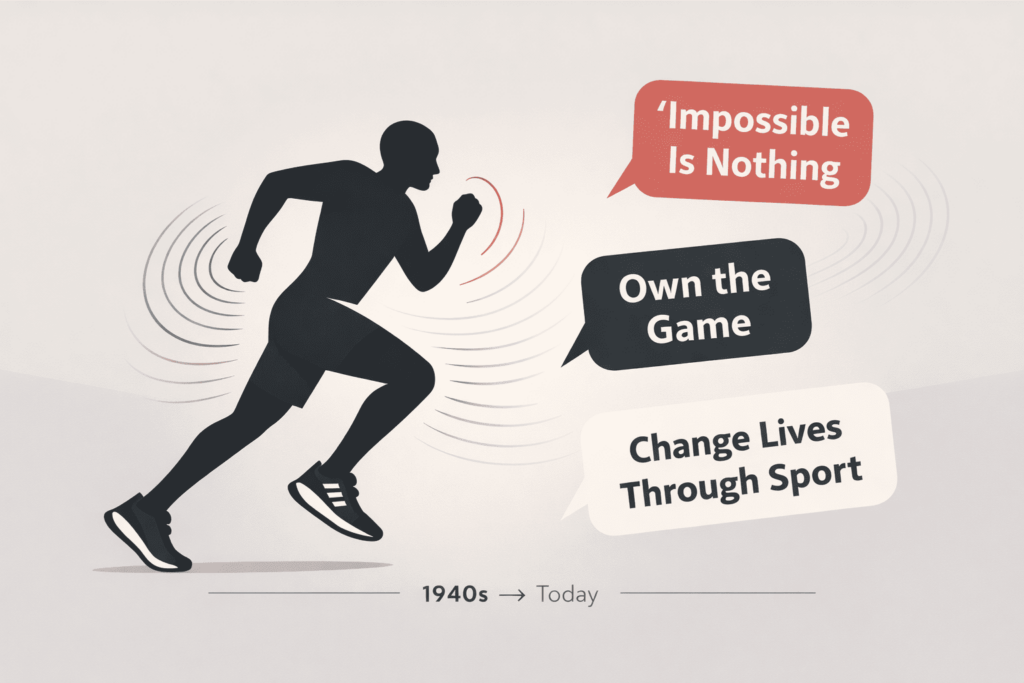
Adidas has a way of speaking that’s sure of itself, welcoming, and pushes you forward. It’s all about getting moving and being genuine,never fake, never talking down to you.
Some of their big taglines tell the story: “Impossible Is Nothing” got a second life in 2021. It first showed up in 2004, and now it’s the main idea.
It says Adidas is a tool for anyone, athlete or artist, to do more than they thought they could.
“Own the Game” is what you hear in their major plays and announcements.
It’s a confident line that puts them in the driver’s seat.
According to the adidas Group Official Profile, their central purpose,
“Through sport, we have the power to change lives”, serves as a North Star that “guides the way we run our company, how we work with our partners, how we create our products, and how we engage with our consumers.” – adidas Group Official Profile
Their core belief is “Through Sport, We Have the Power to Change Lives.” It’s about the bigger picture, the real change they believe sports can create.
You won’t just see perfect pros in their ads. The stories come from actual people,the weekend runner, the designer in their studio, voices that often get overlooked.
This approach pulls in a bigger crowd and, honestly, makes you believe them more.
The tone doesn’t waver: it’s strong, direct, and hits you in the gut.
That feeling is strongest on Instagram and YouTube, where their visual stories do most of the talking.
Adidas and Culture: Streetwear, Sports, and Style
Think about Run-DMC in the mid-80s, rapping about their shell-toes with the laces out. That wasn’t a marketing plan. It was just what they wore.
Adidas heard that song and saw an opportunity most companies would have missed. They signed the group, making history in the process.
From there, the brand just… stuck around. It became a neutral piece in everyone’s wardrobe. Skaters beat up their Campus shoes.
Designers put models in track pants. The classic three-stripe sneakers,the Stan Smiths, the Superstars,never really went away. They just cycled back into style every few years.
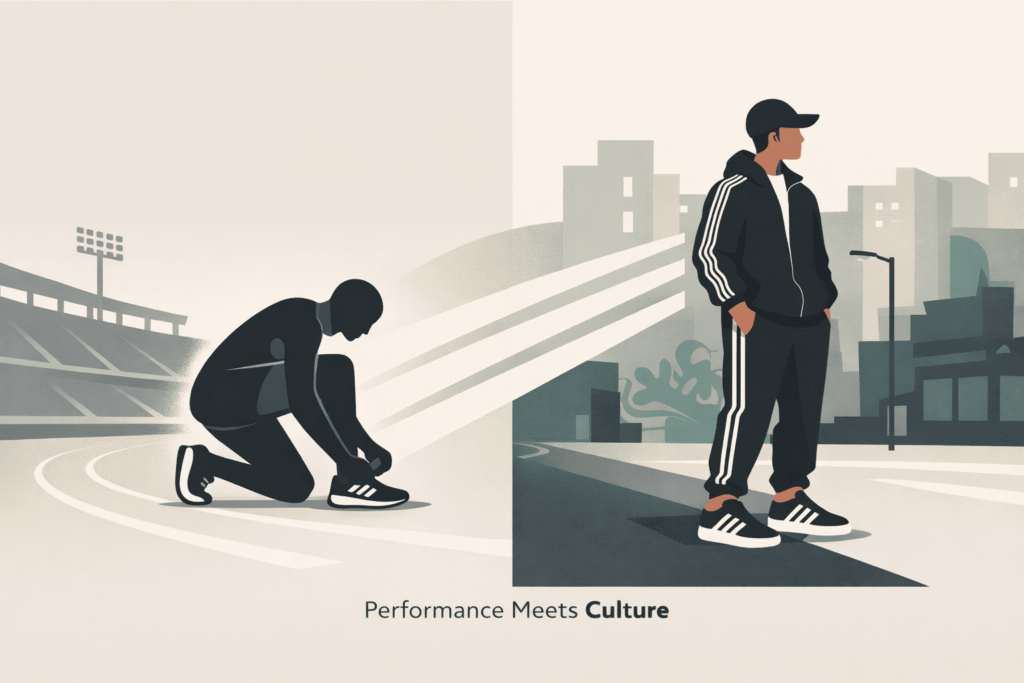
Adidas succeeds because it operates in two lanes at once. It makes serious gear for athletes who need it to perform.
At the same time, it makes clothes and shoes that people want to be seen in. It doesn’t have to pick one identity over the other.
That’s the whole point. The credibility from the stadium gives weight to the stuff on the street, and vice versa.
How Collaboration Reinforce the Adidas Brand Identity
Adidas partners with people to tell a story, not just to make noise. Each collaboration reinforces the same idea: Adidas is a brand that matters in culture and isn’t afraid to evolve.
The former Yeezy line with Kanye West (ended 2022, final sales 2025) is the obvious example. It changed sneaker culture and positioned Adidas as a fashion innovator, despite the messy end.
Pharrell Williams’s work is different. His collections focus on joy, creativity, and inclusion. This directly supports what Adidas says it stands for: self-expression and positive impact.
Collaborations with houses like Gucci and Balenciaga were a statement. They proved Adidas could sit at the high-fashion table without losing its identity as a performance sportswear brand.
Working with Bad Bunny and Beyoncé’s Ivy Park pulls Adidas deeper into music and lifestyle culture. These partnerships help the brand reach new audiences while keeping its core message consistent.
The strategy isn’t complicated. Adidas finds creators who already live by values like originality and inclusion.
Then it lets those partners carry the brand identity into spaces it couldn’t enter alone.
Key Reasons Adidas Collaborates with Cultural Icons:
- Generates Buzz Without Relying on Traditional Ads: High-profile collaborations naturally attract media coverage, social conversation, and resale-market demand, creating organic visibility.
- Strengthens Cultural Relevance: Partnerships keep Adidas visible in music, fashion, art, and youth culture, ensuring the brand stays part of ongoing global conversations rather than relying only on sports performance credibility.
- Expands Audience Reach: Working with artists, designers, and entertainers introduces Adidas to fans who may not follow traditional sports marketing, helping the brand grow beyond athletes.
- Blends Performance and Lifestyle : Collaborations allow Adidas to merge technical sportswear innovation with streetwear aesthetics, creating products that work both on the field and in everyday style.
- Drives Innovation Through Creativity: External creators bring fresh design perspectives, limited editions, and experimental concepts that push Adidas beyond standard product lines.
- Builds Emotional Connection: Music and fashion partnerships create storytelling opportunities that feel personal and aspirational, making customers feel part of a movement rather than just buying shoes.
- Reinforces Brand Values: Many collaborators align with themes like self-expression, diversity, sustainability, and inclusion, which strengthens Adidas’s stated mission.
Adidas’s Approach to Digital and Experiential Branding
Credits: Lap of Luxury
Adidas got tired of just selling products. Now, it’s focused on building a digital hangout space.
You won’t see a glossy TV ad for the next Stan Smith.
Instead, you’ll find it on TikTok first, maybe through a challenge using a trending sound, or in a casual Instagram Reel from a sponsored skateboarder.
There might be an AR filter that lets you point your phone at your feet and preview the shoes instantly. It’s marketing that doesn’t feel like marketing.
They’re also smart about turning customers into promoters. The Adidas Creators Club works like a fan community with rewards.
Share a photo wearing their products, earn points for discounts, or get early access to exclusive drops. It makes people feel included, and encourages organic word-of-mouth.
Even visiting a store feels different. The flagship location in London isn’t just a shop, it’s an experience center.
There’s space for customization, displays that explain sustainability in simple terms, and a layout designed to look great in photos.
This approach works for a simple reason: younger audiences don’t trust traditional ads. They trust their friends and the creators they follow.
By focusing on digital content, community rewards, and experience-driven stores, Adidas aims to become part of the culture, not an interruption.
Key Elements of Adidas’s Modern Marketing Strategy:
- Social-First Marketing: Prioritizing TikTok, Instagram, and creator-driven content over traditional advertising.
- Interactive Technology: Using AR tools and digital features to enhance the shopping experience.
- Community & Rewards Programs: Encouraging engagement through exclusive access and loyalty benefits.
- Experience-Based Retail: Turning stores into interactive spaces that encourage exploration and social sharing.
The Role of Sustainability in Adidas’s Brand Identity
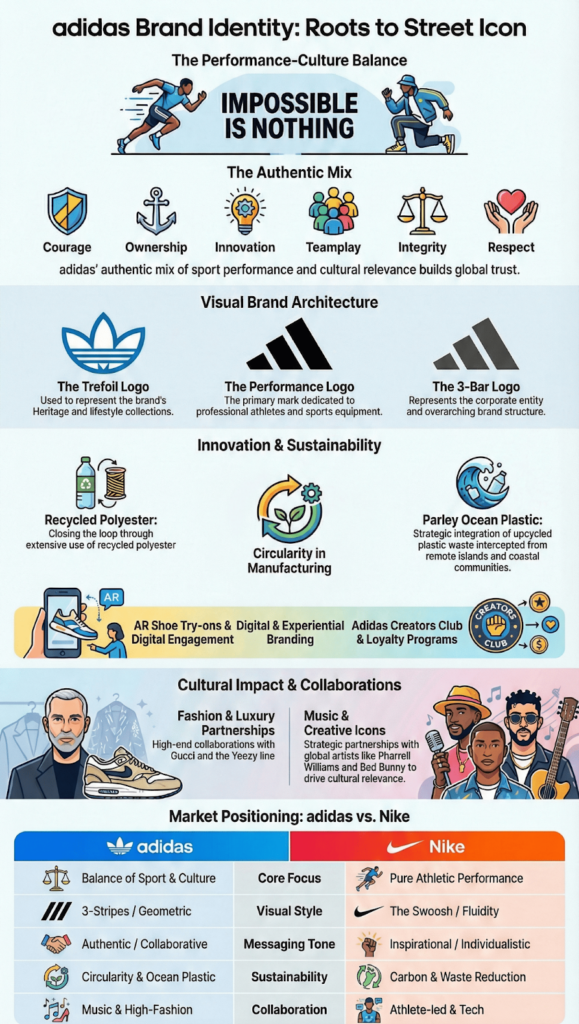
Adidas has moved sustainability from the PR department to the boardroom. It’s a central part of their operations, and they’re being judged on hard numbers.
Their big push is on plastic. 100% recycled polyester target by end-2024 (99% in 2024); ~96% polyester recycled by 2021.
The Parley collaboration is a good example of how they work. It’s been running for years.
The concept is simple: they take plastic waste collected from shorelines and waterways before it degrades into microplastics, and they turn it into sportswear.
It’s a direct line from cleanup to consumer product.
They’re also changing how things are made. Products are being designed from the start for disassembly and recycling.
Factories are switching to dyeing processes that use a fraction of the water. The whole supply chain is under pressure to cut carbon emissions.
The “Made to Be Remade” collection is the purest expression of this.
Each item is made from one type of material, so when you’re done with it, the company can take it back, grind it up, and use it to make a new version of the same thing. Nothing gets lost.
This strategy shows up everywhere,in the shoes on the shelf, the ads on TV, and the way the company talks about itself.
For customers who factor environmental impact into their purchases, it makes Adidas a viable option.
More importantly, it’s a business hedge. When you look at external factors in a PESTLE analysis, from environmental regulation to shifting consumer expectations, sustainability becomes more than branding.
If regulations tighten or consumer sentiment shifts decisively, Adidas won’t be starting from scratch.They’ll already have the systems in place.
Adidas Brand Identity vs. Nike: Key Differences
Nike is the brand for your inner monologue. The one that says, “One more mile,” when you want to quit. Their whole world is built on that feeling.
The shoes look like they’re moving even when they’re still,all sharp lines and space-age materials.
They tell stories about Michael Jordan refusing to lose, about Serena Williams’ stare. It’s hero worship, pure and simple.
Adidas is different. It’s the brand you wear when you’re meeting friends, not necessarily when you’re trying to beat them.
Their vibe comes from the street, from skate parks and hip-hop basements. The famous three stripes are simple, almost humble.
They’d rather work with a musician or an artist than just an athlete.
And they’ll talk your ear off about making shoes from ocean plastic, because for them, that’s part of the identity, not just a marketing bullet point.
| Aspect | adidas Brand Identity | Nike Brand Identity |
| Core Focus | Performance + Culture Balance | Individual Competitive Drive |
| Visual Identity | Three stripes system, minimal design | Dynamic swoosh, aggressive styling |
| Cultural Positioning | Streetwear + Sport integration | Elite athlete dominance |
| Messaging Tone | Inclusive, community-driven | Motivational, performance-driven |
| Sustainability Role | Central strategic pillar | Important but less identity-defining |
| Collaboration Style | Fashion, music, lifestyle creators | Athlete-centric storytelling |
So, who are you buying? A badge of personal ambition, or a ticket into a club?
In the broader landscape of Nike competitors, Adidas differentiates itself not only through culture but also through positioning and pricing strategy, balancing accessibility with premium collaborations to maintain both reach and exclusivity.
FAQ
What makes adidas brand identity different from other sports brands?
Adidas brand identity stands out because it combines performance heritage with cultural relevance.
It began with the Dassler Brothers Shoe Factory, founded by Adolf Dassler and Rudolf Dassler.
The three stripes, adidas logo, and trefoil logo create strong brand recognition worldwide.
From sports shoes to adidas Originals collections, the adidas brand balances athletic need with style, which strengthens its long-term credibility.
How did Adolf Dassler shape the adidas brand and its values?
Adolf “Adi” Dassler built the adidas brand around performance-driven shoe design.
His work at Gebrüder Dassler Schuhfabrik focused on creating sporting shoes that improved athlete results.
That principle still guides the Performance line, advanced 3D printing methods, and ground-breaking innovation such as the Adizero Adios Pro Evo 1.
The brand identity remains rooted in measurable athletic improvement.
Why are the three stripes and adidas logo so powerful?
The three stripes began as a structural element in sports shoes and later evolved into a defining adidas logo system.
The trefoil logo represents adidas Originals, while the performance logo supports the Performance line.
Consistent logo usage, a defined color palette, and clear brand guidelines ensure strong visual communication across marketing materials, digital media, and flagship stores.
How does sustainability strengthen Adidas brand identity today?
Sustainability directly supports adidas branding strategy. The use of ocean plastic in adidas shoes reflects measurable environmental action rather than symbolic messaging.
ESG Evaluation benchmarks and improved sportswear manufacturing processes reinforce accountability.
These efforts enhance brand recognition because customers associate the brand persona with responsibility, innovation, and long-term commitment to environmental impact reduction.
How does Adidas maintain relevance in digital media and culture?
Adidas maintains relevance through strategic sports marketing, data-driven social media posts, and strong visual communication.
Motion design, kinetic shapes, and typographic systems such as ITC Avant Garde Gothic and adineue pro bold reinforce consistency. Collaborations and flagship stores extend brand impact offline and online.
This integrated approach strengthens Adidas brand identity without diluting its performance focus.
Adidas Brand Identity: More Than a Logo
Adidas brand identity isn’t stitched into fabric,it’s stitched into belief. It proves that when purpose meets design, culture follows.
Think about it: three stripes became a signal, not just of sport, but of belonging. And here’s the surprise,what makes it powerful isn’t scale, it’s consistency.
The same truth, everywhere. So what does your identity signal? If you stand for nothing, the world scrolls past.
But if you build on substance, people lean in. Don’t dismiss this as branding talk. It’s reputation. It’s trust.
It’s a legacy. Decide what you stand for, and wear it boldly, every single day.
If you’re ready to put your brand in front of the right audience with clarity and authority, take action now with NewswireJet.
References
- https://www.adidas-group.com/en/magazine/series/value-series
- https://www.adidas-group.com/en/about/profile
