 Skip to content
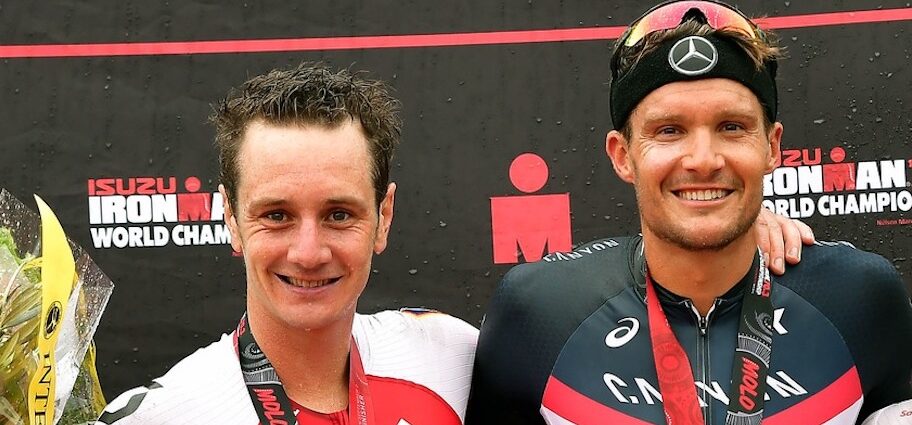
Triathlon legend Alistair Brownlee admits he still gets a buzz out of beating his younger brother Jonny, despite having retired from competitive sport more than a year ago.
The dominant duo won five Olympic and 15 World Championship medals between them during an era-defining spell of success, which went a long way to inspiring many of the athletes who race today.
And while their focus may have moved on from the titles and going for gold, their healthy levels of sibling rivalry continue to bubble away – with Alistair ever keen to come out on top.
Legends Frodeno and Brownlee come together
As the very first guest on a new podcast, which is embedded below, launched by former rival and fellow Olympic-winning triathlon legend, Jan Frodeno, the eldest Brownlee brother reveals how the merest hint of an opportunity to beat Jonny is still enough to spark new life into his old(er) legs.
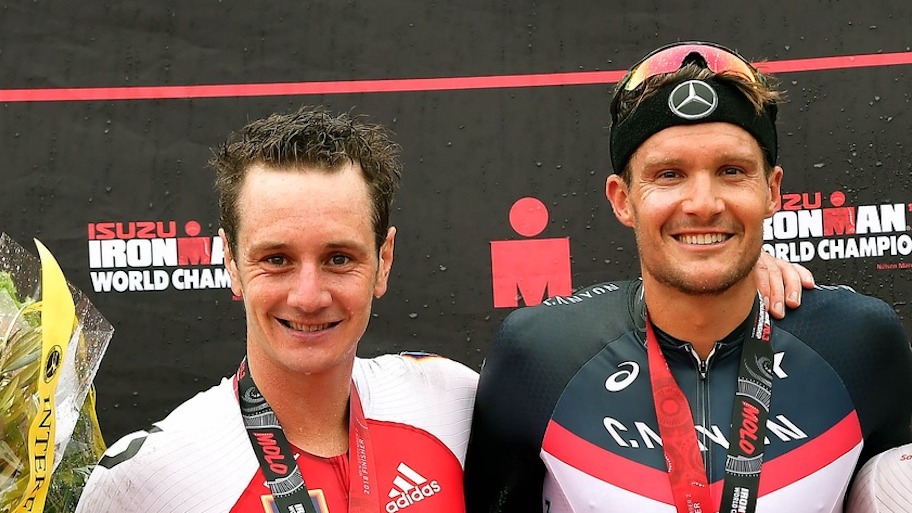
Frodeno invited Brownlee onto his debut ‘Going Mental’ show, having spent years racing against him and seeing firsthand the lasting impact he has had on the sport – even going as far as to say that Alistair had ‘shaped the way we look at racing triathlon today’.
And the German Olympic gold medallist of Beijing 2008 couldn’t have picked a better guest as the pair rattle through a wide range of subjects, ranging from his mental approach to racing and training to the setting up of the Leeds Triathlon Centre, his life after professional sport… and of course that special rivalry.
When asked what his post-retirement life looked like, Brownlee said: “I guess at the moment, I’m actually not too involved in the sport per se. Obviously, I’ve still got friends in the sport, and I go out training with some of the guys a little bit, although nowhere near as much as I used to, obviously.
‘I can still give Jonny a kicking…’
“Although I can still give Jonny a kicking, and that’s what really matters in life. We were racing the National Gravel Champs recently, and we both got dropped from the front group, and basically, for two hours, I was so miserable.
“And then I just sensed that he was starting to struggle, and it was so funny; all of a sudden I went from just trying to get around this thing to thinking, ‘How am I gonna beat him?’ That feeling will never leave me, I’m sure. So a little bit of competition and staying fit are important too.”

Alistair ended up finishing in 15th place, three spots ahead of Jonny in 18th.
It is perhaps no surprise that there remains such a fierce will to compete strongly within an athlete who readily admits that he gave not only 100 per cent in his races but also when he was training – something that many experts and coaches warned him against.
‘You can’t train like that’
“I was actually very aware of that trade-off,” he explained to Frodeno. “I remember being told by a coach quite young, ‘You can’t train like that; you’ll never last very long, and you need to train smarter and better’.
“And I thought two things. I was being told this at like 18, so obviously, you don’t believe that you’re going to have a limited career. But anyway, I thought, ‘I don’t care’. If I’m the best athlete that I can possibly be in two years’ time and I then retire in three years’ time, that’s great. I would far prefer to be the absolute best I could be and get the most out of myself than just rumble along for 10 years.
“I remember looking around at other people training around me, thinking they would be going to the start line of a race, or the Olympic Games, at 95%. A lot of the advice they’re getting from people around them is to make sure they don’t get injured. But I would see that as an aberration if I got to the Olympic start line at 95%… that’s not what I’m here to do.
“I’m here to get there at 99.9%, and of course, if I go to 101%, that’s part of that parcel. And I definitely did that a few times.
“I didn’t sit there at the time with a cool head and think, ‘Never mind, that’s the trade-off’. I got very frustrated by it and worked through it, and then did it all again. I did absolutely push the envelope, and that was the kind of trade-off, I guess, that I was willing to make.
“It got me to where it got me ultimately, and I had a bit of luck as well that I just happened to be in great shape for two Olympic games.”
A career that lasted longer than intended
Brownlee and Frodeno’s Olympic experiences crossed in Beijing as the German stormed to victory and a young Brownlee – who led the race at one point – finished in 12th.
Of course, the Brit superstar would return in 2012 to win the event on home soil and then become the only athlete to win two individual golds when he defended his crown in Rio four years later.
They were undoubtedly the highlights of an 18-year career, which he readily admits was only meant to last a fraction of that time.
“Literally, my plan at 18 years old was to get to the London Olympics, try and win it, retire and go back and be an academic,” he said in the podcast. “If we’d had this conversation with me as an 18 or 19-year-old, and you told me that I would retire at 36 and I’d have this long career that went on long after achieving success at the Olympics, I’d be like, ‘No way, that’s a terrible idea. ‘I’m definitely not going to do that’. But perspectives change.

“When I was younger, I loved watching the Olympics, and I loved watching the Tour de France, but I think what really stood out to me is that it almost felt like those kinds of sporting people were so far away from anything that I would ever achieve. It was almost irrelevant.
“I remember even as a 17-year-old, in 2005, London won the bid to host the Olympics, and I got told about it, and I thought, ‘That’s super cool’, but it’s irrelevant to me because I’ll never be good enough to be there. I couldn’t wait to watch it.”
Retirement brings new challenges
Since his retirement, Brownlee has thrown himself into a wide range of new challenges; he set up the Brownlee Foundation with Jonny – aimed at giving children more sporting opportunities – he helped to coach Beth Potter to double Olympic bronze in Paris, he is an active member of the International Olympic Committee (IOC) Athletes’ Commission, and he remains closely involved with the University of Leeds Triathlon Centre.

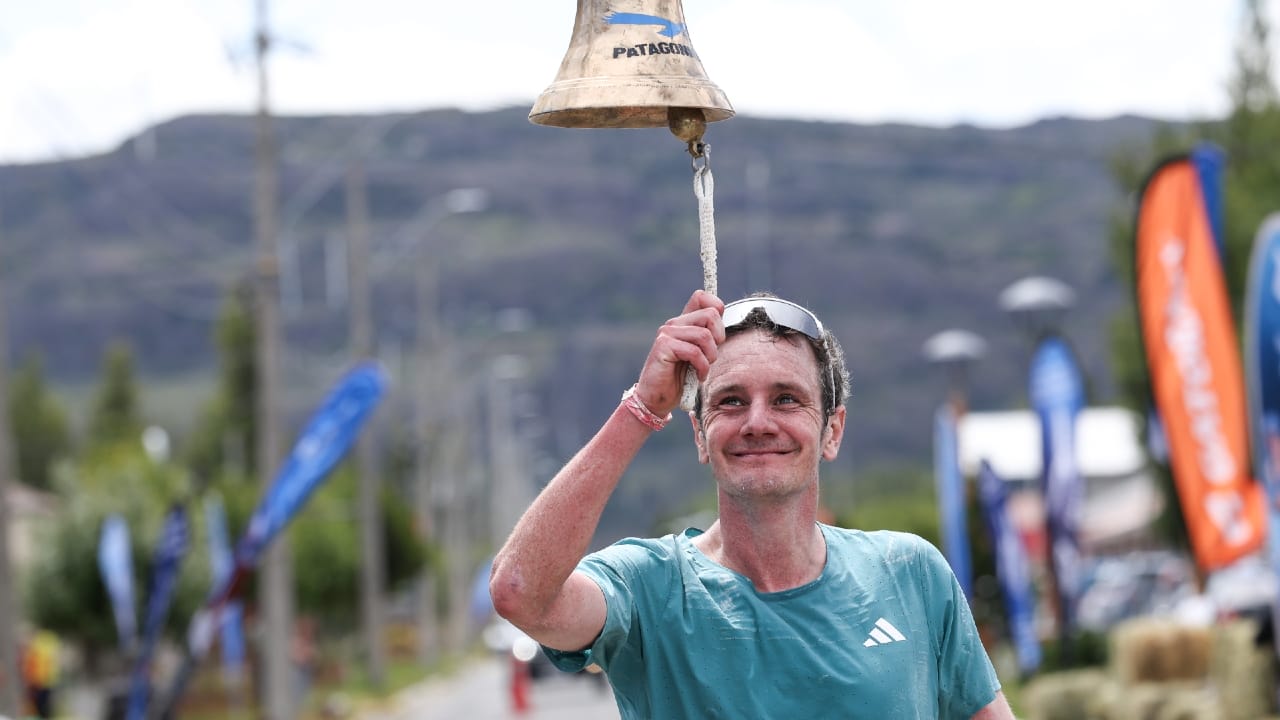
While he no longer competes professionally, he has had no shortage of challenges to deal with, having raced up the Empire State Building, taken part in the Nedbank Gravel Burn cycle race in South Africa, and recently pitted his skills and fitness levels against the wild elements of the Patagonman Xtri.
Many of today’s leading triathletes have spent time training at the Leeds complex, which was established through the inspiration and success of the Brownlees, with Alex Yee, Georgia Taylor-Brown, Non Stanford, Vicky Holland, Gordon Benson and Potter all taking advantage of the centre’s expertise, to name but a few.
Leeds grows out of Brownlee brothers’ success
“The training group in Leeds started with a few of us swimming in a 23-metre pool,” he recalls. “There would be a combination of Jonny and me and a couple of other people training properly, and a couple of lecturers from the university and a couple of people who just turned up for fun.
“And then, over the space of a few years, a few students came, and a few more people came to join us, because Jonny and me were being successful. So it changed fast, and there was never any oversight on who could join and who couldn’t join us.
“It was all like, ‘Oh, this is really cool’, that people are joining. We were completely open; we had nothing to hide from a training point of view. What we were doing wasn’t particularly special; we just had the philosophy of just turning up and training hard and getting the work done. And as long as people did that and didn’t get in the way, they were kind of welcome to participate.
“Of course, looking back, maybe we could have done things a bit better. Working out what we were about and maybe tailoring things a bit more. But there’s a fair point to be made that, for some years and possibly ever since, it was the most successful training environment there has ever been in triathlon… so maybe you shouldn’t change things too much.”
The full ‘Going Mental’ podcast with Jan Frodeno and Alistair Brownlee can be found HERE or viewed via the YouTube embed below.
