 Skip to content
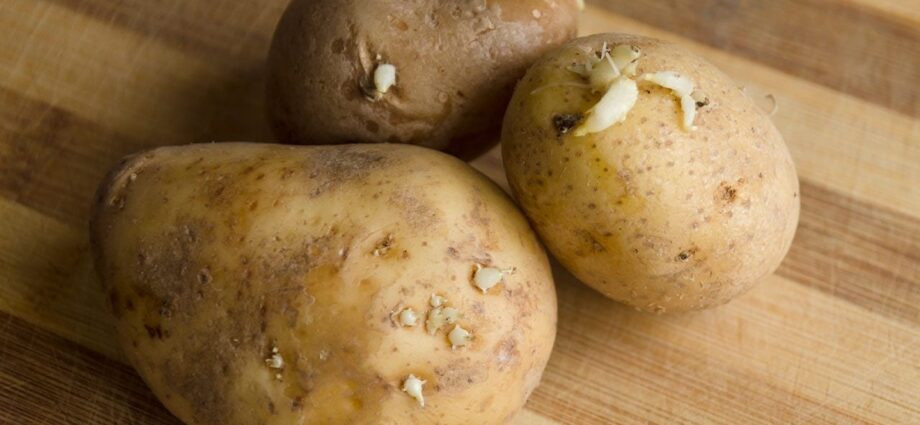


Those little shoots on your potato don’t necessarily mean they are destined for the trash. Here’s how to tell when potatoes are still safe to eat.
I’ve pulled some questionable things out of the back of my pantry, but potatoes are particularly good at making me wonder just how long it’s been since I last cleaned the shelves. A few little sprouts are one thing. A potato that’s managed to grow an entire network of shoots while I wasn’t looking is quite another. But is a sprouted potato actually unsafe to eat, or is there still hope for tonight’s mashed potatoes?
Fortunately, finding a few sprouts doesn’t automatically mean you have to sacrifice your dinner plans. There are, however, a few things to look for before you reach for the potato peeler.
Can you eat sprouted potatoes?

Yes, provided the potato is still firm, has only a few small sprouts and hasn’t turned green. You’ll need to remove the sprouts and surrounding eyes before cooking, but a potato that’s otherwise in good condition may still be usable.
The concern is with two naturally occurring compounds, solanine and chaconine. Their concentrations can increase as potatoes sprout, particularly in the shoots and around the eyes. Eating too much can cause nausea, vomiting and diarrhea, none of which are worth risking for a side of loaded baked potato salad.
According to the National Library of Medicine, potatoes that haven’t turned green can still be eaten once the sprouts have been removed. Removing them reduces the risk, although it doesn’t eliminate it entirely.
There is, though, a point at which it’s time to admit defeat. If your potato has developed long or numerous sprouts, feels soft or has wrinkled, shriveled skin, throw it away. The same goes for potatoes with extensive greening, which can indicate increased levels of those potentially harmful compounds.
Why do potatoes sprout?
As inconvenient as it is for those of us who would prefer our potatoes not to turn into science projects, sprouting is perfectly natural. Potatoes are tubers, meaning they store the energy needed to grow new plants. Those little indentations on the surface, called eyes, are buds that eventually produce shoots.
Warm temperatures and prolonged storage encourage sprouting, while exposure to light can cause potatoes to turn green. To keep your potatoes fresh longer, store them in a cool, dark, well-ventilated place. A breathable bag or basket, rather than sealed plastic, works great. Keep them away from direct sunlight and don’t store them with your onions! Onions release ethylene gas, which can encourage potatoes to sprout faster.
Proper storage will buy you some time, but it won’t stop sprouting indefinitely. If you’ve ever bought a 10-pound bag because it was only a dollar more than the five-pound bag, you’ve probably learned this the hard way.
How to Remove Sprouts from Potatoes
Start by rinsing your potatoes under cool running water, then use a paring knife or the pointed tip of a potato peeler to cut out each sprout. Dig deep enough to remove the entire eye and the surrounding area, rather than simply snapping off the visible shoot. You can reduce your exposure even further by peeling the potato, since these compounds tend to be more concentrated in the skin.
What to Do with Sprouted Potatoes
If you’ve caught your potatoes before they’re too far gone, you don’t have to race to use them all at once. Mashed potatoes freeze beautifully, so make a big batch and portion it out for future dinners. You can also bake and freeze whole potatoes or shred and blanch them for homemade hash browns. There’s something deeply satisfying about turning a bag of potatoes you nearly threw away into several dinners’ worth of side dishes.
Or, if you have a green thumb, try planting one! Sprouted potatoes can grow into new plants, and a potato grow bag is a great way to experiment without digging up your garden.
Either way, those little sprouts aren’t necessarily the end of your potatoes. They might even be the beginning of a few more.
Related:
- Is It Safe to Eat a Split Tomato?
- Does One Moldy Berry Mean You Have to Throw Away the Whole Pint?
- My Trick for Keeping Lettuce and Berries Fresh Doesn’t Cost a Dime
