 Skip to content
- In late November, Cyclone Ditwah triggered landslides and flooding across Sri Lanka’s biodiversity-rich hill country, disrupting nature-based tourism during the peak travel season.
- UNESCO World Heritage sites, including the Knuckles Conservation Forest, Horton Plains and Peak Wilderness, faced trail closures, access restrictions and infrastructure damage.
- Popular destinations faced cancellations and closures, hitting local families who depend on tourism for their livelihoods, though they remain hopeful of a swift recovery.
- Experts warn that reopening of these sites should not be unnecessarily rushed, emphasizing safety, environmental protection and long-term sustainability to preserve both livelihoods and biodiversity.
COLOMBO — Sri Lanka’s misty hill country, a hub for nature-based tourism, is currently grappling with the aftermath of Cyclone Ditwah. Landslides, flash floods and damaged infrastructure have disrupted the peak tourist season and raised questions about the resilience of these ecosystems in a changing climate.
Stretching across the Central Highlands, the region is famed for its scenic mountains, waterfalls, cloud forests and wildlife-rich protected areas. UNESCO World Heritage sites such as the Knuckles Conservation Forest, Horton Plains National Park, Peak Wilderness and dozens of breathtaking waterfalls form the backbone of Sri Lanka’s nature tourism, attracting visitors from across the globe and generating substantial local income.

Peak season interrupted
December to March is traditionally the busiest tourism season for Sri Lanka. In Ella, one of the island’s most popular scenic towns, hotels and homestays reported mass cancellations after access roads were damaged and landslide fears escalated following days of relentless rain.
“For many small operators, the peak tourist season supports livelihoods for an entire year,” said Mithila Bandara, spokesperson for the Hill Country Tourism Bureau. “There were many cancellations in early December, but we are hopeful of conditions improving soon.”

Ella’s charm lies in its many natural attractions. Hikes to Ella Rock, Little Adam’s Peak and Ravana Falls, visits to sprawling tea plantations, and the picturesque Nine Arches Bridge attract hikers, photographers and social media influencers alike. However, the Colombo-Kandy-Ella-Badulla railway, considered one of the world’s most scenic train routes, was severely disrupted by landslides, leaving many up-country services suspended. Deputy transport minister Prasanna Gunasena went on record to say that restoration will take at least up to 18 months — a major blow for hill country tourism.
Authorities have also issued advisories against climbing Adam’s Peak, one of Sri Lanka’s most important pilgrimage and ecotourism sites, after multiple landslides occurred along access routes. “The last stretch of the climb is sensitive, and the weight of thousands of pilgrims could trigger earth slips,” said Shaminda Ranshan, administrator of the Adam’s Peak Travelers Facebook group, which has more than half a million followers. He added that polythene pollution along the trail further increased the risk of slope instability.

Struggle for recovery
The Knuckles Conservation Forest, known for its rugged terrain, endemic species and trekking routes, experienced some of the worst landslides. Villages bordering the reserve were cut off as roads were damaged, isolating communities that rely on guiding, homestays and portering linked to eco-tourism.
“Hill ecosystems like Knuckles are extremely sensitive to intense rainfall,” said naturalist Nadeera Weerasinghe. “Recovery can take years, and repeated events may permanently alter the landscape.” He also highlighted an attempted push by some operators and local politicians to cut a road through Knuckles in recent months, which was blocked through environmentalist protests, showing how disasters can sometimes be exploited for short-term gains at the expense of fragile ecosystems.

The Horton Plains National Park, Sri Lanka’s second-highest wildlife tourism income generator after Yala, also suffered disruptions. Damaged access roads impeded visitors from reaching the iconic national park and the rain. For a few days after the cyclone, park management allowed vehicles to traverse the park where other routes were blocked, said its park warden Sisira Rathnayake.
The Pekoe Trail, Sri Lanka’s first long-distance hiking route spanning roughly 300 kilometers (186 miles) across the Central Highlands, also faced closures in landslide-affected sections. “Some parts are open, and we are hopeful the trail can be restored soon,” said Pramudith Thenabadu, an organizer of the trail. There are local communities that serve tourists and they would also suffer if these tour attractions got disrupted, Thenabadu told Mongabay.

Botanical heritage submerged
The Royal Botanical Gardens of Peradeniya, established 200 years ago and one of South Asia’s most visited botanical institutions, suffered extensive flooding. Parts of the 60-hectare (148-acre) garden along the Mahaweli River were inundated, damaging lawns, walkways and plant collections, particularly the orchid nursery. The garden’s hanging bridge over the Mahaweli River was also severely damaged. Its deputy director, Ruvini Gomes, estimated the restoration cost at around 120 million Sri Lankan rupees ($388,000).
Nature-based tourism not only fuels local economies but also encourages conservation of forests, wildlife and watersheds. Cyclone Ditwah, however, has revealed how fragile this model can be when climate shocks strike, said Srilal Miththapala, tourism consultant and a past president of the Hotels Association of Sri Lanka.
“Even though some routes are open, the hill country will take time to restore the same quality for tourists,” Miththapala said. He cautioned that recovery should not be rushed, as environmental, safety and sustainability considerations must guide the reopening. Hastily reopening sites may bring short-term revenue but could damage biodiversity and undermine the long-term appeal of the region.
“The hill country is both an ecological treasure and an economic engine — protecting it in a changing climate is essential for sustainable nature-based tourism and Sri Lanka’s future,” he told Mongabay.
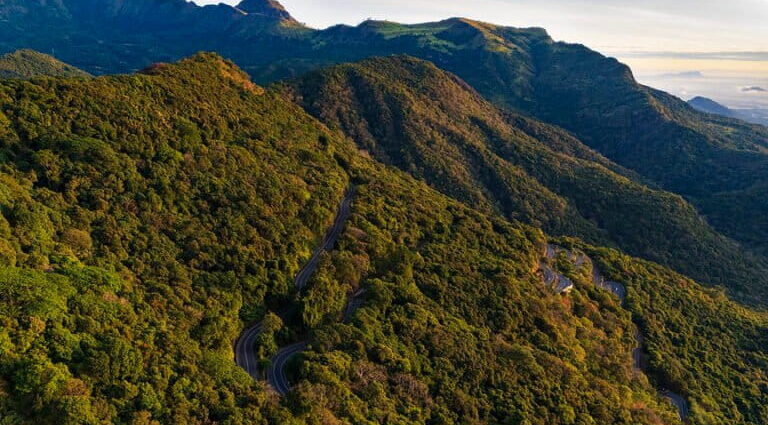
Banner Image: Sri Lanka’s central hill country, renowned for its stunning mountain vistas, was severely affected by landslides following extreme rainfall. Cyclone Ditwah left a serious impact on the picturesque Yahangala Mountain which experienced one of the most devastating landslides. Image by Kasun de Silva.
Credits

