 Skip to content
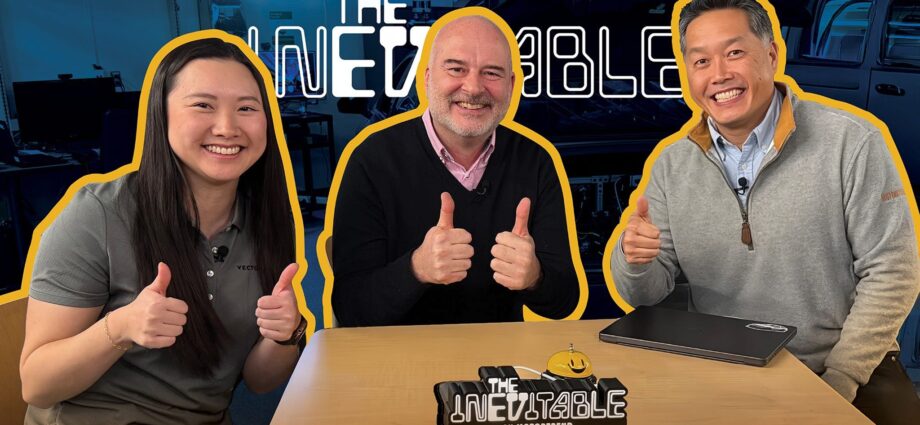
On this special episode of The InEVitable, we cover topics near and dear to my heart—the people behind the cars and how to get top talent to choose the automotive industry over other technology fields. Co-host Jonny Lieberman didn’t make the trip north to Ottawa, the capital of Canada and home of automotive software supplier QNX, where the episode was shot on location at “The Garage,” the software and hardware testing space inside the company’s headquarters.
There, I met with Vector’s Karen Xiong, program manager at Vector North America, and Andy Gryc, developer ecosystem director at QNX, to discuss their roles at their respective companies, their path to becoming software engineers, and how they ended up in the automotive business. Early on, we also had a genuine “Wolverine” moment during our conversation, which is a podcast first.
At the core of this episode is the topic of what it takes to work in a rapidly changing field of software-defined vehicles (SDVs), what kind of education is required, as well as the technical abilities and soft skills it takes to advance.
We also discuss what QNX and Vector are doing to assist interested students and prospective employees in gaining an advantage in the hiring process, including outreach programs like QNX Everywhere, and the free training programs and educational assistance provided by both companies. We also discuss how prospective candidates can set themselves apart, both before hiring and once on a career path.
One of the best parts about talking with really smart people like Gryc and Xiong is that the conversation invariably branches into areas I had never considered, including whether the traditional career path of ascending to upper management is right for certain types of engineers. Perhaps the answer won’t surprise you, but it was something I hadn’t really thought about.
Another fascinating part of the discussion is when I quizzed Gryc and Xiong about AI and whether “vibe coding” was real and had impacted their lines of work. I won’t spoil it, but, as someone who doesn’t code, vibe or otherwise, let’s just say it was interesting to get insights from the folks who do.
If you’re a software engineer, computer science or electrical engineering student, or just someone keen on coding and curious about what it takes to make it in the next chapter of the automotive industry, this podcast is for you. Watch it right here or listen to it wherever you get your podcasts.
