 Skip to content
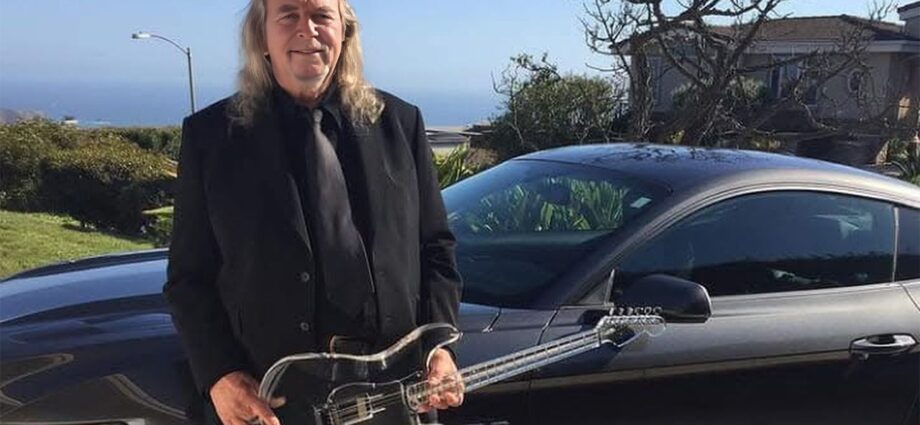
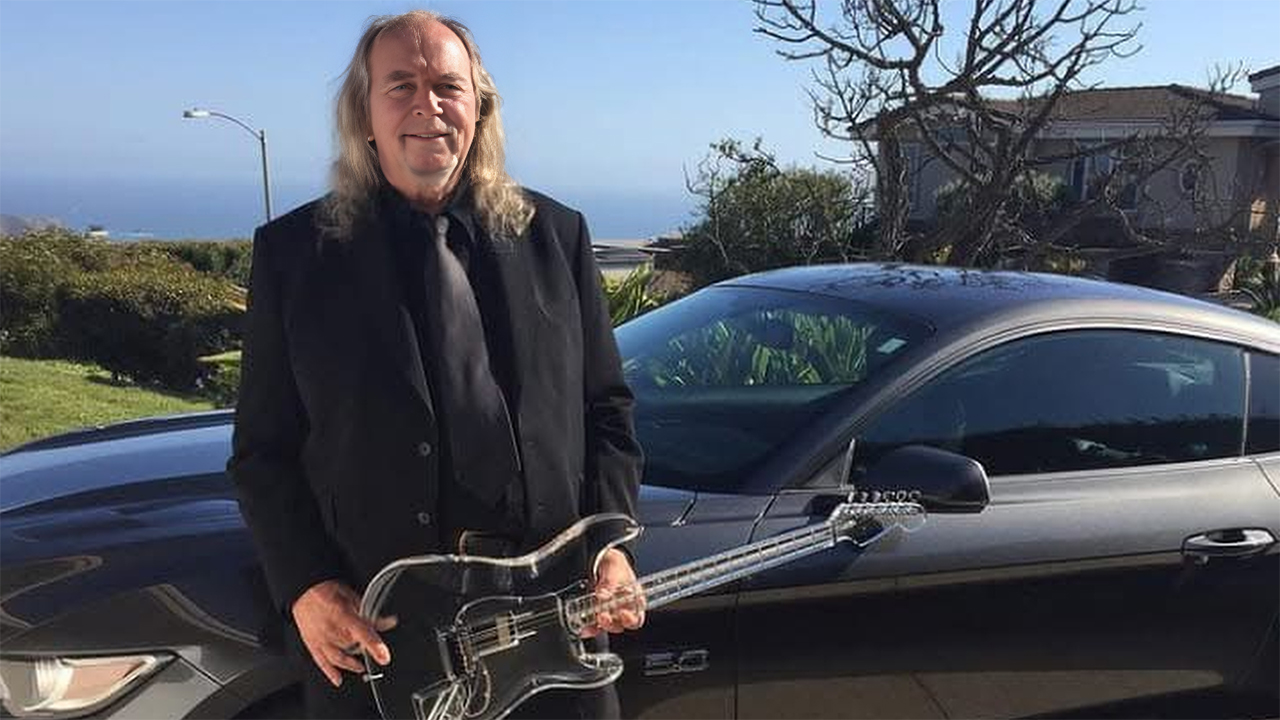
In the the ‘60s, Randy Holden gained a reputation for being a louder-than-loud player who could make the likes of Pete Townsend and Jimmy Page quiver at the knees. But he was jumping from band to band, guided by a free-spirited nature and sounds swirling around his mind that he couldn’t describe.
“I was hearing this sound all over the place,” Holden says. “I thought, ‘Is this Hell’s bells or something?’” As it turned out, his hypersensitivity meant he was picking up hums from everyday appliances, which influenced his vision.
In the early ‘90s, he discovered that Population II’ had been reissued without authorization. He angrily grabbed his guitar, grabbed back the rights to his music, and dove back in. “It was so stupid,” Holden says.
“The people I was dealing with weren’t very smart and didn’t really understand what they’d lost. It amazed me how petty people can be – how they can throw something away that could be a diamond on the ground in front of them.”
He remains musically active at 80, admitting that once he’d picked up the guitar again, he couldn’t put it down. He’s not where he hoped he’d be when he started – but since his return he’s dropped six new records, the last being 2022’s Population III.
“I’m getting old,” he reflects. “It’s a very weird experience. I can’t say I’m thrilled because you don’t have the energy you had when you were young. I know other people my age, and I don’t think anybody has anything good to say about it. It’s a lot more pain.
“So I don’t know what’s next. I’ve never known what’s next, except for the next thing that I’m doing. It’s always been one step at a time. Sometimes that’s all you can ask for. Sometimes that’s all you get.”
They needed someone to back them up, and we were asked to do it. There were five or six bands there, and we were on the second bill with the Stones. That was our first show in California… I don’t know if they’d done any shows in America before that.
Is it true that Keith Richards‘ tone and setup influenced you?
I could play circles around Keith! I thought, ‘Yeah, interesting tones.’ He was using a Fender Dual Showman amplifier with a Gibson Les Paul, which had really nice sustain. I was using a Fender Jaguar with a Dual Showman, but it didn’t have reverb.
What was the key to your extremely loud tone?
There was a rule: never, ever turn down. We played through this horrible rig in San Francisco. The rig was bad, and the venue was horrible because it was a lawn with cement and a steel dome. The sound just crashed around inside. But what I did was just turn up. It didn’t make anything sound better, but there was nothing you could do to sound good.
After that you joined The Other Half.
I used to do a thing with the Other Half – when we played live, I’d plug all the amplifiers together and do a 15 or 20-minute solo. It was a blast. I never knew exactly what I was going to play; I didn’t have anything worked out. I just went for it. The audience just went nuts over it and loved it. That kind of blew me away.
Then you joined Blue Cheer, which seemed to be in keeping with your philosophy.
Before they were Blue Cheer they saw me do what I did. They became a three-piece band and got a record deal right away, playing Summertime Blues, which became a hit. We played a few gigs with them up in San Francisco, so we knew each other fairly well.
Blue Cheer came on after us, doing something similar to what I was doing, except more chaotic. In those days no one played loud like I did – then Blue Cheer came on, and they were the first ones to play loud besides me.
I was like, ‘We made a lot of money and we don’t have any?’ He brought me an envelope and it only had $500 cash. I opened it, said, ‘Okay…’ went to the studio, unplugged, and left
To be fair, Jeff Beck was playing pretty loudly, too.
I’d seen Jeff Beck with his new band with Rod Stewart, who did the Truth album. I was really excited to see that because Jeff was great. But when they played he was very laid back. I was surprised because he was always a wild man – he would improvise, rather than be locked into a theme, like with the Yardbirds.
So I was a little bit let down by Jeff’s band. They were tight and had really good musicianship, but they didn’t have that fire. Jeff seemed very withdrawn; he was giving Rod Stewart the spotlight, which I thought was a big mistake. I’m sure he thought so, too, after Rod took off on his own and became a big success.
Is it true that you saw Blue Cheer on the same bills as Jeff before you joined?
Yeah, Blue Cheer were on the same bill. When they came on, they just thundered on the drums, and I went, “Wow, there’s a drummer!” As soon as our set was over, I went backstage, looking for him – Paul Whaley. I said, “Hey, man, I want you to come and join my new band.”
I said about Blue Cheer, “Here’s a one-hit wonder. I want to do something really powerful that has some weight. I want you to be the guy on the drum throne.” He said, “Let me talk to Jerry,” who was their manager at the time. He arranged for Paul and me to jam the next day to see how we played together.
After that they said, “Look, we want you to come join us!” I took the gig. We had three or four days before going out on tour, but it was easy material to learn. We toured quite a bit. It was an extensive tour across the US and then over to Europe for a few months, and then back across the US again.
But there were big problems: Jerry was bringing in all the money but not opening the books. And there was too much drug abuse – heroin, big-time and hard. A drug you don’t want to mess with.
You only appeared on half of the album New! Improved! because you quit during the recording.
While we were recording the album I was supposed to get my tour earnings – thousands of dollars, which was a lot of money at the time. But Jerry called me from the accountant’s office and said, “Look, we have to use your tour earnings to pay the band’s back taxes before we pay the band.”
I wasn’t very happy about that. And I wasn’t happy with the drugs, along with the money disappearing as it was. Jerry said, “We’re going to give you $1,000. That’s all we’ve got.” I was like, “What the hell? We made a lot of money, and we don’t have any?”
He came over and brought me an envelope with money in it, and it only had $500 cash. I opened it, said, “Okay…” went to the studio, unplugged, and left.
After that, you formed Population II with Chris Lockheed.
Chris said, “I’ve heard you’re looking for a drummer. I saw you at a gig with Blue Cheer, and I heard you just left.” I asked him what he played, and he said, “Drums and keyboards.” I asked, “Can you play both at the same time?” He said, “Well, yeah,” and I said, “Okay, let’s do it.” It was an impromptu, freak thing.
The record company dropped the ball. They never released the record, but kept telling me that it was coming out. After six months I ran out of money and went bankrupt
Population II’s self-titled album, featuring your 200-watt Sunn amps, is credited with starting doom metal. Where did that sound come from?
I used half of the Sunn amps I had for the recording. I was interested in discordant sounds at the time… I was hearing this stuff in my head. It was very strange. I came to learn later on that when you become hypersensitive, you hear things that other people don’t hear.
I was hearing the high-pitched harmonics of machinery, like a ceiling fan. When the sound was becoming overwhelming, the discordant tones would come out, like counting up this rhythm, and the sound was like very hellish music.
I thought, “Could that sound be coming from the fan?” I got a chair, and the closer I got to the fan, the louder it became. I thought, “I’m not losing my mind! I’m actually hearing what this machine is doing.”
Did you have an idea you were doing something new and different with the album?
Oh, absolutely! That was my intention. I was doing a new kind of music and I had a feeling that once it was released, if we could go on tour and play it live, it would get huge. But we never got much of an opportunity to do that.
The record company dropped the ball. They never released the record, but kept telling me that it was coming out. After six months I ran out of money and went bankrupt. I had zero.
Is it true that your Sunn amps were sold from under you?
I temporarily stored my amps in the road manager’s mother’s garage, and went off to live with two girls. The band was kind of separated at that point. When I went back to check on everything, the road manager’s mother told me, “He sold all of your amps at a music store.” I was blown away.
I went to Hollywood, to the only music store that was big at the time, and that’s where they were. I was like, “Son of a bitch!” I said to the guy, “Hey, these are my amps, man.” He said, “No, they’re not.” I said, “See this right here? I painted that on here myself.” He didn’t know what to say.
I called Chris. It just tore everything apart. There was no hope of getting anything back together. I’d been out trying to get another record deal and had people who wanted to sign me, but the other label would not release me from the contract.
Is that what led you to go off grid?
I didn’t know what to do, so I just ran off to the jungle and forgot about life. I went to Hawaii with nothing. I was just gonna paint because I enjoyed that, and nobody could screw with me or take control of anything.
Meanwhile, unbeknownst to you, the album was released and helped launch heavy and doom metal – which you found out about 20 years later. You must have been furious.
That’s putting it mildly. I was counting how many people I was going to have to kill. I found out from a guy named Randy Pratt, who spent four years hunting me down. He talked to everybody I’ve ever known in my life, trying to find me. It was very bizarre, like the CIA or something.
But after a year of persuading, I got a guitar from him, started playing again, and couldn’t put it down – I was sucked right back into it. But I did not want to go through that record company bullshit again. All the lies, deception, and thievery were just horrible. But I love music, and that’s what I was doing before all that started.
How did you regain the rights to Population II?
Randy Pratt told me about it being released being bootlegged several times. He was surprised I wasn’t getting any royalties. I said, “I haven’t received a penny from anybody for anything.” I began regaining control over my music over time.
You walked away from Population II unhappy with the final mix. You later found out the truth about that too.
Back then I had no idea what mastering was. I had a mix that was fabulous. I understood that, most of the time, the album would be played on car radios. So instead of mixing down these giant speakers with hundreds of watts of power, I asked the engineer to set up a car radio amplifier and a couple of small oval speakers to mix through that.
He thought I was nuts. But it was the perfect thing to do. It was beautiful dynamically, and I was really thrilled with it. But I got a test pressing back, and when I played it, it sounded like absolute shit. I lost my mind – I thought, “If my judgment is that bad, I’m incompetent. I’m not even capable of knowing what I’m doing anymore.” It was depressing. I was so despondent.
I didn’t discover until 20 years later that my mix had been destroyed during the mastering process. It came back, and the engineer freaked out because he knew exactly what had happened. But I wasn’t smart enough to understand. I thought it was all my fault – but it wasn’t.
The sales are pretty decent, so I’m happy about that. But I was doing this stuff before any of the others
I wasn’t the idiot I thought I was. In fact, I was 1000 per cent right and on track. It was very satisfying to realize that I’d been blaming the wrong person all those years. But I felt dumb for doing that, and for not knowing enough of what had been going on behind the scenes.
Do you feel like you’ve finally gotten the credit you deserve for pioneering heavy metal?
I really have no idea. It’s certainly not as big as I wanted to go. But by re-releasing the album through Riding Easy Records, I picked up a lot more fans. So, I guess it’s a slow growth process. The sales are pretty decent, so I’m happy about that.
But I was doing this stuff before any of the others. Aside from not having a $50-million net worth… hey, man, oh well.
- Population II is on sale via Riding Easy Records.
“>
You must confirm your public display name before commenting
Please logout and then login again, you will then be prompted to enter your display name.
