 Skip to content
This article was produced by National Geographic Traveller (UK).
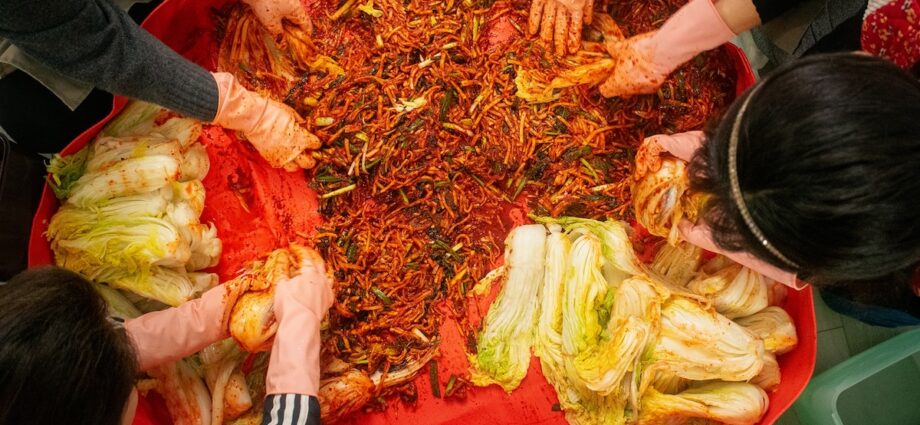
I’m kneeling on the tiled floor of my host Annise Lee’s kitchen, sitting next to three of her pink-rubber-gloved Korean girlfriends. Wafts of pungent fish sauce fill the air. It’s a brisk November afternoon in the hills of Coquitlam, Vancouver’s unofficial Korea Town, and we’re gathered around a shallow children’s paddling pool filled with a spaghetti-like mass of radish strips, mustard leaves, ginger, garlic, onion, apple, gochugaru chilli flakes, fermented baby shrimp and, of course, fish sauce. I watch as the ingredients are folded into a paste, while 16 limp and quartered Chinese cabbages wait idly on the pool’s sidelines.
Judging by the occasional tasting and satisfied nods, there’s neither a recipe nor measurements at play here. Instead, Annise’s friend, Eunsun Kim — considered the local community’s ‘queen of kimchi’ — points at her mouth with a paste-covered fingertip. “My tongue remembers the taste,” she says. Like most of the women present, Eunsun originally learned how to make kimchi from her mother. Without looking up, she coats each cabbage layer in paste, using controlled strokes, finally tying the leafy ends into a neat, boat-shaped parcel of vibrant chilli red. We’re ready to eat.
What follows is a hearty feast of fatty pork belly boiled in soya paste served with leftover kimchi ingredients and simply fried jeon pancakes. The kimchi lands with an audible crunch, the tanginess and mild spice urging me on, bite after bite.
I’m here in Vancouver to experience kimjang, the Unesco-protected, large-scale preparation of kimchi, which typically takes place in South Korea’s rural villages in order to stockpile food for the harsh winter months. The fermented vegetable side dish is the garlicky-sour-spicy cornerstone of Korea’s culinary identity, lately finding its place firmly on plates around the world, boosted by the ongoing K-culture boom.
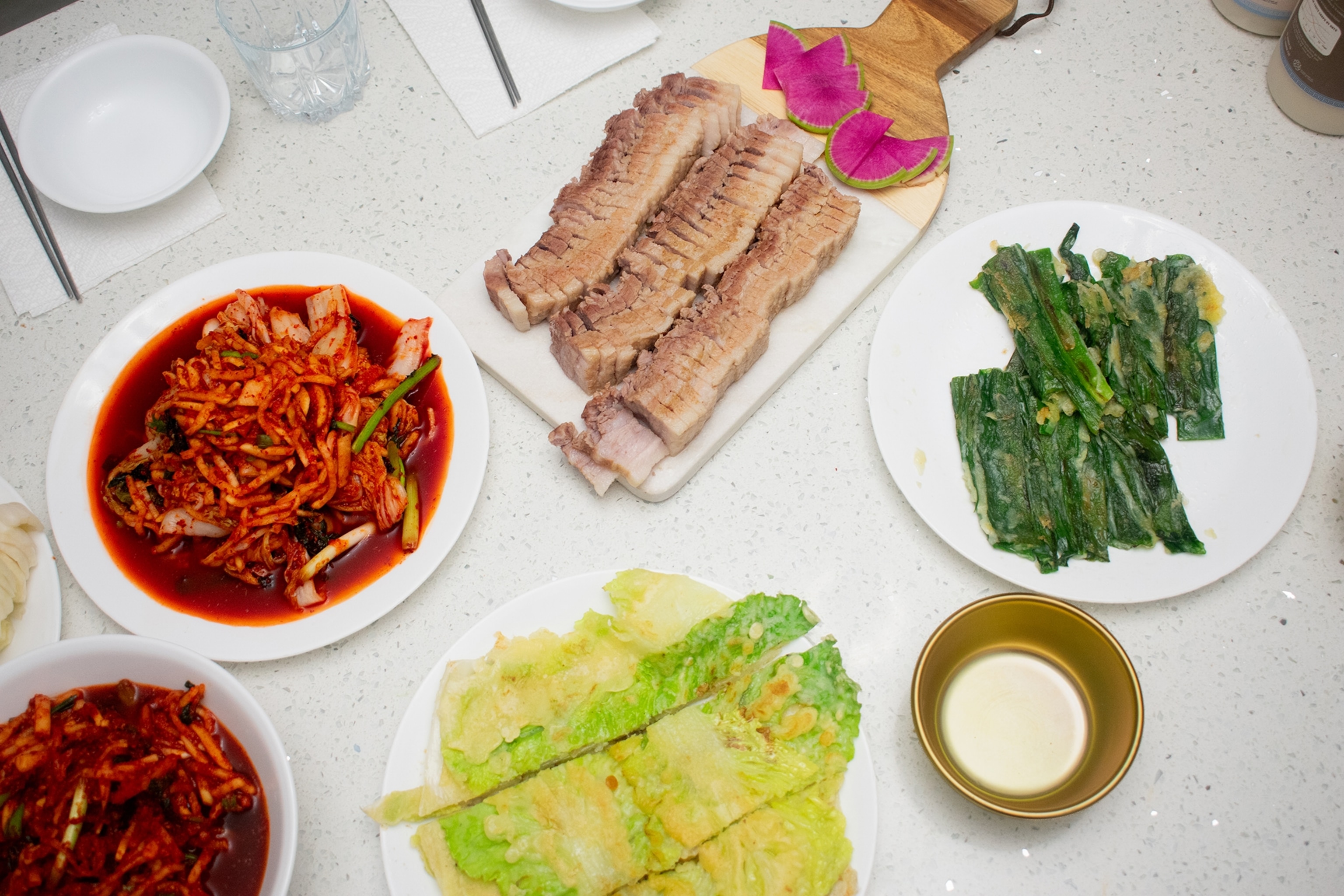
Suyuk — or pork belly— is traditionally served after the completion of kimjang, alongside kimchi and jeon pancakes made from leftover ingredients.
Photograph by Lena-Marie Müller
The skill and tradition of kimjang have been passed down by family matriarchs for centuries, and here in Canada’s British Columbia, some 5,000 miles away from South Korean shores, a small but mighty community of Korean immigrants has quietly carried on kimchi-making in homes, restaurants and urban farms across the province.
With freshly harvested spring onions from Annise’s garden, the four women have prepared one of the most popular of around 200 different kimchi variations for me to try: spicy napa cabbage kimchi. “We grow up with the taste of it”, explains Leeah Park, president of the Korean Women’s International Network and one of Annise’s kimjang-helpers. Naturally lacto-fermented in special plastic containers that have long replaced the traditional onggi clay pots, kimchi is served with nearly every meal as banchan (a small side dish) to balance out the various proteins and complex flavour profiles found in Korean cuisine, but is far more than just a supporting act. “It’s our soul food and if we don’t have it, we get nervous”, Leeah adds with a smile.

Last Chance – Save up to $20!
PLUS, for a limited time, get bonus gifts and issues with all Nat Geo subscriptions.
(Related: 5 ways to eat kimchi, a Korean staple.)
The taste of mother’s hands
“Right now, my wife is making kimchi at home”, says restaurateur Bobby Shin, with a subtle Korean accent despite the 16 years he’s spent in Vancouver. I join him the following day for a much smaller kimjang demonstration, in the downstairs dining area of his celebrated Korean farmer-style tavern Zoomak, in the city’s Gastown quarter.
His mother’s kimchi recipe has become the backbone of numerous dishes including cheesy kimchi jeon pancakes and kimchi mul-kooksoo (cold buckwheat noodle soup). “Making kimchi is an act of remembrance,” he explains. Wearing a daringly white Stussy T-shirt, he spreads the chilli-red paste with the same vigour as Eunsun. “Vancouver is a city of immigration,” he adds, hinting at the buzzing Asian diaspora that’s welcomed Zoomak’s authentic menu.

The leftover paste from Bobby’s demonstration will go straight home to support his wife’s kimchi preparation.
Photograph by Jinju So
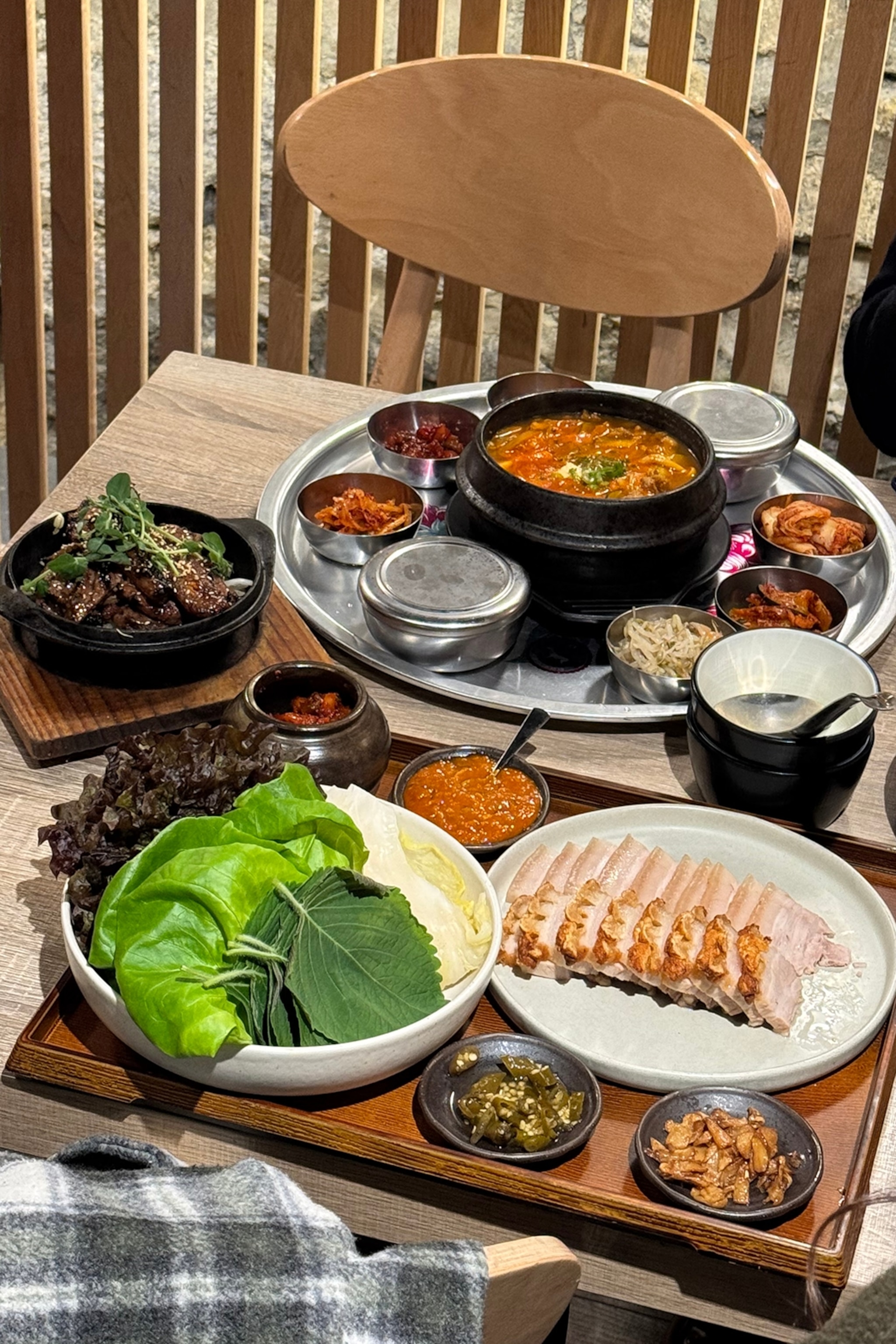
Zoomak serves both the traditional boiled pork belly as well as it’s own version with crisped fat.
Photograph by Jinju So
The Korean philosophy of jeong — a deep emotional bond, nurtured over time, between people, places and things — also threads through Tom Jeon’s namesake restaurant, which opened in September 2025 following his success with Japanese spots Tom Sushi and Tozen Sushi Bar. I meet him at the sleek, contemporary spot — all soft leather booths and wooden walls hung with glass decorations reminiscent of fish scales — for a dinner of hand-cut kimchi noodles, delicate amberjack crudo and freshly brewed corn tea. “Korean is my language,” he says softly, and I sense that he means this as expression that goes beyond the spoken word. “If I don’t do it the right way, I might create a bad reputation for my culture.”
It’s not just the restaurant’s various types of kimchi — from chive to aged, white kimchi — that shine, but Tom’s personal nostalgia for his late mother’s son-mat, the unique hand flavour tied to Korean cooking. Tom explains how food touched by bare hands, especially by loved ones, is thought to carry a richer taste and meaning — contributing not just the chef’s unique skill and touch, but also to the fine balance of bacteria that fuels fermentation. It’s a taste that inspires Jane Lee, his Korean-chef wife, to make all kimchi for the restaurant from scratch.
You May Also Like
As with Eunsun and Bobby, there’s an undeniable spark of pride when Tom speaks of kimchi, one that’s followed him from Seoul and deepened since his arrival in Vancouver — much like the condiment’s flavour during fermentation.
(Related: Where to eat in Vancouver’s best food neighborhoods.)
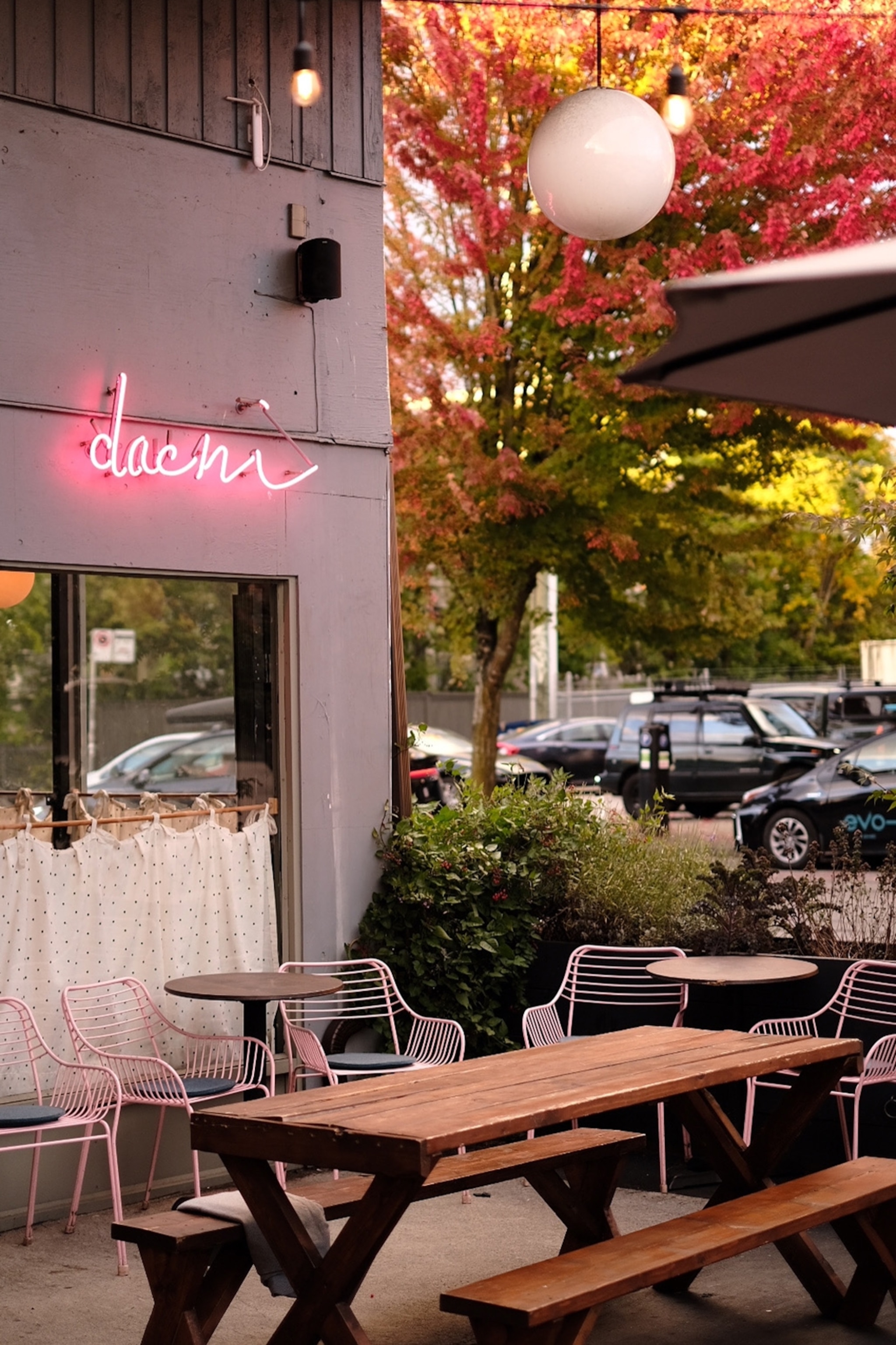
Dachi restaurant is a popular after-hours hangout spot in Vancouver.
Photograph by Dachi
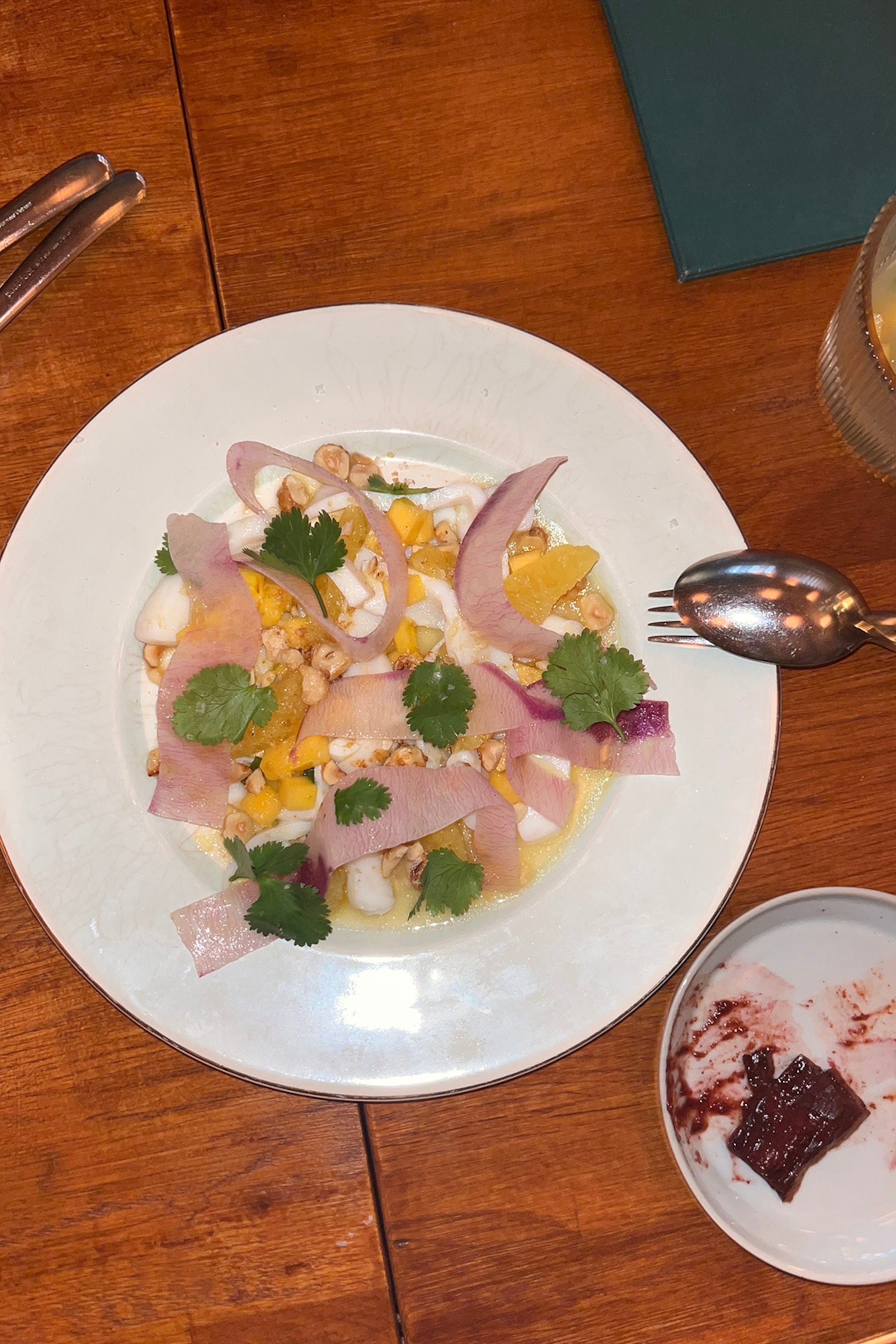
Water kimchi, made with a mild, watery brine, predates all other kimchi types and is paired with daikon radish, orange, giant squid and coriander at Dachi.
Photograph by Lena-Marie Müller
Cultural connection
“I learnt how to make kimchi through phone calls with my mom,” says chef Jiwon Seo. It’s International Kimchi Day (22 November) and I’m at the “charmingly undefinable” Dachi restaurant — as described by its general manager and co-owner Sarah Doerksen. A disco ball by the front door casts sparkles of light onto stylish mid-century furniture, polka-dot cafe curtains and a wine-filled fridge, as Jiwon tells me of her unusual kimjang journey.
Growing up in Seoul, she was never more than a taster at her mother’s kimjang and it wasn’t until Jiwon had spent years of training in European-style restaurants overseas that she followed her jeong and reconnected with the cuisine of her childhood. “I put my Korean identity aside for the first five years of living here and even now, I try to avoid cooking anything too traditional.” Dachi’s menu features Treviso radicchio kimchi mixed into beef tartare, and locally farmed butternut squash water kimchi with orange slivers and braised squid — Jiwon is certainly inspired by the melting-pot spirit synonymous with the Pacific Northwest. “Kimchi grows with the immigrants of each country,” she adds, applying a thick layer of kimchi paste onto salted radicchio leaves. It’s this merging of cultures that’s allowed Dachi to attract a noticeably non-Korean crowd of diners, introducing Korean flavours and a sense of jeong to a wider Canadian audience.
In a similar vein, the glass jars at Gimjang Kimchi — a Vancouver-grown kimchi brand in Richmond — intentionally feature descriptions in English rather than Korean. Co-founder Noah Yoon, who also runs the organic Gaia Farm that produces most of the kimchi’s ingredients, knows this is how he can best spread the spirit of seasonality and community inherent in kimjang.
A former business consultant, Noah decided to abandon his tech lifestyle in Seoul to follow in his family’s farming footsteps. “My dream for Gimjang is to inspire connection; to use its sharing spirit, where no household is left out,” he says enthusiastically. “We can unite different backgrounds by following this concept.” And here, sitting in the breezy farm store, surrounded by jars of kimchi, I feel jeong stronger than ever before.
To subscribe to National Geographic Traveller (UK) magazine click here. (Available in select countries only).
