 Skip to content
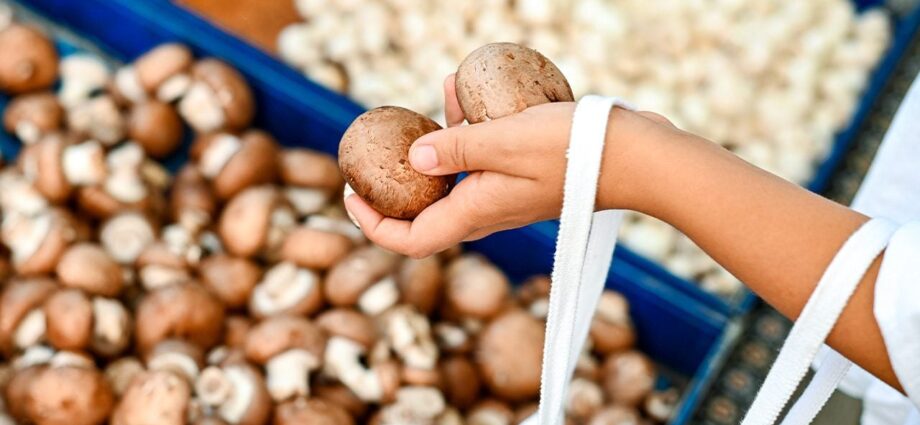


Mushrooms can go from fresh to slimy surprisingly fast. Here’s what to look for at the grocery store to make sure you’re bringing home the freshest package.
Mushrooms don’t last long in my house, largely because I put them in just about everything. Creamy pasta, eggs, pizza, soup, rich sauce for a juicy steak—I have yet to encounter a savory dish that isn’t improved by a pan of mushrooms browned in butter. Still, I’ve brought home plenty of packages that seemed perfectly fine at the grocery store, only to discover a few days later that they’d gone slimy in the refrigerator. Mushrooms contain a lot of water, and they can go from firm and fresh to unpleasant rather quickly.
Fortunately, the freshest mushrooms have a few fairly obvious characteristics. One of the most useful clues, however, may require turning the package over.
What to Look for When Buying Mushrooms

Fresh mushrooms should look firm and fresh, with smooth caps and a relatively dry surface. A little dirt is completely normal—mushrooms do grow in compost—and isn’t an indication that they’re old or poor quality. You can deal with that when you clean your mushrooms at home.
What you don’t want is a package full of mushrooms that are wrinkled, shriveled, bruised or beginning to develop dark soft spots. If you’re buying loose mushrooms, give one a gentle squeeze. It should feel firm rather than soft or spongy.
For packaged mushrooms, I always flip the container over before putting it in my cart. Moisture tends to collect at the bottom, and it can be easy to miss when you’re looking down at a tidy row of caps. A little condensation inside the package isn’t necessarily a disaster, but mushrooms sitting against visibly wet packaging (or worse, beginning to look slick themselves) should be left behind.
Don’t be alarmed by the gills underneath the cap, either. On common white and cremini mushrooms, the veil underneath the cap can open as the mushroom matures, exposing the gills. Younger mushrooms with closed veils tend to have a more delicate flavor, while mushrooms with open veils have a deeper, more pronounced mushroom flavor. Exposed gills alone don’t mean the mushroom has gone bad.
Once you’ve found a good package, keep the mushrooms refrigerated and wait to wash them until you’re ready to use them. Starting with firm, dry mushrooms gives you the best chance of actually being able to cook them before your produce drawer gets other ideas.
How to Tell If Mushrooms Have Gone Bad
If you’ve ever encountered a truly slimy mushroom, you probably didn’t need an article to tell you not to eat it. Texture is one of the clearest indications that mushrooms are past their prime. If they’ve become wet, slick, soft or mushy, it’s time for them to go.
Wrinkling is a grayer area. Mushrooms naturally lose moisture as they sit in the refrigerator, so a few wrinkles don’t automatically make them unsafe to eat. They do, however, tell you that the mushrooms are getting old. If they’re still firm, smell normal and show no signs of spoilage, use them soon and preferably in something cooked, where a slightly less-than-perfect texture won’t matter much.
Mold is another matter. Mushrooms that have visible mold or an unpleasant smell should be tossed rather than trimmed or salvaged.
Ultimately, the same qualities you’re looking for at the store—firm, smooth and dry—are useful at home too. The farther your mushrooms have traveled from that description, the more carefully you’ll want to consider whether they’re still suitable for dinner.
Related:
- How to Pick the Best Apples at the Orchard or Grocery Store
- Should You Be Washing Your Bananas?
- Does One Moldy Berry Mean You Have to Throw Away the Whole Pint?
