 Skip to content
- Community members in Alto Mayo, Peru, are protecting 4,000 hectares (nearly 10,000 acres) of unique wetland forest by combining sustainable ecotourism, scientific research and participatory management of the territory.
- In the Tingana Conservation Concession, visitors explore the flooded forests by canoe and learn about sustainable agriculture and local species, while contributing revenue to the community’s economy.
- Since 2023, community members have installed eight camera traps to monitor biodiversity and strengthen surveillance against encroachers.
- The cameras have captured species like jaguarundis, margays, neotropical otters and razor-billed curassows, providing valuable scientific information that has been integrated into local environmental education programs.
The Tingana Conservation Concession sits in the center of a unique wetland in the Alto Mayo Basin, the highest swamp in Peru with Amazonian characteristics. In its flooded forest, native moriche palms (Mauritia flexuosa, known in Peru as aguaje) and renaco trees (Ficus trigona) resist the pressure of rice crops, which are expanding around the protected area.
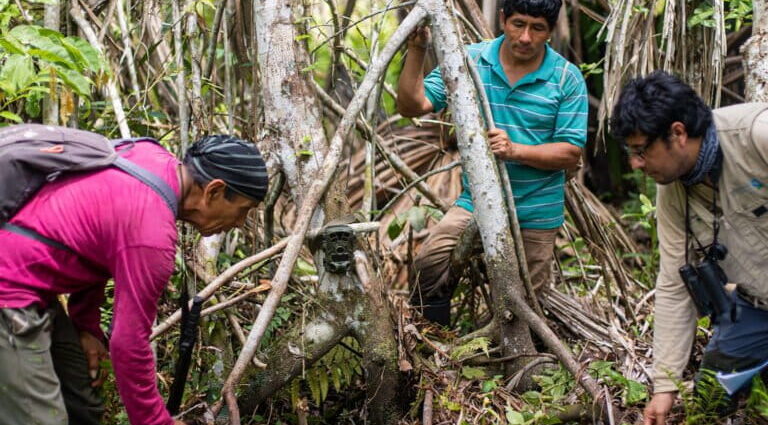
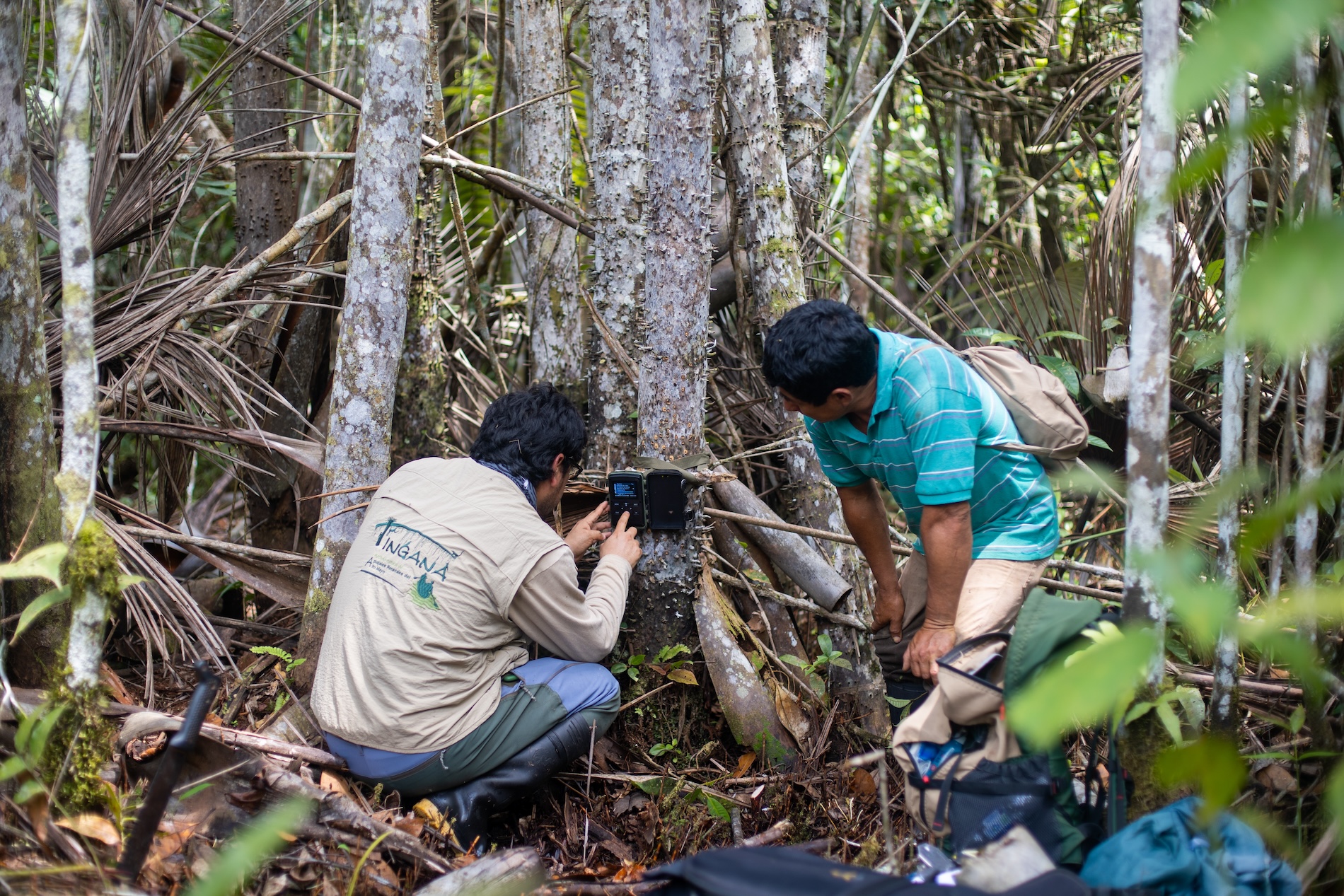
An association of local families has been working to transform and protect the reserve’s habitat. In 2023, they began using camera traps to monitor its biodiversity
“The cameras are our eyes in the forest,” says Julio César Tello, head of research at the Association for the Conservation of Alto Mayo Aguajales and Renacales (Adecaram), the community organization that has managed the area since 2004. “They are eyes that warn us and give us information.”
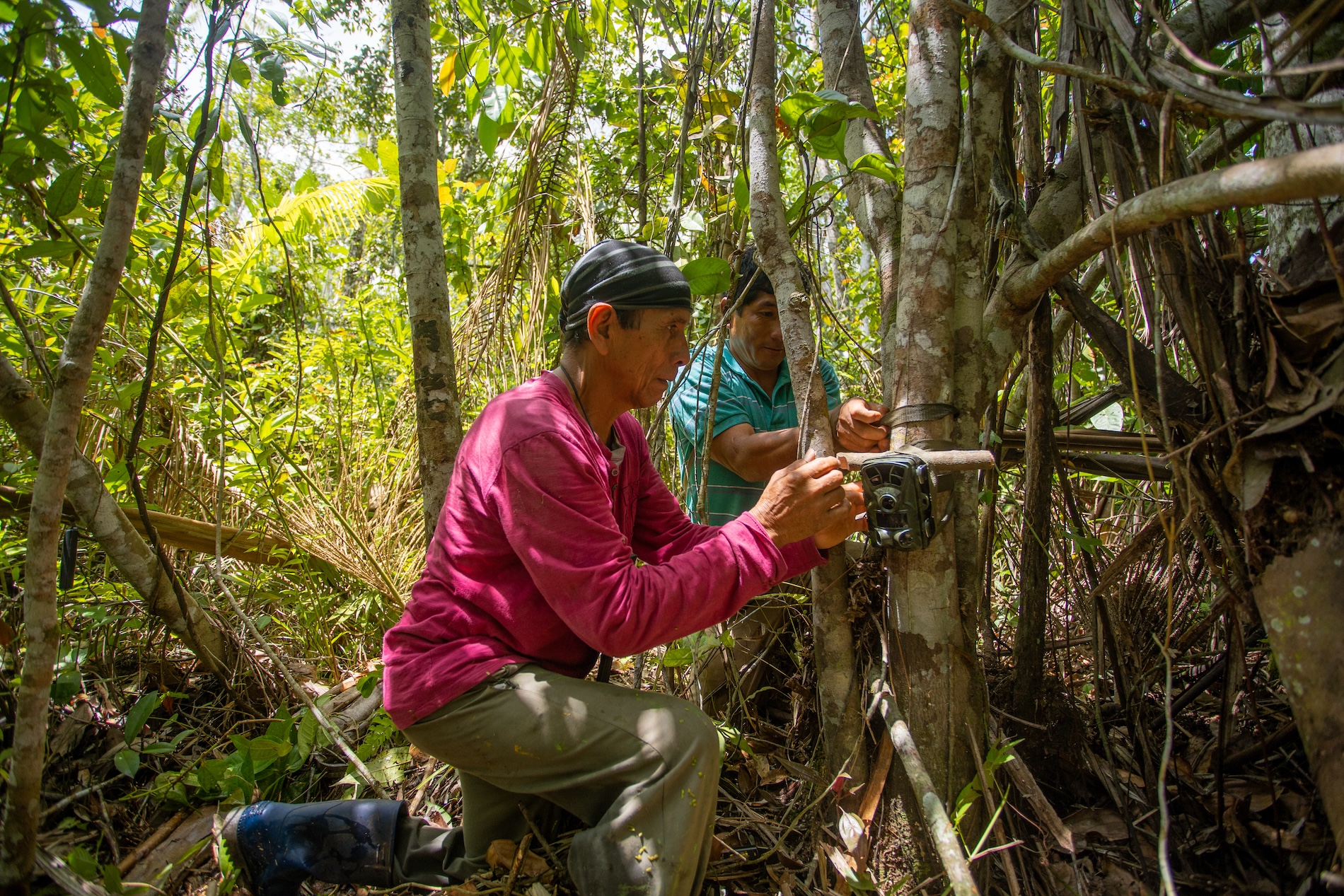
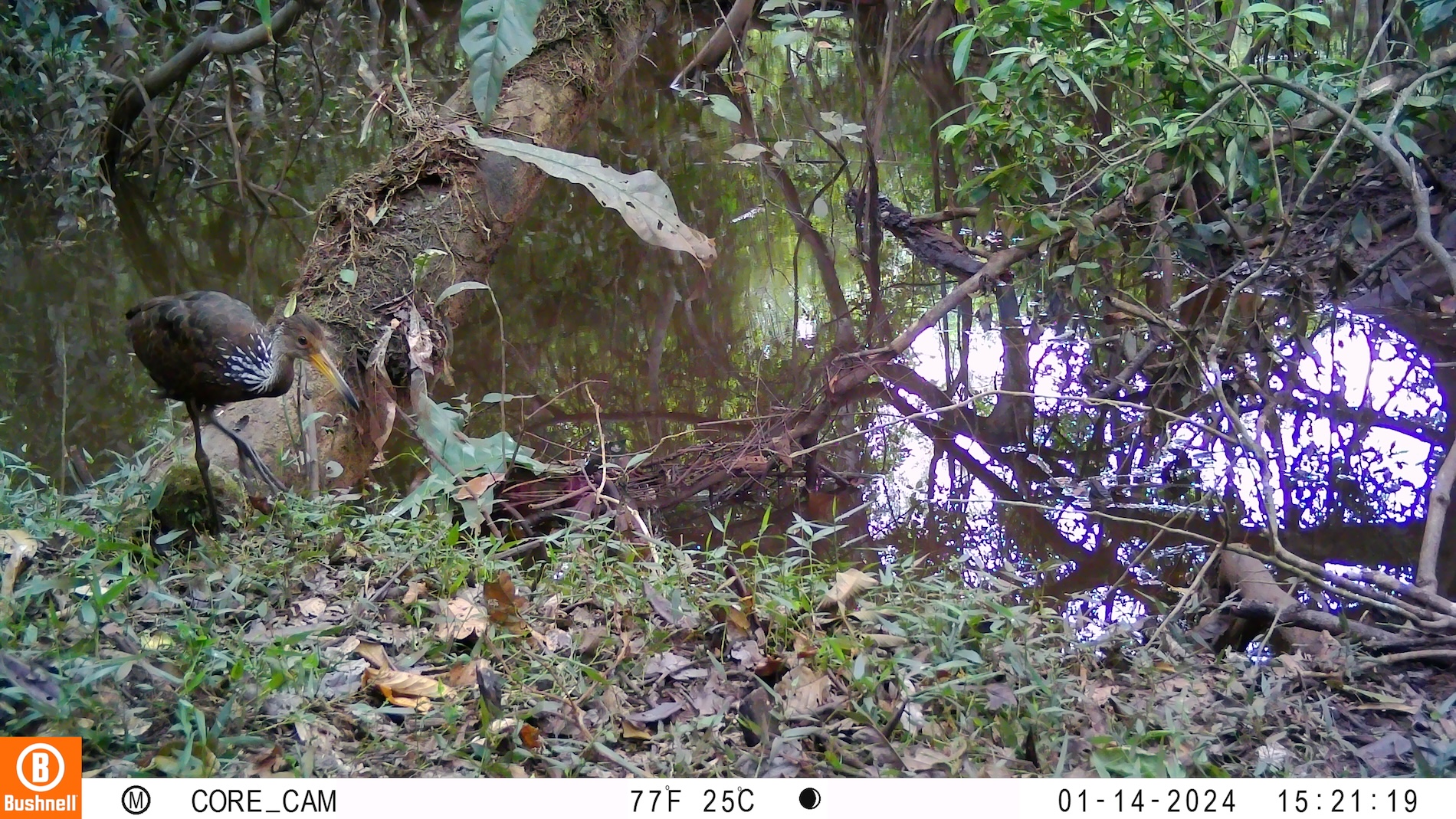
Adecaram, in collaboration with Conservation International Peru, has installed eight camera traps so far, which have recorded the presence of 66 species over the past two years. These include wildcats like the jaguarundi (Herpailurus yagouaroundi) and margay (Leopardus wiedii), neotropical otter (Lontra longicaudis), capybara (Hydrochoerus hydrochaeris) and razor-billed curassow (Mitu tuberosum), a bird once was thought locally extinct.
Dino Cabrera, the Adecaram project director, told Mongabay Latam the images have broadened scientific knowledge of the area, as well as raised awareness among local communities and tourists about the importance of preserving and protecting the habitat.
“Within the many activities we carry out is research,” Cabrera said. “It’s the main component that allows us to learn about the biodiversity potential and make decisions about species and the territory. That’s why our work is also empowering the local population and next generations to manage their own territory.”
This approach has been key, according to Cabrera, as many villagers who used to hunt or log have transitioned to conservation. He said they now participate in activities like ecotourism that have boosted the local economy.
“This change has led to the World Tourism Organization recognizing Tingana as a successful venture in the Americas,” Cabrera said. “And it was precisely because of that story: how families who used to hunt and predate on resources like aguaje are now preserving, recovering, restoring and living in harmony with the ecosystem.”
A forest that walks
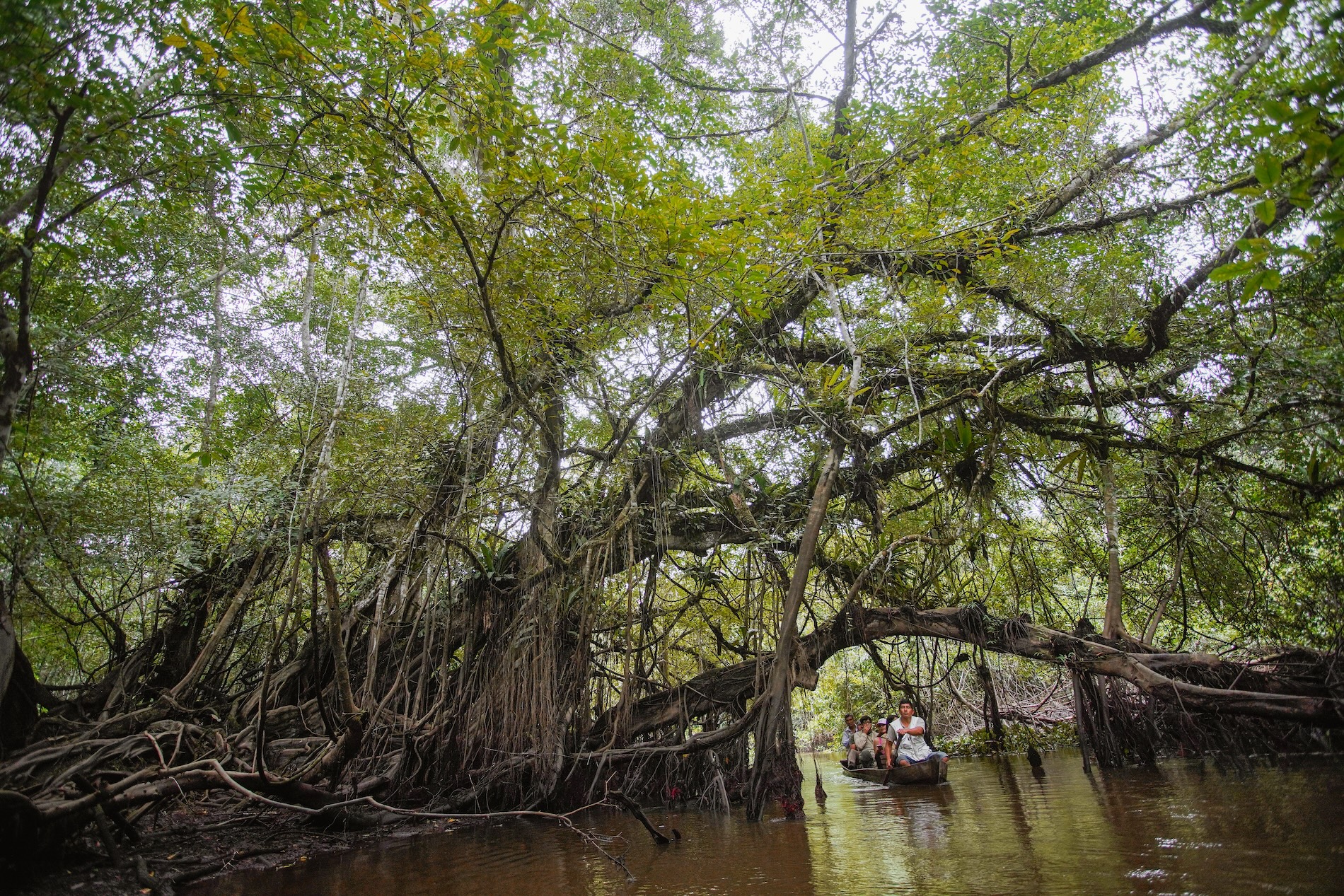
Tingana hosts a unique ecosystem: a forested wetland that sits more than 800 meters (2,600 feet) above sea level. This landscape is marked by renacos, known as “the trees that walk,” and aguajales along the course of the Avisado River.
“In the map of Peru’s ecosystems, the area is considered a palm swamp,” Tello said. “It’s rare to see aguajales above 800 meters. Generally, we find them in the low area of the Amazon at 140 or 180 meters [460-590 ft] in regions like Loreto, Ucayali or Madre de Dios, but here we have an area of aguajales above 860 meters [2,820 ft]. That makes it a very particular ecosystem, very fragile, that now suffers pressure around it due to rice crops.”
In 2017, according to Tello, Adecaram was granted a conservation concession by the regional environmental authority to manage 2,500 hectares (nearly 6,200 acres) for 40 years, with the option for renewal. The association, with support from Conservation International, subsequently added a second, 1,500-hectare (3,700-acre) concession, expanding the area under protection.
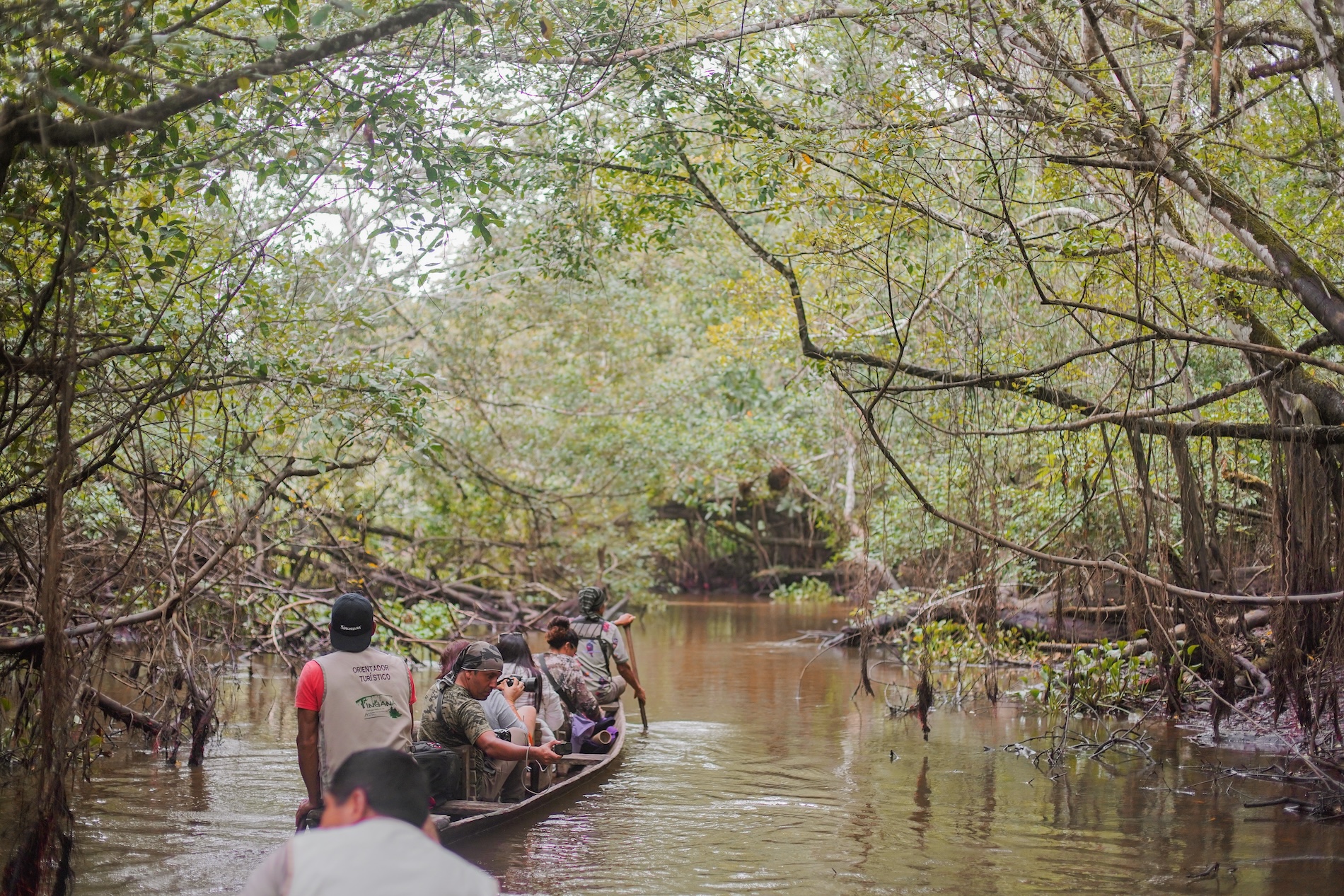
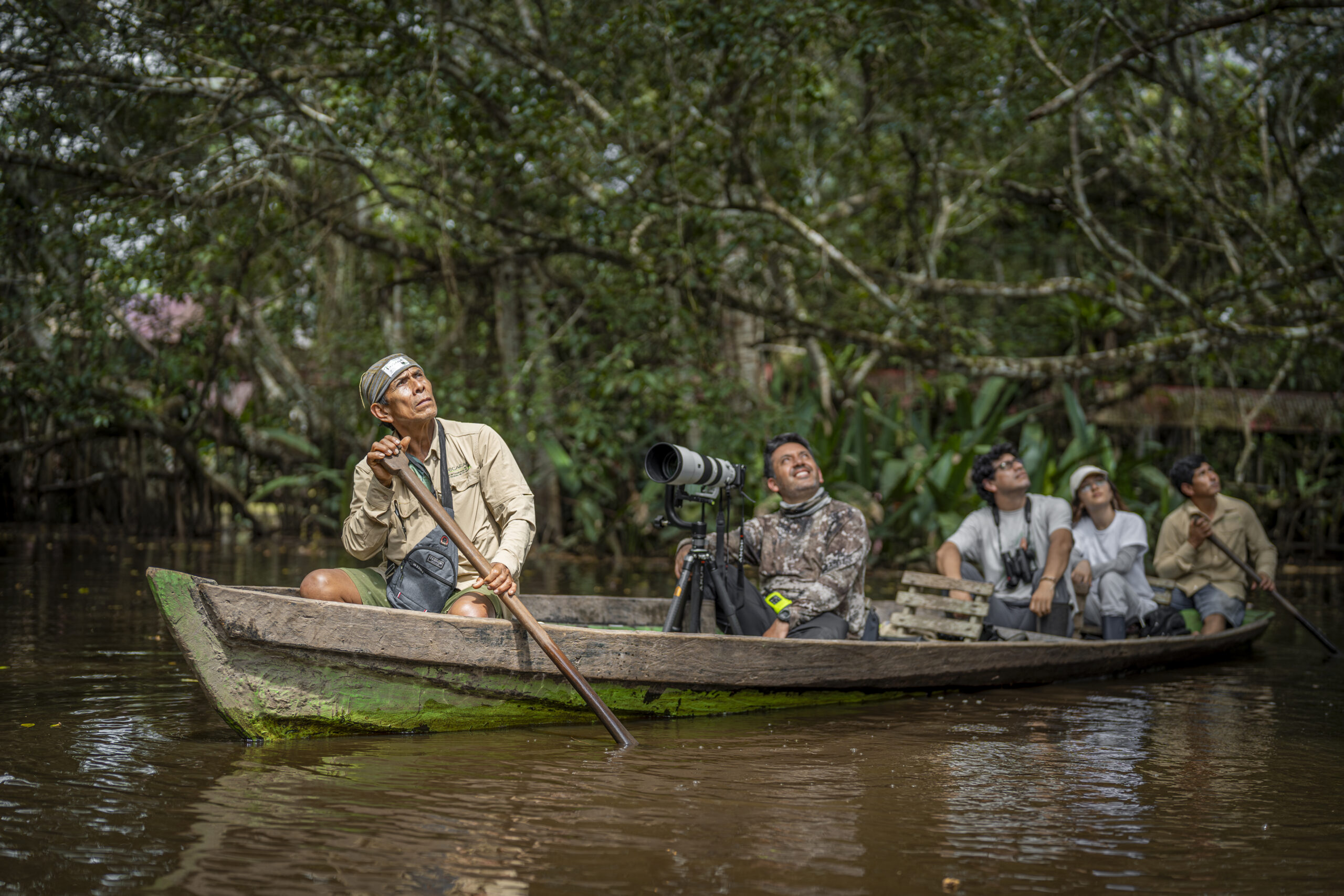
Tingana Experiences is the community-run ecotourism company, which arranges wildlife excursions for visitors.
“You see the monkeys jumping from branch to branch with you underneath,” said Daniela Amico, director of Conservation International Peru. “It’s a space where everything is very near, everything is very intimate, very beautiful. It’s a mosaic with a lot of pieces inside the same landscape of such a particular and valuable ecosystem.”
Amico said the use of camera traps has strengthened the work they do as a community.
“Every time a new species appears, they get encouraged to stay committed to doing this work,” she said. “The result is also that now the members are diversifying the type of service they offer tourists.”
This diversification includes the addition of tours of community life around Tingana, where tourists can visit farms where locals practice sustainable agriculture such as the cultivation of medicinal plants and orchids used to make vanilla, as well as beekeeping.
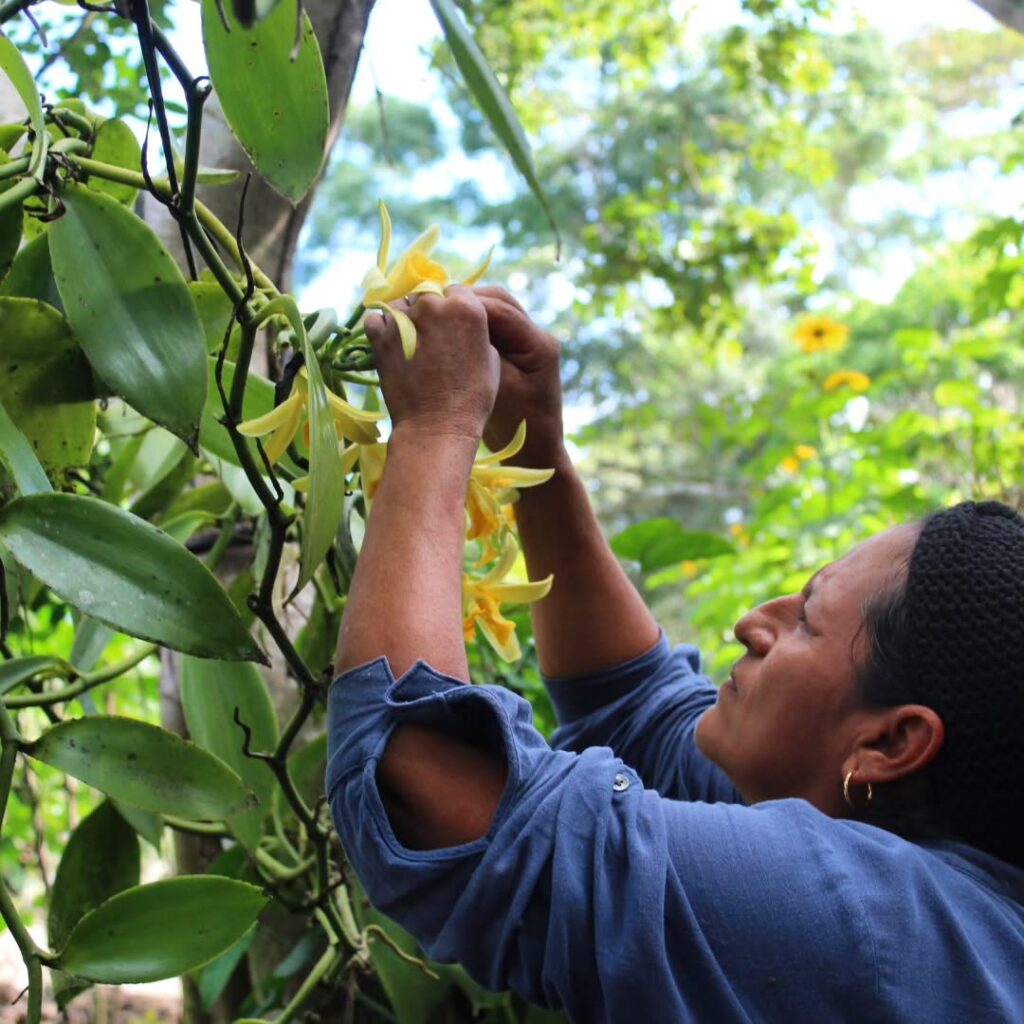
The women from the community sell traditional dishes and elaborate handicrafts, and visitors can purchase products made with locally grown vanilla, cacao, coffee and honey.
Eyes in the forest
The first time that camera traps recorded a jaguarundi in Tingana, the community was surprised. Tello said there’d been hints of their presence, but no definitive record of this feline that’s about twice the size of a housecat. That changed in 2024, when a camera trap snapped a photo of a distant, dark creature with a long body. After consulting biologists and placing a second camera in the same location, a video confirmed that jaguarundis prowl the Tingana Conservation Concession.
“When we captured it and I showed it, the members smiled,” Tello said. “They said, ‘Ah, finally! We had always heard it and thought that it existed. But now with the cameras we can really say that it does.’”
With more cameras came more surprises. In the same area where the jaguarundi was recorded Adecaram recorded a margay, another wildcat. They also recorded birds like the razor-billed curassow, which hadn’t been observed in the area in 40 years due to hunting, as well as an abundance of rodents like the black agouti (Dasyprocta fuliginosa) and lowland paca (Cuniculus paca).
Adecaram’s next camera trap goal is to recording a jaguar (Panthera onca).
“In February of 2022 we observed a jaguar after 20 years [without jaguar sightings in Tingana], so the members want to keep tracking it because we don’t know if it’s still in the area,” Tello said.
Members of Adecaram have also expressed interest in sharing their findings with the wider community by authoring a scientific article and publishing it in a national journal, Tello said. He added they also want to strengthen their environmental education programs and raise local awareness of Tingana’s biodiversity, particularly among area youth.
“We believe that we still need to dedicate a lot of effort to studying this camera-trap work,” Tello said. “We want to purchase many more cameras because the eight that we have are not enough for the 4,000 hectares [9,900 acres] of the reserve.”
Participating in citizen science
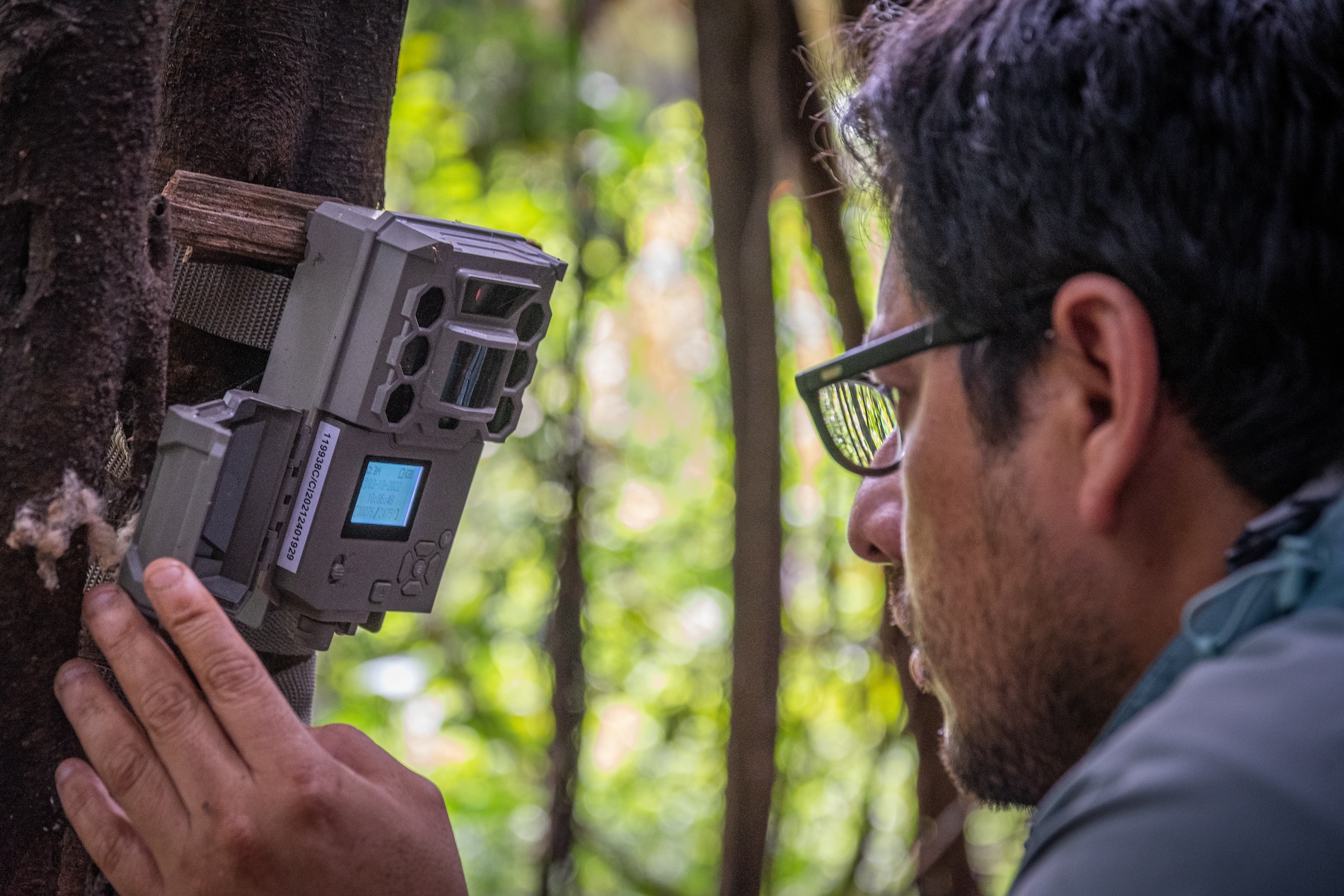
Tello told Mongabay Latam that there’s a palpable atmosphere of anticipation each time Adecaram members check the camera traps.
“There is always excitement when the cameras are installed and we wait 30 days to see what’s in there. When we come back to collect them, everyone pays attention to see what has appeared,” Tello said. “I think it’s a participatory activity that is very beautiful for the members.”
Now, Tello said, this excitement is being extended to visitors.
“There are trained members who go with the visitors, they install the cameras together, [then] we send them the images that their camera captured by email,” Tello said. “That way, they can share them on social media and tag the company. It’s a way of making them participate in citizen science and research so they can learn more about what we do here.”
But the work has its challenges. Project director Cabrera said most Adecaram members 50 and older, yet the future of the project depends on more young people joining.
“Generational replacement will be a determining factor for sustainability, and [young people] need to come with increasingly more skills,” he said. “I have cousins and nephews who study environmental engineering, industrial engineering or accounting. This will be the human resource that will make Adecaram last over time.”
Cabrera added that as a fourth-generation Tingana resident, his biggest hope is to see the wetland where he grew up continue to exist for future generations, as alive and robust as it’s been for his.
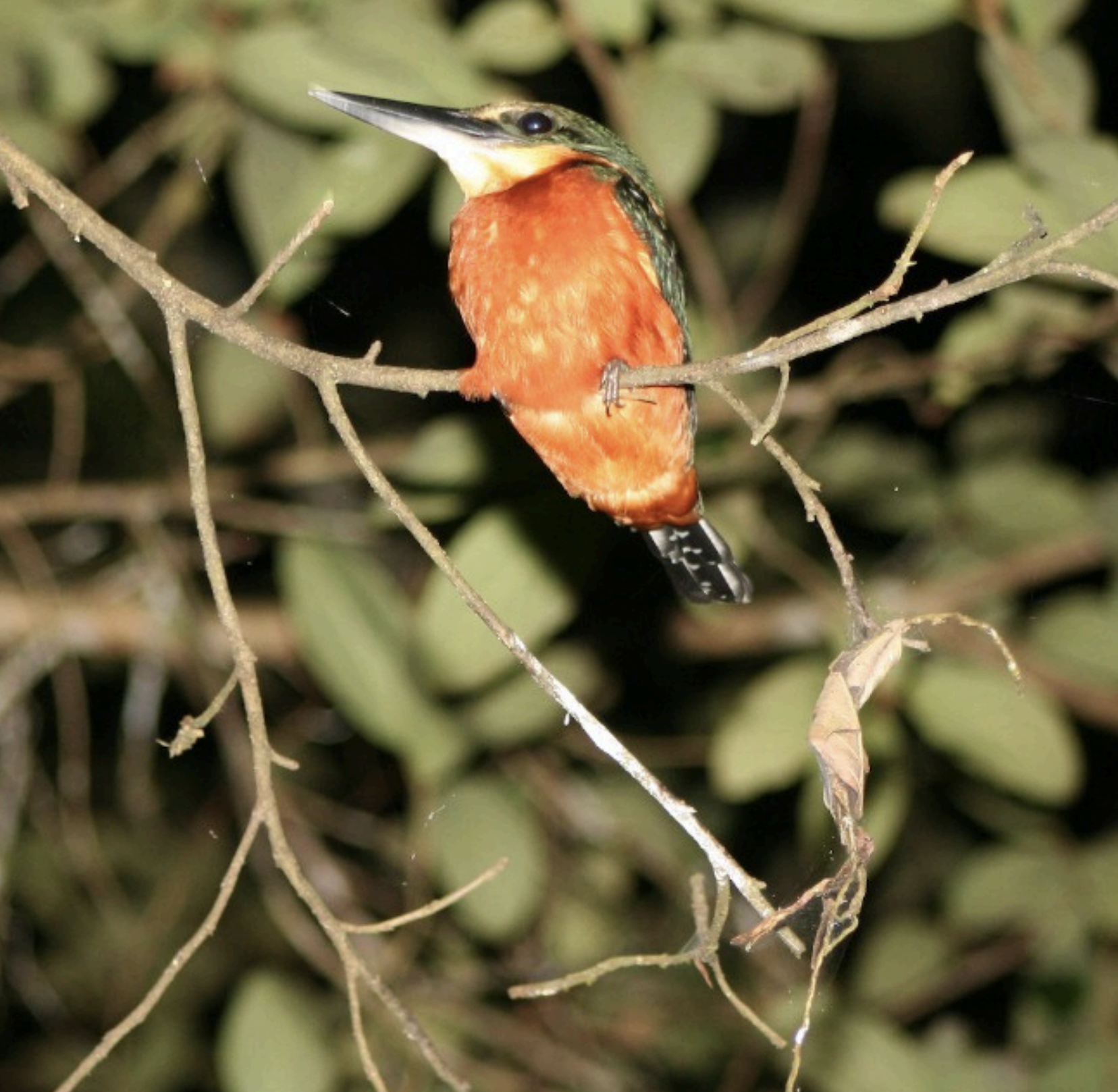
“The importance of this unique ecosystem is what moves us to preserve it,” Cabrera said. “Knowing that we have a technical team that supports us with project management sustains us and gives us hope. But, above all, because most of us are a family: we are from here, we live here, we are a part of the territory. We are Tinganians, and like the kingfisher or any other species, we will also always be here.”
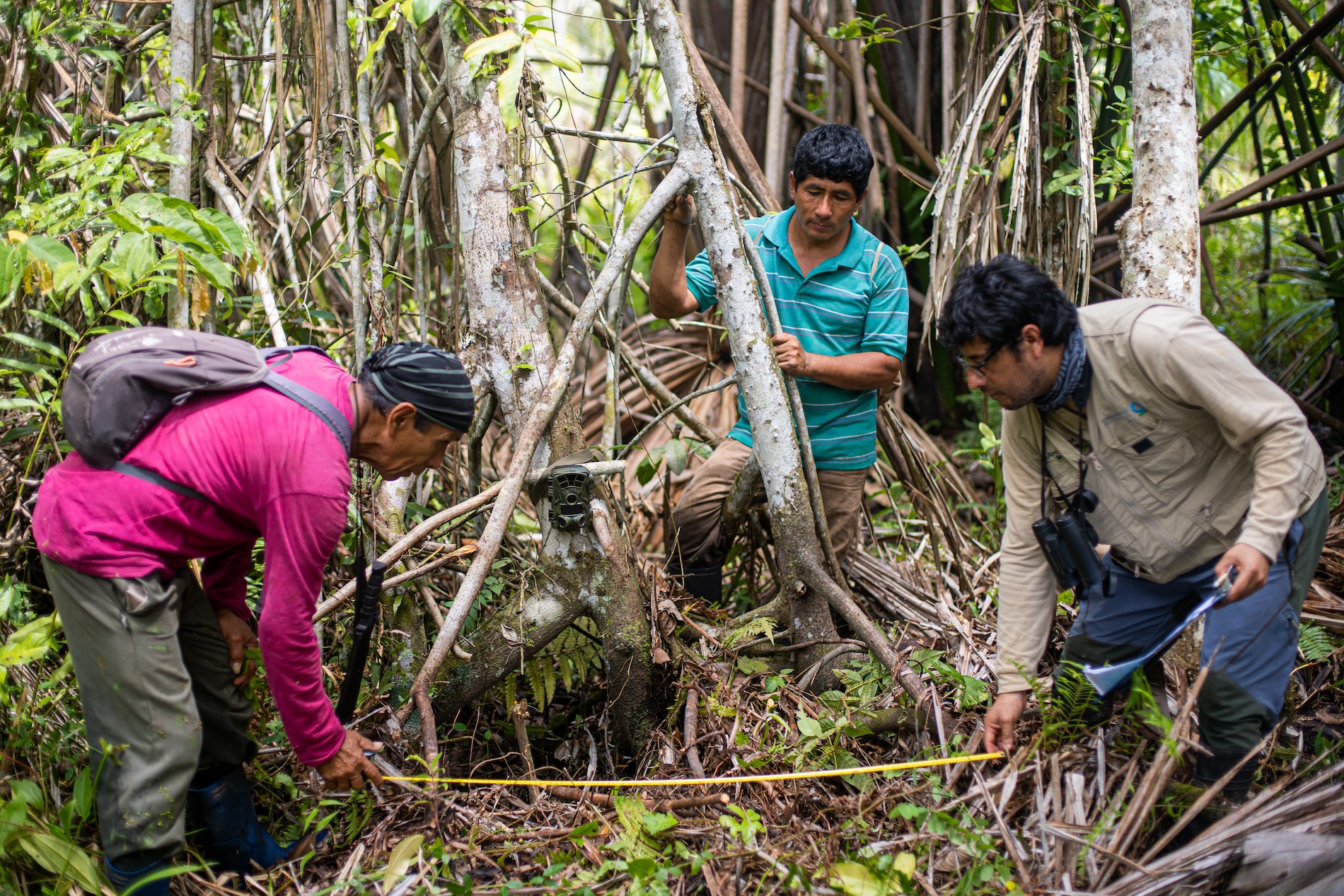
Banner image: Adecaram members install a camera trap to monitor biodiversity in the Tingana Conservation Concession. Image courtesy of Macoy Zapata.
This article was first published here• Community members in Alto Mayo, Peru, are protecting 4,000 hectares (nearly 10,000 acres) of unique wetland forest by combining sustainable ecotourism, scientific research and participatory management of the territory. in Spanish on Nov. 22, 2025
Credits

