 Skip to content
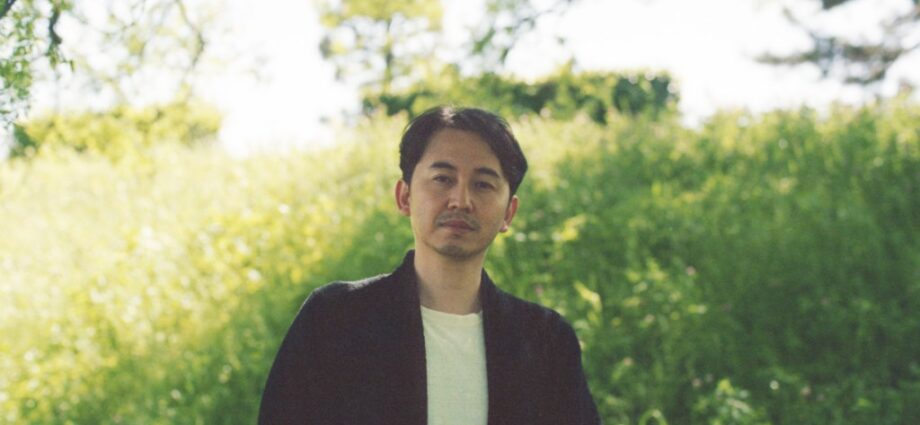
Billboard Japan spoke with composer Marihiko Hara, the composer of the score for the film KOKUHO, for its MONTHLY FEATURE series spotlighting artists and works currently worthy of note.
Explore

See latest videos, charts and news
KOKUHO has become a landmark in Japanese cinema history, earning over 20 billion yen ($125 million) at the box office to claim the all-time No. 1 spot among live-action Japanese films. At the 49th Japan Academy Film Prize held in March 2026, it swept 10 awards including Picture of the Year, with Hara himself taking home prizes in the Outstanding Achievement in Music and Theme Song categories. The film’s theme, “Luminance,” released under the name Marihiko Hara feat. Satoshi Iguchi, also charted on the Billboard Japan charts for an extended run, pointing to new possibilities in the relationship between film scores and theme songs.
Hara opened up about the creative process behind the music of KOKUHO, his influences from Ryuichi Sakamoto, what lies ahead in his career and more in this interview.
KOKUHO has become a truly major phenomenon. You won in the Outstanding Achievement in Music and Theme Song categories at the Japan Academy Film Prize — how are you feeling now?
Now that the Japan Academy Film Prize is behind me, there’s a sense that one chapter has closed. But honestly, a year ago before everything came together, I never imagined it would turn out like this. I still can’t quite believe it.
I imagine it’s also starting to sink in that you were part of a work that marks a turning point in Japanese film history.
That too, but what makes me happiest is that the music I made straightforwardly as my own has been received this way. The core of it hasn’t changed from anything I’ve done before. Of course I adapted to the scale of the film, but I never made something different from what I’d naturally make just to appeal to a wider audience. It’s music I can genuinely hold my head up and call my own, and being recognized for that is what I’m most grateful for.
KOKUHO marks your second collaboration with director Lee Sang-il, after The Wandering Moon. How did you go about beginning the work on the score?
When the offer came, I’d already read the novel it’s based on. KOKUHO centers on kabuki, but it wasn’t as though I started studying it when the offer came in — I’d actually been going to kabuki performances little by little since around 2014, over a decade earlier. I was genuinely hooked, seeing at least one production a month. I’d even had the chance to work at the Kabuki-za theater in Tokyo on Hideki Noda’s Noda-ban: Sakura no Mori no Mankai no Shita, so I wasn’t overly conscious of (that element of) kabuki itself. Rather, I’d given absolutely everything I had to [Lee’s] previous film, The Wandering Moon and had squeezed myself completely dry at that point, so there was a slight anxiety about whether I could write something even better next time, alongside a determination to do it.
Beyond kabuki, you’d already used traditional Japanese instruments on your 2020 album PASSION, so I imagine your interest and hands-on engagement with that territory predated this project.
Yes. The music I’d listened to over the years, like Toru Takemitsu and Ryuichi Sakamoto, naturally included instruments from outside the Western tradition, so my ear was already attuned to them. Also, my middle school had weekly lessons in noh chanting, and my grandmother played shamisen, so traditional Japanese instruments were part of my world from an early age. So it was less a case of wanting to “incorporate them into my music” and more of wanting to expand the palette of sounds that were mine. That’s why I’d been working in gagaku (traditional Japanese) instruments, and Persian instruments like the santur (a traditional Iranian trapezoidal hammered dulcimer) for some time.
And yet in the KOKUHO soundtrack, a Western instrument like the viola da gamba sits at the center, rather than traditional Japanese instruments. Where did that idea come from?
The only traditional Japanese instrument I added was the shakuhachi. I knew kabuki performances include hayashi music, so placing traditional Japanese instruments on top of that felt counterproductive, even nonsensical. KOKUHO isn’t a kabuki film, but a film about Kikuo’s life, so I felt there was no reason for Kikuo’s everyday world to carry that Japanese aesthetic. As for the viola da gamba, I’d already featured it in NODA·MAP’s Seisankakukankei and a documentary called Shika no Kuni, and each time there was a specific reason for that choice. In this case, I was thinking about a contemporary take on Takemitsu’s approach in Hiroshi Teshigahara’s film Rikyu, where he referenced music by Josquin des Prez, a Renaissance composer and contemporary of Sen no Rikyu. Rather than incorporating someone else’s music, I wanted to bring the sound of the viola da gamba — an instrument central to the era of 1603, when kabuki was born — into the present. That’s because I don’t think being possessed by “the demon of theater” is something unique to our time. There’s been something of that spirit lurking in theaters since the very beginning of kabuki, and I wanted to pull that into the present somehow. To do that, I felt the right approach wasn’t the sounds of the Edo period or of Japan per se, but something Western from that same era. The viola da gamba was something I had in mind right from the start.
In another interview, you mentioned that when you landed on that distinctive low boom of the viola da gamba, like a demon’s presence, it gave you a kind of foothold.
Right. I wrote an ascending phrase on the score for the player to perform, then processed it heavily, lowering the pitch considerably among other things. When that sound emerged, it connected to a strange experience I’d had in 2017 while doing a sound check at the Kabuki-za. I started feeling physically heavy, and when I said, “I’m not feeling so well,” the head of the hayashi musicians grinned at me and said, “You’ve received the Kabuki-za’s baptism.” That moment came back to me. There’s a scene in the film where Kikuo and Shunsuke look up at the stage and say, “It feels like someone’s watching.” I had a fleeting feeling that this sound might be that gaze. That gave me the confidence in the timbre, and I included it in my first demo. At that point there wasn’t even a main theme melody yet. Director Lee heard it and said, “This is really good, but it’s not possible to sustain three hours on just this, so we’ll need melody that works as film music, too.” I understood that, of course, but needed to present what I felt was the essential core of the sound first.
That seems to speak to both your interpretation of KOKUHO as a work and to your identity as an artist, someone who has always worked with both timbre and melody as twin axes. In that sense, it’s a particularly concentrated expression of your approach.
Of course I knew melody was necessary and intended to write it, but I didn’t have anything that could be called the KOKUHO melody at that stage. Timbre comes to me more naturally than melody, so I think I instinctively started from the sound and then worked my way toward the main theme. And then, as always, I agonized over the melody afterward.
How did the theme song “Luminance” come together?
We had residential work sessions in Kyoto, five days at a time, around forty days in total. By the third session or so, the main theme had taken shape, along with “Sagimusume” and a few pieces for key scenes in the middle of the film. After that, Director Lee raised the idea of a theme song as well. It wasn’t part of the original brief. I believe the conversation came up around the end of the year, and I had to have a demo ready by the new year, but it came together fairly naturally. There was also a request to use voice, and I had in mind something that existed somewhere between “voice” and “song.” I’d been deeply immersed in Kikuo at that point, so I thought of it as music that would set both of us free, and I was able to deliver it without too much struggle.
What are your thoughts on Satoru Iguchi’s singing?
I knew from the start that he would sing it, so I was already thinking with his voice in mind as I built the piece. I had absolutely no doubts because I knew it was going to be really good.
The lyrics were written by Miu Sakamoto. How did that come about?
I suggested that. The song has very few words, and the delivery is somewhere between breath and singing. Miu-san and I have worked together before. A lot of her own work is vocalise, pieces without lyrics or with very sparse ones. Her words are extremely simple, but when they’re set to melody, they suddenly shine. That was why I thought she was the right person.
You must have a close connection to Miu Sakamoto.
I’d known of her since her debut and had listened to her albums, but we actually didn’t meet until after (her father, Ryuichi) Sakamoto-san passed away. We’d been aware of each other all along but never had the chance to meet. Once we finally decided to, we ended up seeing each other three to five times in a single week — for radio, concerts, dinner — and from there we started working together a great deal. The fact that it happened after Sakamoto-san’s passing is… hard to put into words, but I feel like that’s just how it was meant to be. We were both shaped by Ryuichi Sakamoto’s music from our teenage years, separately and in different ways, so there’s something between us like siblings, or distant relatives.
You’ve been deeply shaped by Ryuichi Sakamoto, while Miu Sakamoto has followed her own path in music as his daughter. It struck me that there’s something in that relationship that echoes Kikuo and Shunsuke in the film.
I hadn’t thought of it that way at all — it gave me a jolt to hear it. But that’s exactly what it means to have been as immersed in Kikuo as I was. Even working with many different musicians, there are moments when I think, “This person is a born musician,” that they’re someone who has music flowing through their body. I don’t feel that way about myself. I feel like I’m always in pursuit of music.
Finally, looking ahead, what would you like to pursue or try at this stage of your career?
I want to keep working on films, and I’d love to work with directors from outside Japan as well. My most recent solo album is PASSION from 2020, so I’d like to finish a new one this year. I’m also getting invitations to do concerts, so I want to put energy into performing. I’d also like to work on essays, and acoustic architectural spaces that don’t use electricity.
—This interview by Tomonori Shiba first appeared on Billboard Japan
