 Skip to content
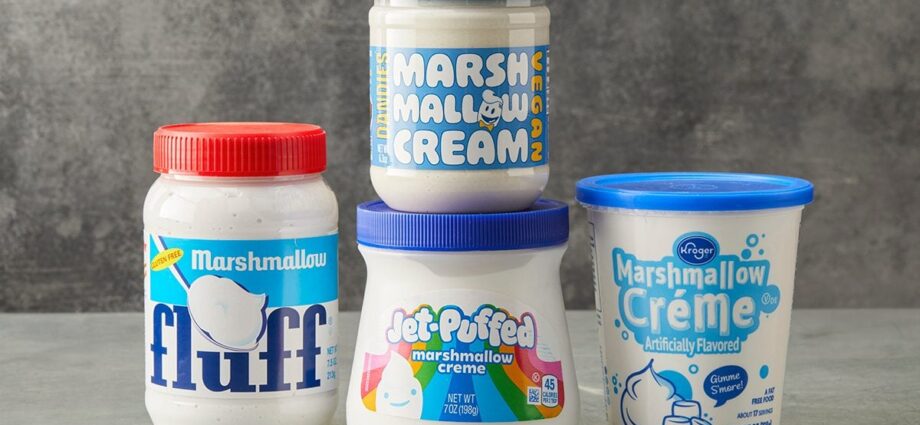


Do the small variations between marshmallow creme versus Fluff make a difference in your recipes? We tasted four brands to find out.
I had a lot of food allergies as a kid, including nuts and red food coloring, but marshmallows were safe. And I loved the squidgy, bouncy consistency right out of the bag and the soft, stretchy texture once melted. Yet, marshmallow creme wasn’t something I tried until college, when my Massachusetts-born roommate offered to make me a Fluffernutter sandwich after a long day of classes. A whole new level of marshmallow love was unlocked as the soft bread, sticky-sweet marshmallow spread and salty peanut butter soothed my overstimulated mind.
But the question is: How much of a difference does it make in your marshmallow creme recipes if you buy marshmallow creme versus Marshmallow Fluff? To get into the sticky, nitty-gritty details, a Test Kitchen taste test was in order.
What’s the difference between marshmallow creme and Fluff?

Most people use Marshmallow Fluff and marshmallow creme interchangeably when referring to the spreadable confection, but there are differences beyond the name. Marshmallow Fluff was the first brand of marshmallow creme, sold by the Durkee-Mower Company of Somerville, Massachusetts, in the early 1900s. It’s made with just four ingredients (corn syrup, sugar syrup, dried egg whites and artificial flavors), which the company says haven’t changed in over 100 years. Marshmallow creme usually includes the same ingredients but also has stabilizers, like cream of tartar or xanthan gum, which help it become voluminous and thick.
Whether you go with the infamous Fluff or another brand of marshmallow creme, the sticky confection feels like a marshmallow’s more relaxed, dare I say cooler, cousin. There is a lot of ingredient overlap between the confection and actual marshmallows, but it’s the addition of gelatin (or a plant-based gelling ingredient such as carrageenan in vegan marshmallows) that gives marshmallows their firm texture. Because marshmallow creme doesn’t contain gelatin, it remains more fluid like a meringue, but without the stiff peaks.
Our Marshmallow Creme Tasting Selections
We wanted to find out if the addition of stabilizers affected marshmallow creme’s texture and consistency, so we sampled a mix of brands with and without stabilizers, including Marshmallow Fluff, Jet-Puffed, a generic Kroger brand and Dandies, a plant-based version made without egg whites. All the brands tasted as expected—sugary sweet with distinct vanilla notes—so the distinctions mainly came down to which brands were more suitable for specific recipes.
Our Testing Panel
- Allison Cebulla, Culinary Producer
- Monica Ganos, Culinary Assistant
- Catherine Ward, Prep Kitchen Manager
Best for Sandwiches, Dips and No-Bake Desserts: Marshmallow Fluff

Marshmallow Fluff’s bright red lid makes it easy to spot on shelves, and it stands out from other brands because it doesn’t contain any cream of tartar or xanthan gum. Our tasters thought it was firm and dense rather than airy, but the chewy texture gave it a homemade vibe. Catherine said its glossy sheen and tiny air pockets reminded her of taffy (although it wasn’t very stretchy, breaking when pulled rather than forming long threads).
All tasters agreed it would shine in recipes where the Fluff doesn’t need to hold its shape, as in a creamy hot chocolate dip, marshmallow fruit dip or marshmallow ice cream topping. In a no-bake dessert, like strawberry pretzel pie, the gelatin and whipped cream would keep the soft Fluff from slumping. The texture would also be wonderful warmed up or toasted until soft and melty, as is done with the blanket of marshmallow on marshmallow creme baked sweet potatoes.
Of course, you can’t mention Marshmallow Fluff without also mentioning a Fluffernutter sandwich. Nancy Mock, a Taste of Home Community Cook and New Englander who grew up with it, says that the sandwich was actually created by a competing marshmallow creme company. Of course, it was Marshmallow Fluff that made it famous. “Durkee-Mower coined the name Fluffernutter in the ’60s and widely promoted the creation,” she says. The rest is history!
Best for Fudge, Frosting and Beverages: Jet-Puffed Marshmallow Creme

This thick marshmallow creme has both cream of tartar and xanthan gum, giving it an airy texture and thick consistency. Tasters noted it was thick enough to hold its shape, as it could create a domed shape on a spoon. It was also stretchy, which Catherine thought would be great for making spider web designs on cookies or cakes.
The thickness did make it harder to spread, so our tasters didn’t think this was the best option for a sandwich, but the added structure would make it a fantastic option for fudge or frosting recipes, like chocolate cake with marshmallow creme frosting and s’mores cupcakes. This option won’t easily deflate or become runny, so it’s also great for swirling into Fluffernutter brownies, whipping into a creamy topping for Butterbeer, or painting inside a glass for a fluffy soda or ghostly iced latte.
Best for Vegan Baking: Dandies Vegan Marshmallow Cream

As a vegan spread, Dandies is made without egg whites, which is what gives most marshmallow creme brands added structure and lift. Instead, this spread uses tapioca syrup, starch and potato protein to imitate the texture of the classic confection. The first thing our tasters noticed was that it’s not as smooth as expected, having some graininess where they expected a silken texture. It was also sticky and very thick, so not the best option for fluffy applications.
It would be a great option for vegan fudge or vegan hot chocolate, although the tasters did comment that it was a little sweeter than normal. Catherine suggested using it as a filling for thumbprint cookies or oatmeal sandwich cookies, where the thickness is an asset when you don’t want a runny texture. It’s also a good option for pairing with savory or salty ingredients, like a natural peanut butter, to balance out that extra sweetness.
Tips for Using Marshmallow Creme
- Lightly grease measuring cups and spoons: Just like honey or corn syrup, this stuff is sticky, so getting it out of a measuring cup without leaving a bunch behind can be tricky. A light rub of a neutral oil inside the cups will help the marshmallow creme spill out.
- Skip the refrigerator: Marshmallow creme is best stored in a a cool pantry. Too much heat and it can melt. The cold of a refrigerator will make it firm and hard to scoop out. If you do need to refrigerate it, let it warm at room temperature before scooping.
- Buy the size to match your needs: Any marshmallow creme will gently deflate over time, so I aim to buy and open the size jar that fits my needs. If I want to drop spoonfuls into my hot cocoa or drizzle it over a baked sweet potato, I’ll open a smaller jar, but if I’m making a tray of fudge or marshmallow-topped brownies, it’s time to grab the big container.
