 Skip to content
Get the Popular Science daily newsletter💡
Breakthroughs, discoveries, and DIY tips sent every weekday.
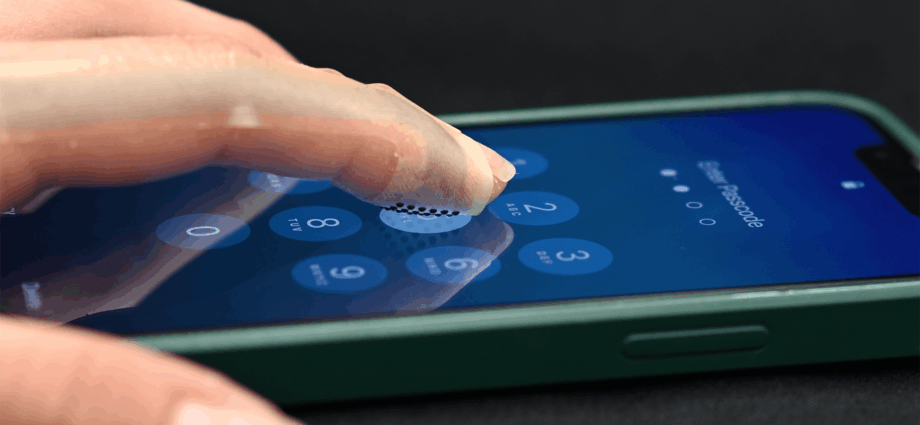
A time traveler visiting from an earlier era might reasonably conclude that humanity has entered the age of cyborgs and cybernetics. Pedestrians regularly walk down city streets with tiny computers in their hands and even smaller digital devices shoved in their ear canals. Virtual reality headsets, though still bulky, can transport users into convincingly realistic digital versions of far away museums and long past historical events. And yet, despite all this technology, people today still can’t really feel what it’s like to touch objects in their digital worlds.
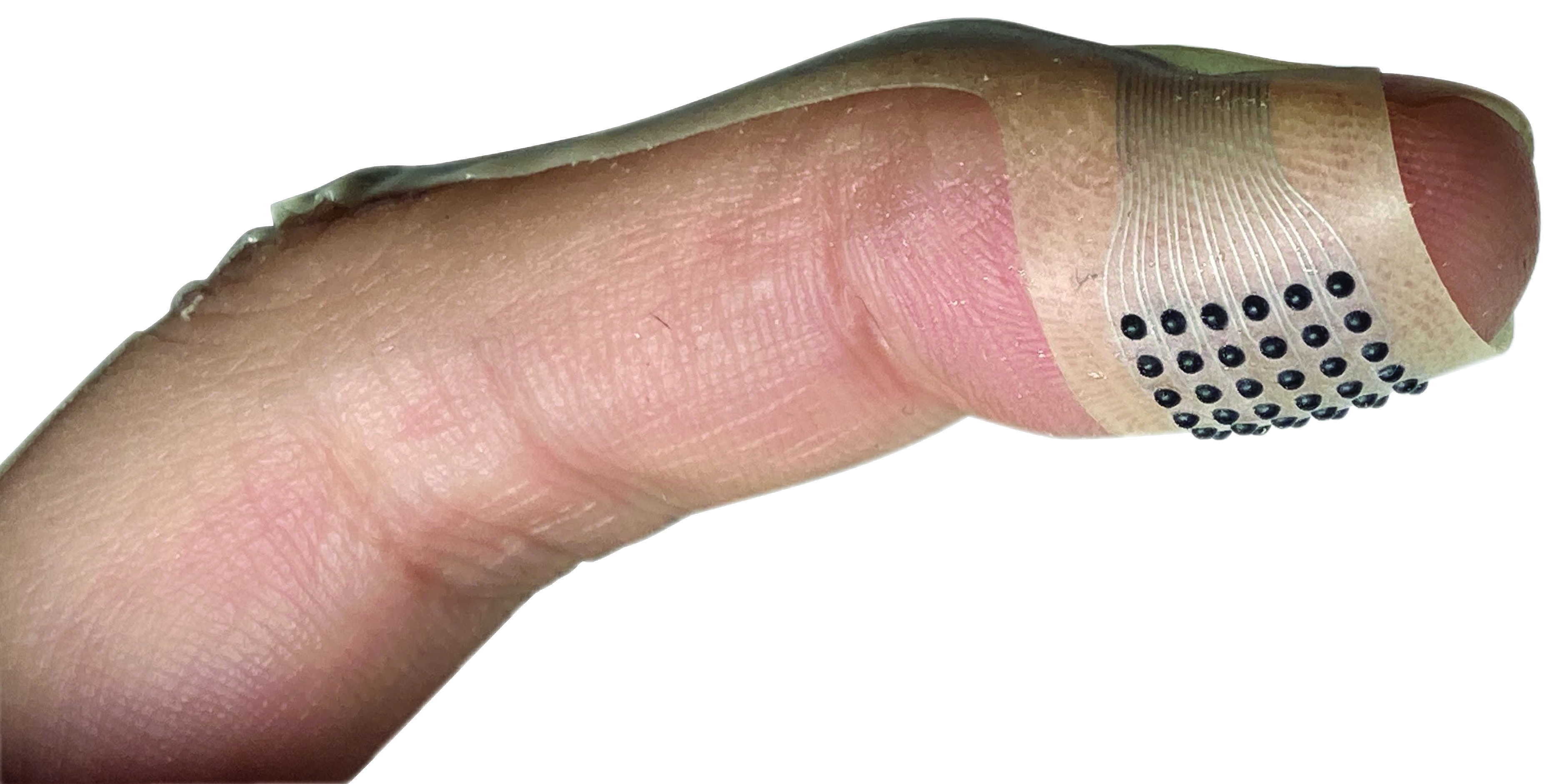
A team of engineers from Northwestern University is trying to change that with the introduction of a new bandage-like finger wearable. The ultrathin haptic device called VoxeLite wraps around a user’s finger (any finger will work) and sends electric pulses through a grid of round nodes that function like a computer screen’s pixels for the sensation of touch. According to the team, the result is a device capable of adding physical sensations of touch and feel to digital experiences. Additionally, trial participants reportedly experienced “human resolution” in digital spaces.
Smartphone users wearing VoxeLite could theoretically scroll over a sweater on Instagram and feel the texture of the fabric. Gamers in virtual reality could also use the wearable to sense the tightening tension of a bowstring or the slick surface of a well-lacquered doorknob. The finger wearables open more practical doors as well. In theory, the added sensation of touch in virtual worlds could help people with visual impairments navigate apps more easily. Details of the device are described this week in a study published in the journal Science Advances.
“I’m most excited to see what entirely new forms of digital communication, interaction, and experience we can create together once we have access to a new sensing modality.” Northwestern PhD student Sylvia Tan tells Popular Science. “The examples in the paper are things we can easily imagine, but to me those are just the starting points. Just as advances in visual and audio technologies reshaped our day-to-day lives, I’m excited to see how advancements in touch will transform it further.”
Digital tough lags behind sight and sound
Digital audio and visual realism have advanced rapidly in recent decades, but the same can’t be said for so-called digital touch. With only a few scattered exceptions, the sense of touch when interacting with the digital world still relies almost exclusively on varying levels of vibration. That works well enough for certain applications, but it pales in comparison to the nuance and richness the human finger experiences when touching objects in the physical world. Researchers call this sensation the skin’s temporal resolution. Modern vibration-based technology, by contrast, has a low spatial resolution—so low, in fact, that it could be compared to watching jittery old movies with extremely low frame rates.
“Despite its central role in how we perceive, navigate, and connect with the world, we lack a meaningful way to create realistic digital touch,” researchers write in the paper.
To get critical touch closer to the real thing, researchers had to rethink how the device would fundamentally work. They created a grid of tiny nodes positioned 1.6 millimeters apart directly beneath a user’s fingertip. Each node consists of a soft rubber dome with a conductive outer layer and an electrode inside.
When a slight voltage is applied, the nodes generate electroadhesion, the same effect that makes a balloon stick to a wall after it’s been rubbed. To the user, this translates into a sensation of friction or gripping sensation. Higher voltages create the feeling of rougher surfaces. Together, these nodes, referred to by the team as pixels of touch, combine to produce complex illusions of texture and physical sensation.
Spacing the nodes at the right distance was particularly challenging. If they’re too close together, the body can’t distinguish one from another. Too far apart, and the device won’t register enough sensation to feel realistic.
“The largest challenges and trade-offs we had were purely from fabrication challenges,” Tan says. “Our current methods allow us to reach 1 mm spacings, but any smaller would require the use of high-precision machines that we currently do not have access to.”
VoxeLite: An always on finger glove
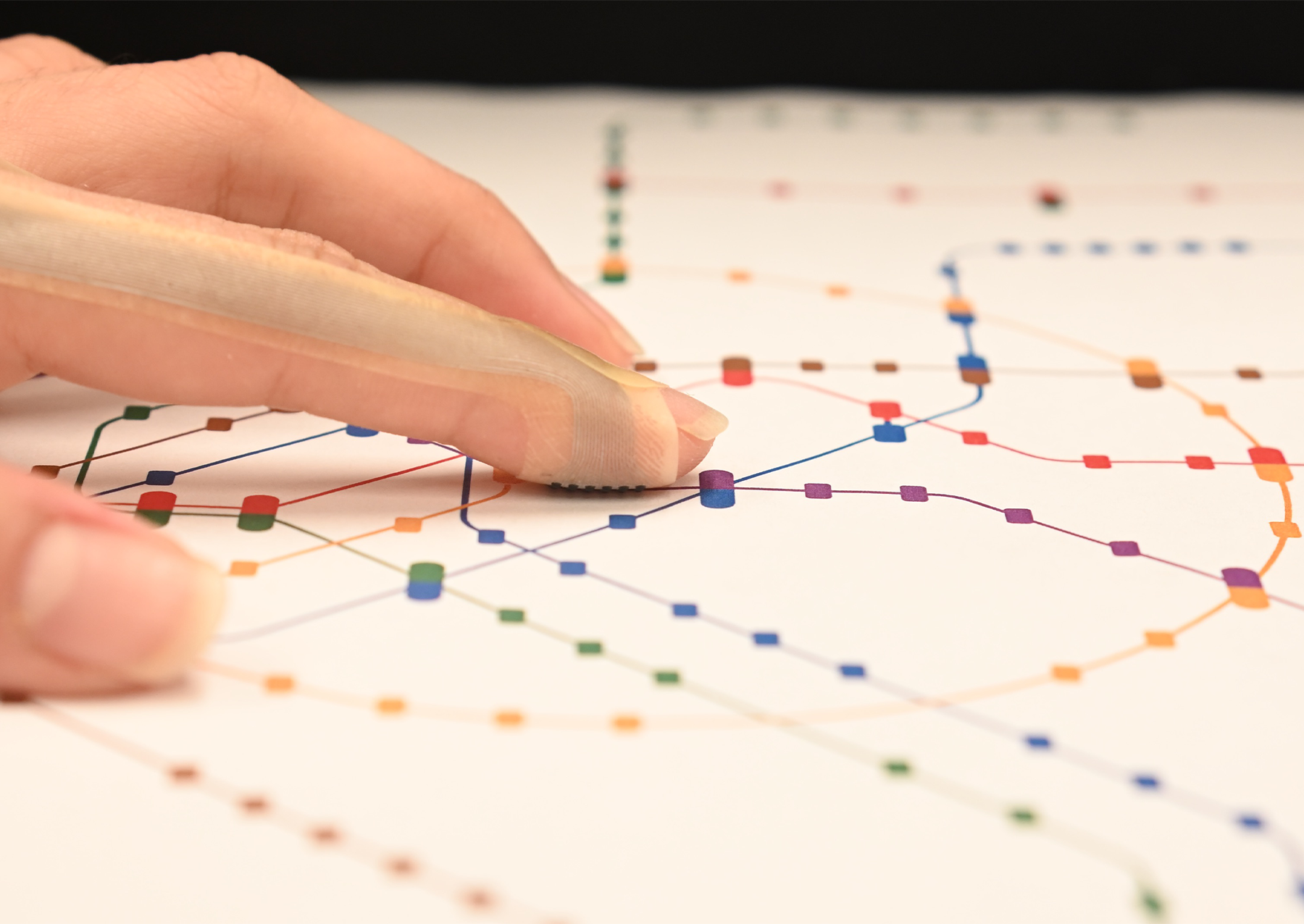
The device’s form factor is intentionally light, weighing less than an ounce or gram. The researchers who designed it say that they wanted a wearable that is “haptically transparent,” meaning a person doesn’t need to remove it while interacting with the physical world. In theory, someone could slip on their VoxeLite and go about their day normally, with the option of experiencing digital touch at any time. The device is also thin enough to avoid distracting users while they complete other tasks. Tan says that they ideally envision the device functioning similarly to eyeglasses, which people wear throughout the day.
So far, the finger wearable appears to be working as intended. In a pair of experiments, study participants were asked to slip on the VoxeLite and identify different sensations of direction. When asked to distinguish up, down, left, and right, participants wearing the device answered correctly 87 percent of the time. In a separate test, participants were asked to identify fabric textures such as leather, corduroy, and terry cloth, and they answered correctly 81 percent of the time.
“These findings position VoxeLite as a platform for human-resolution haptics in immersive interfaces, robotics, and digital touch communication,” the researchers write in the paper.
The wearable is still in its early stages, and likely won’t be shipping as a phone accessory anytime soon. Eventually, the team hopes to develop a system that works on multiple fingers simultaneously, but that will require “optimized routing architectures and alternative fabrication strategies” that are not yet in place. It’s also unclear how even a single-finger wearable will perform after extended use in real-world environments, where it could be exposed to,, dirt, debris or other variables that might cause damage. One variable it does seem to fair well against is moisture. Tan says they didn’t experience issues with sweat exposure. In cases where the device gets totally submerged in water Tan said the device will work again after being air-dried.
Still, the findings point to a possible future where interacting with digital environments may feel noticeably more realistic and personal. The blurred line between person and machine keeps getting hazier.

2025 Holiday Gift Guide
Don’t settle for a gift card again this year. Our list of editor-approved gifts suit every personality and budget.
