 Skip to content
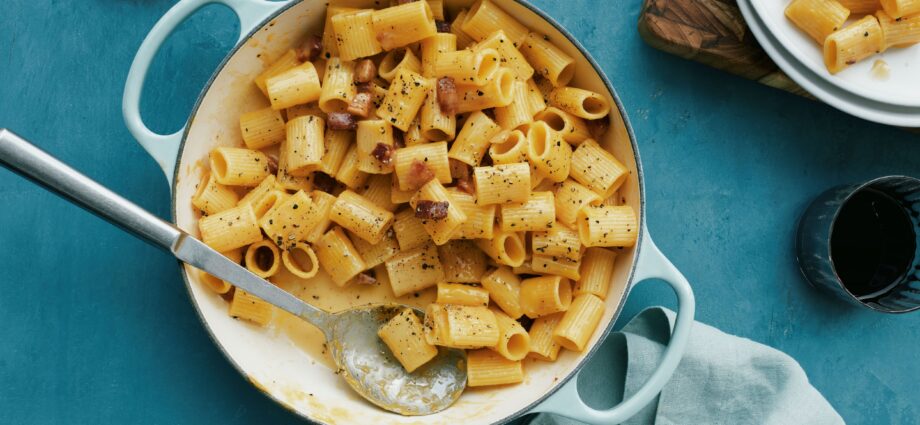
There’s no debating pasta carbonara’s standing in the pantheon of Italian pasta recipes. A Roman classic, its glossy sauce is built from eggs, hard cheese, cured pork, and black pepper—no cream required. This version relies on egg yolks, finely grated Parmesan cheese, rendered pancetta fat, and starchy pasta water—nothing more.
As the pancetta cooks, its savory, aromatic drippings become the backbone of the dish, while a generous amount of freshly ground black pepper keeps the richness in check. The key is timing. The eggs and cheese are whisked together off heat, then gently tossed with hot pasta until silky and emulsified, never scrambled. Traditionalists can swap pancetta for guanciale or Parmesan for Pecorino Romano, but the result remains the same: a spare but luxurious, deeply satisfying pasta carbonara that’s ready in about 25 minutes.
Tips & FAQs for the best pasta carbonara
- How do you keep pasta carbonara from scrambling?
Use low heat and constant motion. Temper the eggs with warm pasta water, then toss everything together just until the sauce turns glossy. - What pasta shape works best?
We like big tubes of mezze rigatoni, but you could use conchiglie (shell-shaped pasta), cavatappi (spiraled pasta tubes), pipe rigate (snail-shell pasta), or any medium shape that traps the sauce and catches bits of pancetta. Want to use long pasta? Look to this recipe for Spaghetti Carbonara. - Is cream traditional in pasta carbonara?
No. Carbonara’s richness comes from the emulsification of eggs, cheese, pork fat, and pasta water—not cream. - Pancetta vs. guanciale:
Guanciale is the traditional choice for carbonara and has a richer, spicier flavor, but milder pancetta is widely used, easier to find in American grocery stores, and works beautifully. You can also use thick-cut American bacon, but note the flavor will be quite different, as these Italian cured pork products are not smoked. Want a version without pork? Try mushroom carbonara. - Why so much black pepper?
Carbonara is sometimes called “cacio e pepe with pork” for a reason; the pepper cuts through the richness and ties everything together. - Can you make carbonara ahead?
Not really. Carbonara is at its best the moment it’s finished.
