 Skip to content
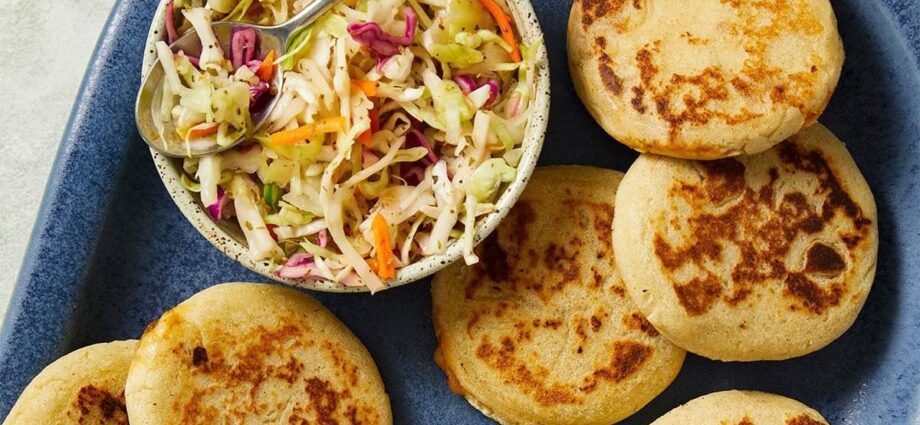

These Salvadoran pupusas are filled with chorizo, beans and cheese, and are served with curtido, a pickled cabbage slaw.
Of my California memories, my weekly visits to the Hollywood Farmers Market are among my most beloved. For years, after hitting my favorite stalls for fresh greens, berries, stone fruit, tomatoes and almonds, I would stop at the Delmy’s Pupusas stand for lunch. I’d order a chicken and cheese pupusa, and the woman who served them (always with a smile!) would ask if I wanted “everything.” It was always a yes: a hot pupusa straight from the griddle with salsa, a dollop of sour cream, and a pile of spicy pickled slaw called curtido. A watermelon agua fresca to go with it was mandatory. The Salvadoran corn cakes were hearty and delicious—just the thing to fuel the rest of my day.
I wish I still lived near that market, or that that woman were my auntie so I could have all her cooking secrets. While I no longer live in California, pupusas are one of my all-time favorite dishes. I’ve found great ones at Salvadoran restaurants near my home, but having a solid pupusa recipe like this means I can make them myself whenever I want.
This recipe from Community Cook Kristyne McDougle Walter includes a chorizo, bean and green chile filling that’s savory with a hint of spice. The pupusas require a little prep, but it’s always worth it. Make and freeze extra; they’re a perfect make-ahead meal for busy weeknights.
What are pupusas?
A popular street food in El Salvador, pupusas are thick, round, flattened corn cakes stuffed with meats, cheeses, vegetables, beans or seafood. They’re cooked on a griddle like a pancake, with each side browning as the fillings heat up (and melt, if there’s cheese). The best accompaniments to pupusas are homemade salsa roja, sour cream and a few slices of avocado. But the curtido is an absolute must. The spicy, vinegary relish-slaw hybrid tastes good with and on just about anything.
Pupusas are made with masa harina, a finely ground flour made from nixtamalized corn (it’s also the main ingredient in corn tortillas, tamales, gorditas and sopes). Masa harina has a different texture and flavor from basic cornmeal, which is simply dried and ground corn—and the two generally aren’t interchangeable. Pupusas are sometimes compared to their Venezuelan cousins, arepas, but arepas aren’t made with masa harina, and more closely resemble a sandwich than a stuffed corn cake.
Ingredients for Pupusas with Curtido
- Pupusa dough: Masa harina is the key ingredient in pupusas. It can be easily found in most grocery stores; look for it near other Latin American goods. Pupusa dough also includes all-purpose flour, melted shortening (optional), and salt. Warm water brings it all together.
- Filling: The pupusa filling for this recipe includes ground chorizo, chopped onion, refried beans, canned green chiles and shredded mozzarella. Ground chorizo can usually be found near refrigerated bulk sausage meats; don’t confuse it with the cured, dried Spanish chorizo that resembles salami.
- Curtido: Curtido is generally made by quick-pickling cabbage and other vegetables. Keep this one simple by using coleslaw mix, cider vinegar, sugar, dried oregano, salt and pepper.
How to Make Pupusas with Curtido
Step 1: Make the dough

In a large bowl, whisk together the masa harina, flour and salt. Gradually add warm water and melted shortening, if you’re using it.

Knead the dough until a ball forms. Cover and refrigerate it for 30 minutes.
Editor’s Tip: The ideal masa should be soft, smooth and easy to shape without sticking. If the dough cracks as you handle it, it’s too dry. If it sticks excessively to your hands, it’s too wet.
Step 2: Make the curtido

Meanwhile, in a large bowl, cover the coleslaw with boiling water.

Let it stand for two minutes, then strain it and discard the water. Add the vinegar, sugar, oregano, salt and pepper, and toss to combine. Cover and refrigerate the curtido until you’re ready to serve it.
Step 3: Make the filling

In a large skillet, cook the chorizo and onions over medium heat until the chorizo is cooked through, four to six minutes. Add the refried beans and green chiles, stirring until combined. Remove the filling from the heat.
Step 4: Construct the pupusas

Divide the dough into 16 portions. Roll each portion between two pieces of waxed paper.

Place 1 to 2 tablespoons of filling in the center, topped with a pinch of cheese. Fold the edges over and pinch to seal the filling inside.
Editor’s Tip: You can also use lightly oiled hands to flatten the dough into a circle, fill it with meat and cheese, and wrap the sides around the filling. The dough shouldn’t be rolled out super thin; you need about 1/4 to 1/2-inch depth on the bottom to hold the filling, and enough dough to fold around it. You should have an even thickness of dough around the filling. Once filled, pupusas should be flattened a bit before hitting the griddle; think potato pancake, not tortilla.
Step 5: Cook the pupusas

Heat a flat skillet or griddle (preferably made of cast iron) until it’s hot. Do not grease the pan. Once it’s hot, place the flattened pupusas, in batches, on the griddle. Cook them for three minutes then flip them. Continue cooking them for another two minutes. Remove the cooked pupusas to a serving dish and repeat with the remaining pupusas. Serve them immediately with the curtido.
Editor’s Tip: If the pupusas are sticking to the griddle, swipe a small amount of oil onto the griddle with a paper towel.

Pupusas Variations
- Make other meat fillings: Instead of chorizo, combine cooked shredded chicken with the beans, or just make chicken and cheese pupusas. You can use ground beef, ground turkey, shredded beef or pulled pork instead of chorizo.
- Make veggie pupusas: Fill these with any vegetable you love, including cooked diced zucchini, squash, sweet potato, carrots, asparagus, mushrooms and spinach.
- Go traditional: Classic Salvadoran fillings include chicharron (fried pork belly or rinds), loroco flower buds, and queso duro or queso fresco. Look for loroco buds, usually frozen or in brine, in Latin American markets or any international market with a good Central American selection.
- Unstuff them: Plain pupusas are delicious, especially with salsa and curtido. You can even put the meats, beans and other fillings on top.
How to Store Pupusas with Curtido
Leftover pupusas will last up to four days in an airtight container in the refrigerator.
Can you freeze pupusas?
Pupusas freeze well, cooked or uncooked. However, cooked ones are easier to reheat. Once cooled, set the pupusas in a single layer on a baking sheet and freeze them until they’re solid. Store the frozen pupusas in an airtight container or freezer-safe bag for up to three months.
How do you reheat pupusas?
Reheat pupusas in a hot skillet on the stovetop for three to five minutes per side, or until they’re warmed through. Pop them in a 350°F oven for 10 to 15 minutes, or in an air fryer for five to seven minutes. You can reheat frozen pupusas from frozen, but they’ll cook faster if you thaw them in the refrigerator first. A microwave works in a pinch to reheat pupusas, but the texture will be softer.
Pupusa Tips

How do you prevent pupusas from cracking?
The key to preventing pupusas from cracking is making sure the masa is properly hydrated. If the dough cracks around the edges as you shape it, it’s likely too dry. Mix in 1 to 2 tablespoons of water at a time until the dough feels soft, smooth and pliable. Keep your hands lightly damp while shaping the pupusas, and gently press the dough around the filling to seal it before flattening it.
Can I use cornmeal instead of masa harina for pupusas?
No, cornmeal is not interchangeable with masa harina for pupusas and similar recipes. While both are made from corn, masa harina is made from nixtamalized corn (corn treated with lime), which gives it the right texture and flavor to form a soft, pliable dough. Cornmeal is simply ground dried corn and won’t bind with water the same way, so the pupusas made with cornmeal may crack, crumble or fail to hold their shape.
How should you serve pupusas?
Pupusas are a traditional street food, so keep it casual. You can use a knife and fork, but eating them with your hands is perfectly acceptable! Serve pupusas with your favorite salsa recipe, with sour cream and sliced avocado on the side. And be sure to have a big serving of curtido. Make them the main part of a meal with a side of black beans and rice and soft, sweet fried plantains.
