 Skip to content
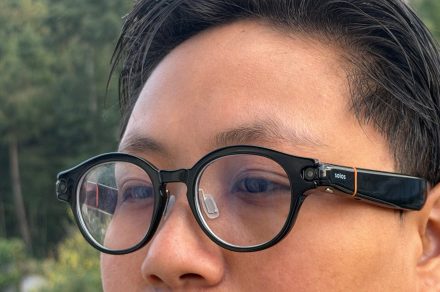
Meta’s camera glasses are under fire over disturbing privacy allegations.

Nadeem Sarwar / Digital Trends
US Senators Ron Wyden and Edward Markey have sent Mark Zuckerberg a rather scathing letter over Meta’s camera glasses. They’ve accused the company of launching a product “tailor-made for invading the privacy of its users and bystanders.” And looking at the incidents they cite, it’s not hard to understand why. Meta has until November 25 to respond.
Meta knew about the risks before launching its glasses
According to the senators, Meta’s own human rights assessment identified risks to women, children, and other vulnerable people back in 2021, before its first Ray-Ban glasses went on sale. The company went ahead anyway. The examples in their press release are disturbing. In 2025, 404 Media reported on men secretly filming women while soliciting sexual services, with the recordings eventually reaching millions of views on social media.

The letter also cites reports of overseas contractors reviewing intimate footage, including people undressing and having sex. More than 70 plaintiffs have sued Meta, alleging sensitive recordings were shared without consent. The senators describe “exposing unsuspecting individuals’ intimate moments to strangers for AI training” as an invasion of privacy. Meta’s commitment to preventing intimate-image abuse, they add, “rings hollow” without meaningful safeguards.
They want answers about who can access recordings, how they’re used for AI training, whether recording lights can be bypassed, and how people can get their data deleted. Markey had already questioned Meta’s reported facial-recognition plans in March.

The world is growing uncomfortable with camera glasses
Norway is preparing restrictions on AI glasses in public spaces, while Oslo has already banned them in schools. Courts in England, Wales, and New York have also imposed restrictions. Australia is considering a ban in government workplaces. California tried introducing penalties for secretly recording people in private spaces, but Governor Gavin Newsom vetoed the bill over its broad definition of wearable devices.
Meta has introduced safeguards that disable recording when the camera’s warning light is obstructed. A welcome improvement, yes. But I still struggle to see how a tiny blinking light protects someone once their private footage has already been recorded and potentially shared with strangers.
RELATED COVERAGE:
- The camera on my smart glasses gives me the ick. The people around me feel the same.
- Meta knows its smart glasses have a privacy problem. So it’s locking itself out
- Meta patent shows a hardware kill switch for its camera glasses. It can’t come sooner.
- Meta smart glasses ban trend is catching steam in the US, and an NY nightclub just set the ball rolling
- The privacy nightmare of smart glasses turns real as victim filmed and extorted

Sudhanshu Kumar Manglam is a tech journalist at Digital Trends, where he covers consumer technology, science, and games.
Audio-Technica’s new wireless StreamSet headset promises studio sound without the cables
Finally, a wireless headset that takes your voice seriously.

I’ve lost count of wireless headsets that sound great until the microphone switches on. That is exactly why a cord-free streaming headset from a studio-audio brand earns my attention (with a pinch of skepticism). Audio-Technica wants to change my mind, and I am all up for it.
The company has announced the “ATH-M50xSTS-WL,” its first wireless headset in the StreamSet line. What’s unique, however, is how the brand has combined the studio sound of its ATH-M50x monitor headphones with microphone tech from its 20 Series studio mics (via Audio-Technica).
Subvocal’s glasses promise to let you talk to your computer in complete silence
Voice dictation is incredibly convenient, but talking to your computer in public can be embarrassing. Subvocal thinks it has a solution.

Typing has always been a bottleneck between what we think and how quickly we can communicate it to a computer. AI-powered dictation tools like Wispr Flow have made things considerably better. You can practically ramble your way through an entire email, or even an article, and have it transcribed into text in seconds.
But there’s a rather awkward problem with talking to your computer. Try doing it in a quiet office, a library, or even your favorite cafe, and more often than not, you tend to attract some attention or end up disturbing others. A startup called The Subvocal Company thinks it has found a solution to this issue. It has developed a pair of smart glasses that promise to turn silent mouth movements into text at over 200 words per minute.
Google’s new Android XR tools let developers test apps without needing to buy expensive smart glasses
Google has also added new Android CLI tools to help AI coding agents test apps and catch performance issues.

At the 2026 Android Dev Summit, Google has announced some interesting features coming to both Android XR and Android CLI. Developers can now build and test apps for smart glasses without owning the hardware, while Android’s command-line tools are getting upgrades that help AI coding agents test applications and identify performance problems. Both announcements could eventually mean better apps for both Android and extended reality hardware users.
Building Android XR apps without owning smart glasses
