 Skip to content
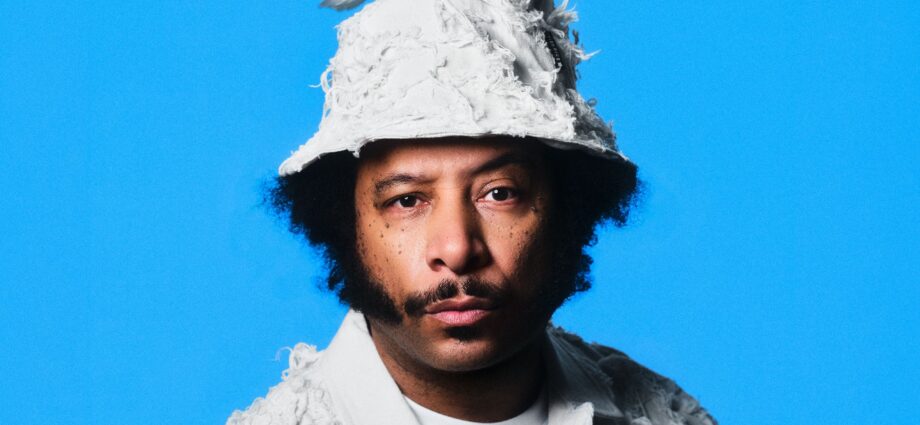
On a cool, drizzly day in Oakland, California, the film director Boots Riley often seemed less like a person than like a landmark—clockable from a distance. In part, this was because Riley, who is fifty-five, wore a gargantuan, lumpy tomato-red felt hat with a wide brim, like the cowboy hat worn by Quick Draw McGraw in the old Hanna-Barbera cartoons. It was January, 2025, and Riley was taking a lunch break from editing his second movie, the caper film “I Love Boosters.” On his way to a burrito joint, he was stopped on nearly every block, often by fans of “Sorry to Bother You,” his surreal sci-fi movie about an Oakland telemarketer, from 2018, or of his equally loopy 2023 Amazon TV series, “I’m a Virgo,” about a sheltered thirteen-foot-tall Black teen-age boy. Some people quoted lines from his nineties hip-hop group, the Coup; others knew him from the 2011 protest encampment Occupy Oakland.
No matter who walked up, Riley slowed down. Oakland has become a city of artists, and often people just wanted to talk shop. A skate-store owner had plans for his own caper movie; so did a guy from a sign store. A musician called Big Hungry, who was starting a “digital music salon,” thanked Riley for hooking him up with a writing group. In each encounter, Riley, a chill, hangdog figure with mutton chops and a spray of freckles, was soft-spoken and receptive, curious and unhurried, but also a little elusive when necessary, knowing when to drift away. His friend Pete Lee, a photographer and a filmmaker, once recalled the default question that Riley uses to identify friendly semi-strangers he can’t remember: “So—what are you working on?”
On our way back to Riley’s editing suite, we passed a mural of Oakland notables, an image that included the hip-hop luminary Tupac Shakur and Pam the Funkstress—the d.j. for the Coup, who died at the age of fifty-one, after complications from surgery. A skinny man wearing a GoPro spotted Riley from a block away, whipped his head around like Wile E. Coyote, and barrelled toward us. “You should be on a mural!” the man yelled.
“I’m not done yet!” Riley shouted back.
All week, Riley had been struggling to hone the rhythms of “I Love Boosters,” which was slated to première that fall. The film, inspired by a track from the Coup’s 2006 album, “Pick a Bigger Weapon,” is a Robin Hood story in which the Velvet Gang, a crew of shoplifting “boosters” led by an Oakland resident named Corvette (Keke Palmer), squares off with a venal, worker-exploiting, idea-stealing billionaire designer, Christie Smith, played by Demi Moore. But, like all of Riley’s projects, the movie defies easy summary: it is a screwball farce, a Day-Glo dystopia, a heist flick, a sci-fi adventure, and a psychedelic social satire, double-stuffed with anti-capitalist themes and absurdist detours, plus a touch of vampire cunnilingus. Riley was working with the independent film company Neon, which, after years of snapping up Oscar winners at film festivals, had begun producing its own films, and “Boosters” was its biggest production yet. Expectations ran high: “Sorry to Bother You,” which cost only $3.2 million, made eighteen million dollars at the box office. “Boosters” cost twenty million dollars, and Riley still had to finalize the hand-crafted effects that are essential to his D.I.Y.-ish aesthetic—a ragged, cartoony quality that he calls “jankiness.”

“I ate way more grain bowls back when I had hope for humanity.”
Cartoon by Sophie Lucido Johnson and Sammi Skolmoski
Riley saw “Boosters” as his best chance to infiltrate the mainstream. He’d spent decades as a critics’ darling, first in music and then in film and TV; in Oakland, he was perfectly in synch, a Marxist bohemian auteur-virtuoso whose class-war themes were native to the culture. Now his goal was to blast “Boosters” far beyond that radius, turning it into a summer blockbuster, a popcorn hit with a revolutionary heart.
That day, Riley had been editing a sequence in which Corvette sneaks into a San Francisco condo owned by Christie, her fashion idol, by hiding inside a coffee delivery cart. The scene used one of the film’s funniest visual gags, an apartment so crazily tilted that nobody inside it could stand up straight. Like many of Riley’s best bits, it doubled as an in-joke for locals: Millennium Tower, a San Francisco high-rise completed in 2009, had sunk sixteen inches, then leaned two more, creating a luxury boondoggle.
On Riley’s monitor, Corvette, attempting to flee the condo, was tugged downward by gravity—and when she tried to stay stable her legs whirled in a “Looney Tunes” blur. Riley had achieved the effect by using an elaborate pinwheel mechanism that spun mannequin legs at lightning speed.
The sequence ran long. Riley tweaked dialogue in which Moore posed the body of the girl pushing the coffee cart while pontificating about seeing it as “art.” Ultimately, he decided that it didn’t land. “It’s bad writing,” he said, cutting the whole exchange. Flipping through shots of Corvette peeking impishly from the cart, he rejected one, with an affectionate laugh, as “too Keke Palmer.” He was seeking a hard-to-hit tone: jokes that wouldn’t “pressure” the audience or produce “the wrong kind of laugh.”
Finally, hours in, he was satisfied. “It’s very ‘Pink Panther’! The whole thing feels like a Blake Edwards movie,” he said. At his request, his editor, Matt Hannam, added circusy sound effects, including a slide whistle. “ ‘Guest starring Dom DeLuise,’ ” Riley added, laughing.
Riley’s movies are entwined with—and, often, inspired by—music. For “Boosters,” he’d set the action to a hilarious cacophony of hoots and whistles composed by Tune-Yards, his Oakland neighbors Merrill Garbus and Nate Brenner, who had scored all his projects. The collaboration had been easy, instinctual, and locally sourced: while Riley was writing the “Boosters” script, he’d run down the block to discuss new scenes with the musicians. The rest of the production had been much harder—particularly because, to his frustration, he’d been forced to film primarily in Atlanta rather than in Oakland, after a year of maddening delays led to the production losing its California tax rebate.
Midway through the afternoon, Riley gave his son Nicos a call. Riley has four children: Alina, twenty-eight, and Nicos, twenty-five, from an early marriage to an illustrator; Xola, twenty, with another ex; and Django, thirteen, with his long-term partner, Gabby La La. Nicos, who is on the autism spectrum, was attending a school that taught filmmaking skills to neurodivergent adults. He had got lost on a bus route; Riley spoke to him gently, arranging for an Uber. He’d been trying to guide Nicos during the difficult transition to an independent life, which made it even harder to be out of town for months at a time.
Late one evening, after he’d finished editing, we drove to a chic cocktail bar, a product of the gentrification he’d fought for years. On the way, I asked how long he’d been wearing these big hats. (He had a roster, including a nubbly Rastafarian number.) They were a recent thing, he explained: a year and a half earlier, he’d bought a few from Uptown Yardie, an élite London brand inspired by Jamaican culture. He took the red felt hat off his head to show me its ornate inner structure, joking that it was a “hat within a hat.” I peeked inside it: it struck me as an embodiment of Riley’s adoration of too-muchness, and also like the slang that comedy writers use for overkill: a hat on a hat.

The Velvet Gang, from “I Love Boosters.” The film defies easy summary: it is a screwball farce, a Day-Glo dystopia, a heist flick, a sci-fi adventure, and a psychedelic social satire, double-stuffed with anti-capitalist themes and absurdist detours, plus a touch of vampire cunnilingus.Photograph courtesy NEON
For more than a year, as I’d trailed Riley, I’d assumed that his hats were savvy self-branding, a deliberate shift away from the dandelion Afro that he had worn since the nineties, when he’d scowled, with quasi-parodic toughness, from the covers of albums such as “Genocide & Juice.” These days, he looked as goofily approachable as a children’s-show host, which struck me as helpful in a career that required him to win over normie film executives.
There was a simpler explanation, he told me: his hairline was receding. The longer he wore these Brobdingnagian toppers, the harder it was to quit—the hats matted down his hair, and it was difficult to detangle. Lately, he’d been wondering if he should wean himself off the hat habit. “They’re heavy, too,” he said. “At first, I couldn’t wear this one for more than a few minutes.”
After our drink, Riley ran into a labor activist he’d worked with decades earlier. As they were talking, a second man walked up, who turned out to be Riley’s former dentist. Riley was equally at ease when talking with the dentist, listening patiently as the man described his fancy new house in a gentrified area. As we walked away, Riley shook his head and burst out laughing. “That guy really fucked up my teeth,” he said. “It took years to fix them!”
Four months earlier, I’d met Riley in Atlanta, where he was shooting at the Greenbriar Mall. Inside was the set for Metro Designers, an outlet of Christie Smith’s clothing chain, which sells monochromatic clothes—one color per month. Right now, everything was an eye-searing neon yellow. Poppy Liu, playing a disgruntled Chinese factory worker who joins forces with the Velvet Gang, was rehearsing a sequence in which her character loots the boutique using a literal plot device: a sci-fi teleportation gadget that sucks up clothes in seconds, like a magical vacuum.
Between takes, Liu did TikTok dances, trying to summon the right energy. She said, “Boots, can I ask you something? Am I looking serious, or am I, like, ‘Wowww’?”
“You’re looking serious,” Riley told her, quietly. The character hadn’t used the gadget much yet, he noted. “So you might be, like, afraid.”
“Boosters” had taken a winding path to development. Two years ago, when Annapurna, the indie production company that distributed “Sorry to Bother You,” approached Riley about moving forward with a second film, he was feeling bruised from the chaotic production of “Virgo,” which had undergone painful cuts only to sink beneath the waves of Amazon’s algorithms. His priority was developing a different screenplay, then titled “The Electric Spanking of War Babies,” a sci-fi adventure inspired by the wisdom of Parliament-Funkadelic. (“Free your mind and your ass will follow.”) He was also hoping to adapt the playwright Anne Washburn’s feral and philosophical dark comedy “Mr. Burns, A Post-Electric Play.”
Annapurna pushed for the more accessible “Boosters,” a heist film he had on the back burner. Riley was game, particularly after the executives sweetened the deal by offering him the chance to work with Michaela Coel, the Ghanaian British auteur behind HBO’s “I May Destroy You.” Coel read Riley’s script and agreed to play Corvette, although she was concerned that her accent would be an impediment. At the time, she was struggling with writer’s block, and Riley advised her to write for four hours a day, whatever the results. The method worked so well that she completed her own TV series, which she then stepped away from “Boosters” to make, joking, “You shouldn’t have given me that advice.” In an added irony, she started dating the tech entrepreneur Spencer Hewett, a Thiel Fellowship recipient whose breakthrough project was developing a R.F.I.D. surveillance technology that can help reduce retail theft. (Coel’s publicist said that she was unavailable for comment.)
When Riley was ready to shoot “Boosters,” Neon stepped up as a co-producer, offering Riley the significant budget he needed. This time, the director was determined not to cut corners, to make a film as maximalist as his imagination. Hunting for a new Corvette, Riley sent an Instagram D.M. to Palmer, a former Disney star and pop singer who’d broken through to film snobs with her work on Jordan Peele’s “Nope.” They had a four-hour meeting, hashing out the script. Palmer, who grew up in a working-class family in Robbins, Illinois, told me, “We really vibed on life.” She described Riley as “thoughtful, very human,” adding, “He doesn’t just think the actress should show up and be used relentlessly.”
On the Metro Designers set, the crew positioned some lighting while Riley and his costume designer, Shirley Kurata—the giddy mind behind the Elvis cosplay in “Everything Everywhere All at Once”—chatted about recent movies. On most sets, black T-shirts are the rule, but among the “Boosters” crew the brightness was cranked to eleven: Riley wore rainbow sneakers, Kurata a multicolored Muppet-fuzzy vest. The crew, during a weekly movie night, had watched “Megalopolis,” the Francis Ford Coppola epic from 2024. Riley, a Coppola buff, understood why critics had found it self-indulgent. “You know, it might have been O.K. if Adam Driver was playing a human being,” he joked. Even so, he’d felt goosed by Coppola’s playful, unapologetic auteurism, by how liberated Coppola had been to make a movie that was like no other. He’d heard that much of the “Megalopolis” script was generated through improvisation—the kind of filmmaking that was only possible, he said wistfully, because Coppola had paid for everything himself. One of Riley’s favorite films was Coppola’s “Bram Stoker’s Dracula,” in which Gary Oldman played Nosferatu in a cherry-red kimono. It was a flamboyant film, unafraid of seeming ridiculous, and was therefore indelible.

Riley is attracted to mixtures, color, variety: paisley worn with plaid, the painter Jacob Lawrence, any artist “who takes different textures and slaps them on top of one another.”Photograph by Bobby Doherty for The New Yorker
Riley wanted to inject “Boosters” with a similar fearlessness, using the elasticity of the heist-comedy genre to draw connections to deeper issues. In his script, he’d incorporated a Chaplinesque slapstick sequence in a Chinese factory where workers made sandblasted jeans. The scenario was based on a real-life scandal: workers have died from cancer from the chemicals used in sandblasting. In an early draft of “Boosters,” he’d marked this scene with the words “a note: I’m paying for an extra day of shooting in order to put this back in the script.” (Ultimately, Neon ponied up for the filming.) Too often, radical artists were forced by the market to speak in code, he told me, the way George Lucas had when he made “Star Wars” instead of the film he’d originally envisaged—a Vietnam War movie from the P.O.V. of the Vietcong. Riley was occasionally dinged online for working with Amazon or with Annapurna, which was founded by Megan Ellison, the daughter of the right-wing titan Larry Ellison. Riley had no tolerance for that critique: in his view, there was no “clean” way, under capitalism, to make art for a mass audience. And if you couldn’t reach everyone what was the point?
He was just as impatient with the idea that “Boosters” glamourized theft, an incendiary topic in the wake of the 2020 protests over the murder of George Floyd, when looting became a talking point for the right. For years, he’d been giving speeches at colleges, arguing that crime was often necessitated by capitalism, which created an underclass and then punished the sub-rosa tactics that its members used to survive. “Boosters” was a sci-fi fantasia about class payback—and part of a cinematic tradition. When an X user complained that the film’s trailer encouraged thievery, Riley shot back: “You didn’t hear a peep from them about Ocean’s 11, Heat, or the other millions of heist movies or 20,000 Mafia movies.”
Riley filmed at the Metro Designers store for several days. In the movie, members of the Velvet Gang take sales jobs there in order to case the joint, only to discover how greasily exploitative the conditions are: the music is so loud that it drowns out workers’ complaints; lunch breaks last thirty seconds, forcing employees to line up at starting blocks, then sprint for their food. But the mood at the fake store was laid-back, happy. Under a canopy, the ensemble chitchatted about plastic surgery in Hollywood.

Cartoon by Ellie Black
Over lunch, Riley’s first assistant director, Miloš Milićević, told me that he’d also worked on “Virgo,” which was shot in New Orleans. The process had been brutal, he said: Riley had been forced to cut entire episodes, making the narrative choppy; he’d fought Amazon to maintain the show’s most original elements, among them a graphic episode in which his naïve giant, Cootie, loses his virginity to his tiny, supernaturally fast girlfriend. The results—filmed with miniatures, Claymation, and puppets, using forced perspective, manipulating scale to create illusions of size—were eye-popping. The show, which featured a sizzling performance by Walton Goggins, as an authoritarian vigilante, was an avant-garde breakthrough for television.
It was also a flop. Nevertheless, Milićević had been eager to work with Riley again. He saw him as a visionary whose concept of jankiness had potent philosophical dimensions. It was an anti-Marvel stance, rejecting the visual conformity of so much C.G.I. It had a childlike warmth, evoking old-school kids’ shows like “H.R. Pufnstuf.” It was “poor people’s work,” like drag, or quilting—a way of utilizing scrap materials to create something fresh and beautiful. And yet it was also an élitist, niche style aimed at audiences who craved something pure and not mass-produced. Milićević described Riley as a rare blend in Hollywood, both a mature, practical artist and a dreamy newbie, “ethereal, open to the abnormal.” He noted, “There are shots where Riley says, ‘You can see the seams, you see the imperfections,’ which he doesn’t mind—and actually embraces.”
Raymond (Boots) Riley was born in Chicago in 1971, to a sprawling, polyglot family with deep roots in radical politics. His father, Walter Riley, was one of eleven children of sharecroppers from Durham County, North Carolina, and became an activist at thirteen. For years, Walter led the N.A.A.C.P.’s state youth chapter, then he worked as a labor activist for the Maoist Progressive Labor Party, organizing rank-and-file autoworkers, before becoming a civil-rights lawyer. He met Riley’s mother, Anitra Patterson, in San Francisco, when he was on a strike. Patterson, born in New York City, was the daughter of a Black poet father and a German Jewish artist mother whose brother, a socialist in the French Resistance, had fought and then fled the Nazis. When Raymond was a year old, his parents moved the family to Detroit; when he was six, they returned to the Bay Area; when he was eight, Patterson moved out, and Walter, by mutual agreement, became a single father to Raymond and his brother.
The year Patterson left, Riley, then a third grader, lost the bus pass he used to get to a magnet school near Berkeley. A bubbly charmer, Riley was confident that someone would help him out. Instead, he wound up trekking for miles, rejected first by bus drivers and then by a carful of cops, who scoffed, “We’re not a cab service.” When he finally made it home, at 10 p.m., his father was sobbing on the front porch, certain that his son was dead. For Riley, this was a jolt of illumination about the way the world viewed him—not as a child but as a suspect, a scammer in the making. As he once put it, “My mother had always told me that I was so cute, but I realized I wasn’t cute—I was Black.”
Riley wanted to be seen another way: as a hero. As a kid, he feverishly fantasized about being a kung-fu-powered ass-kicker like Marvel’s Daredevil—or a soldier, like the scrappy teens in the Cold War film “Red Dawn,” who fight a Soviet invasion. (His father talked him down, calling the movie fascist.) Walter, who had left the Progressive Labor Party, didn’t preach Marxism to his son, but Riley embraced a radical-left viewpoint on his own, after tagging along with some cute older girls who were participating in a cannery workers’ strike.
Still, Riley’s early role model was not an activist but an artist: the gangsta-rap legend Ice Cube. Riley venerated the rapper so much that his early tracks for the Coup, which he founded at the age of twenty, were all Ice Cube imitations, with his voice pitched low and his affect “hard.” Riley met his bandmate E-Roc in 1991, when they both had gigs handling packages for UPS; later on, he met Pam the Funkstress when she d.j.’d at Tupac’s first album-release party. The Coup’s early records were pugnacious, laced with humor and some finger-wagging. In “Fuck a Perm,” Riley mocked beauty standards; in “Last Blunt,” constant weed use. Left-wing analysis animated his lyrics: in “Fat Cats, Bigga Fish,” a small-time thief realizes that the C.E.O.s whose pockets he picks are way bigger crooks than he is, cutting dirty deals to gentrify Oakland.
The albums didn’t sell. E-Roc said, of the gangsta-rap era, “If you weren’t talking about money, drugs, and sex, nobody was really trying to hear you.” E-Roc admired Riley’s idealism but wasn’t that political himself; he quit the band to take a union job as a longshoreman, and suggested that Riley do the same. Riley turned him down. Now twenty-four, he felt like a failure. The radicals he revered—the Black Panther Fred Hampton, the vanguard activists in Cuba and South Africa—had rattled the world in their teens, the way his father had. The Coup had made it onto local radio, but, although critics praised Riley’s droll wordplay—the Los Angeles Times called him “rap’s most articulate Marxist”—they pigeonholed his lyrics as “conscious hip-hop,” as if he were grinding out didactic pamphlets.
For a few years, Riley stopped making music. He helped form a radical collective, the Young Comrades, which fought three-strikes drug laws, police brutality, and an “anti-cruising ordinance” in Oakland. He did telephone fund-raising for nonprofits, luring Orange County Republicans into supporting homeless shelters. By the time he picked up the mike again, in 1998, shortly after his first child was born, he had a renewed sense of purpose. The Coup’s new albums featured rude, funny bangers such as “5 Million Ways to Kill a C.E.O.,” which, like so many Riley tracks, used slicing comedy to denounce billionaires. (“They own sweatshops, pet cops, and fields of cola / murder babies with they molars on the areola / control the Pope, Dalai Lama, Holy Rollers, and the Ayatollah.”) He was still taking aim at capitalism, but his sonic landscape now had a relaxed, get-down vibe.

“Captain, why don’t I go get your glasses so you can really see that mermaid.”
Cartoon by Drew Panckeri
In September, 2001, the release of the Coup’s album “Party Music” was upended by a perverse coincidence: the album’s cover showed Riley’s finger poised over a music tuner as if it were a bomb detonator, while smoke spilled from the World Trade Center in the background. The image was a metaphor for the destruction of capitalism, he insisted, not a blueprint for action. But the record company changed the cover against his will, and he wound up on ABC, fruitlessly debating the Iraq War with Bill Maher.
It was a rough period; Riley felt marginalized, treated as a cartoon terrorist. But by then he had embraced a different role model from his youth: Prince. At fifteen, he’d seen “Purple Rain” with friends, and had been awestruck not just by Prince’s musicianship but by his persona, his ability to radiate skilled, seductive joy—to exude not hard authority but the soft stuff. Riley recalled, “We were, like, ‘What is this?’ The high voice. We didn’t know how short he was. We went from ‘Oh, is this guy gay?’ to ‘We don’t care!’ Like, ‘Maybe being gay is cool, if he’s doing it?’ But we didn’t say it—admit it out loud.” Looking back, Riley told me, “Prince saved my life,” by liberating him from comic-book masculinity. Like Prince, Riley had a singular moniker—“Boots” originated as a taunt from students who were mocking a pair of Florsheim boots that Riley had been given by his father. He’d hated the nickname at first, Walter told me: “He would wake up and come into my bedroom and say, ‘You made me wear those boots! ’” As a front man, Riley embraced the name—and, with it, a peacocking ambition to achieve mass visibility.
In 2012, the Coup released the love song “The Magic Clap,” the first track that Riley had written with his new partner, the sitarist and helium-voiced singer Gabby La La. Its optimistic sexiness was inseparable from its ideological punch. (“We wanna breathe fire and freedom from our lungs / Tell Homeland Security we are the bomb!”) The playful, cheaply made video showed Riley, in a natty royal-blue suit, being electrocuted by G-men, then breaking away on a wobbly pink bicycle.
The song appeared on “Sorry to Bother You,” a concept album that was tied to a screenplay with the same name that Riley had written—a mordant, magical-realist story about Cassius, a sad-sack Oakland nobody who scores a job as a telemarketer for a sinister, non-unionized corporation called RegalView, then uses a “white voice” to shoot up the corporate elevator. Initially, Riley, who’d taken a few film courses at San Francisco State, conceived of the album as a vehicle to help him jump into directing: he figured that he’d take the music on tour, raising the hype and the money he’d need to mount an independent film.
That plan fizzled fast. Riley kept moving, crashing parties at the Sundance Film Festival and toting the screenplay everywhere, honing his pitch. He networked maniacally, finding mentors and allies through his activism, among them the “Arrested Development” star David Cross, who agreed to perform Cassius’s “white voice.” In 2014, he ran into the San Francisco literary macher Dave Eggers on the street; Eggers published the screenplay as a book for his McSweeney’s imprint, scoring Riley some mainstream credibility. Finally, in 2015, Riley was accepted to the Sundance Screenwriters Lab, in Park City, Utah; the next year, he got into the festival’s program for new directors.

Riley and Pam the Funkstress, his bandmate in the Coup, who died in 2017.Photograph by Bromberger Hoover / Getty
At Sundance, he was peppered with notes, often contradictory, from industry names: some loved his script, others hated it, and one suggested that he ramp up the love story and deëmphasize the labor politics. This experience cemented Riley’s sense that he should trust his gut. The most useful feedback came from Karim Aïnouz, a Brazilian director, who told Riley, “I really love your main character. I wanna protect him, I want to make sure he’s O.K. in the world. And that’s how I know it’s bullshit, because I hate everybody!”
Riley realized that Aïnouz was right: Cassius was too much of a victim, a pinball in the capitalist machine. He refined the script further, showing his hero doubling down on his Faustian bargain. As Cassius, Riley cast the brilliant, sad-eyed actor LaKeith Stanfield. Armie Hammer played the villainous C.E.O.; Tessa Thompson was Cassius’s lover, a radical artist with her own “white voice.” “Sorry” was defiantly weird, stuffed with comic digressions such as ads for WorryFree (an Amazon-like corporation flacking indentured servitude) and a reality show called “I Got the Shit Kicked Out of Me.” The film ended with a truly bananas sequence featuring a scheme by RegalView to enslave horse-human hybrids.
Riley filmed “Sorry” in Oakland, in twenty-six days. It débuted at Sundance, then got strong reviews; one critic praised it as “an absurdist, startlingly original Molotov cocktail through the pane glass window of Hollywood.” It felt like his new career had achieved liftoff. Instead, what followed was the turbulent production of “I’m a Virgo,” the story of a sheltered Black teen who dreams of becoming a superhero—a plot partly inspired by the day Riley lost his bus pass. He saw “Boosters” as his do-over, a chance to regain Hollywood momentum.
There was a consistency to Riley’s filmed stories, which he sometimes described as tracks on an album. In each one, an Oakland naïf—Cassius, Cootie, Corvette—was torn between a seductive capitalist and an inspiring left-wing organizer, one the path to fame and riches, the other to community and revolution. Riley’s core ideology hadn’t changed since his teens; he believed in a mass strike in which workers would unite, globally, to withhold their labor, leading to radical structural change—he’d depicted such transformations in each of his productions, including in “Boosters.”
But he’d changed, as an artist. In middle age, he’d evolved into an aesthetic magpie, pulling together influences like a d.j. It had taken him a while to be open about his enthusiasms. He told me, “In junior high school, I really loved the eighties British invasion, right? You know, the Cure, Depeche Mode, all that kind of stuff. But you’re not going to hear any nineties interviews talking about that.” His first album, “Kill My Landlord,” now made him cringe, he said: its aesthetic felt too narrow and its politics too on the nose.
What he loved these days was mixtures, color, variety: paisley worn with plaid, the painter Jacob Lawrence, any artist “who takes different textures and slaps them on top of one another.” His tastes are broad but lean toward the colorfully experimental, from the precise geometries of Wes Anderson to the trippy existentialism of Leos Carax, from the far-left Pier Paolo Pasolini to the far-right Yukio Mishima. For “Boosters,” his touchstone was an obscure Michel Gondry film from 2013, “Mood Indigo,” a retro romance full of futuristic imagery: skittering robots, a piano that mixed swanky cocktails when played. His favorite recent movie is “Hundreds of Beavers,” a manic fur-trapper farce with handmade effects—jankiness personified. He was an eager student of the methods artists use to seduce audiences, devouring David Byrne’s book “How Music Works” and a documentary about the devilishly clever publicist Edward Bernays, who sold cigarettes by rebranding them as feminist rebellion.
Over the years, Riley had added to his lineup of heroes. In the nineties, boomer music executives often spoke to him in their native language, Bob Dylan fanhood. Initially, he resisted, but over time he became a full-on Dylanite himself. Recently, he’d gone toe to toe with James Mangold, the director of the Dylan bio-pic “A Complete Unknown,” critiquing him for having downplayed the Communism of Dylan’s mentors.
All art is political, Riley often says, whether it claims to be or not. Superhero stories are copaganda; sitcoms sell middle-class norms. But art is also more than ideology. It is a source of joy and comfort; it makes you horny and angry; if it’s bold enough, and crafty enough, you can’t ignore it—and it could change you, the way it had him.
In November, 2024, the “Boosters” production shifted to a soundstage in Norcross, Georgia, adjacent to the Marvel lot where “Black Panther” was shot. One day, the crew was filming a scene at one of Christie’s fashion shows, where the Velvet Gang confronts its nemesis. The head of Neon had flown in to observe; executives in black suits mingled with the funkily attired crew. A few days earlier, the film’s department heads had debated, collegially, how to get the crowd in the scene to look big enough without leaning too hard on “tiling,” the cheat of digitally copying and pasting. They’d budgeted for a hundred extras—could they afford more? A Technocrane? “We can shoot like Coppola, from above,” Riley suggested. “The lower we are, the harder it is to hide that we don’t have that many people.” He wanted to generate awe: “When Corvette says, ‘I feel like I’m touching the world,’ it has to feel big.”
Floating above the soundstage was a massive eyeball with a rainbow runway carpet protruding from it like a tongue. Rows of extras lined up on either side of the carpet. After the debate, the producers had agreed to add a hundred and twenty-five more extras, sending Kurata, the costume designer, on a frantic thrift-store shopping spree, seeking monochromatic outfits in blue, pink, brown, yellow, orange, and green.
Behind a black curtain, Demi Moore looked spookily glam in a suicide-blond wig with black roots. She was filming a scene in which Christie berated her skeptical assistant, Miranda Priestly style. One day, the assistant would run her own fashion line, Christie told her—and then she could talk about how hard her boss had pushed her, how crushing the hours had been, how harsh the conditions for factory workers. Fashion was worth the sacrifice. “We could get every whacked-out asshole in the state of Michigan wearing fuchsia,” Moore said, nearly hissing. “We could look from space and see a big spot of fuchsia. Bam! I mean, humanity is our canvas. So get excited, bitch.”
Riley chuckled, pleased. He gave Moore a note: maybe this was the first time she’d said these particular thoughts out loud? Moore tried the exchange a few more times, in different tones—more acidic, more surprised, more chaotic. Then Riley turned to the actress who was playing Christie’s assistant. “Be more afraid of her,” Riley suggested, and then, a moment later: “Try a different thing—you hate her.”
One of the most satisfying ironies of Riley’s films and TV show is how charismatic and, at times, convincing his villains are, from Armie Hammer’s silky tech C.E.O. to Walton Goggins’s righteous supercop. There was no narrative tension if it wasn’t tempting to see the world their way. And, of course, Riley was a boss himself, trying to put his own spot of fuchsia on the planet. He wasn’t always at ease discussing the parallel. When I asked, a few times, if he identified with Moore’s character, he pivoted off the topic, telling me, simply, “All the characters are me.”
It was clearly important to him to be an ethical leader. On the set of “Virgo,” he had learned that some stand-ins had been stiffed by a sketchy payroll company. He guaranteed the employees’ pay with his own money, then threatened to quit, withholding his own labor until the company compensated everyone. He was a fiery advocate during the 2023 Writers Guild strike; at one point, a leaked e-mail from a Directors Guild chair smeared him as part of a “fringe group” whose members should be blackballed from elected positions.

Tessa Thompson and LaKeith Stanfield in “Sorry to Bother You” (2018). Both play characters who can switch to a “white voice.”Photograph from Annapurna Pictures / Everett
Not everyone on set shared Riley’s politics, I knew. Milićević had told me he believed that the economic impacts of the Writers Guild strike had outweighed any gains. Riley’s friend Pete Lee, who was working as the set photographer, described himself to me, wryly, as a “fair-weather Communist.”
Offline, Riley was at ease talking with, and working alongside, unlike minds. He tried not to doomscroll, he told me, and he even had a “dumbphone,” intended to keep him unplugged. But, when he did log on, he had what Twitter veterans call a “poster’s soul,” debating strangers about Venezuela and Gaza, searching for his name and then replying. In February, 2025, as DOGE was crushing U.S.A.I.D. programs that supported children in poverty, Riley tweeted that he didn’t oppose “dismantling” the agency, calling it a C.I.A. front that “subverts democracies” on behalf of U.S. corporations. In October, 2025, he jumped into a Reddit Oscars forum after a user described him as “massive tankie,” slang for a leftist who excuses injustices committed by Communist governments. “I prefer the term ‘huge’ to massive, thank you,” Riley joked, then wrote a long post defending China’s invasion of Tibet on the ground that Tibet had been a slave state, complete with a feverish cascade of links, which was disputed by someone who claimed to be a scholar of Tibet, leading to a whose-links-are-better dance-off. In a follow-up comment, Riley wrote, “All of my art is argument with strangers.”
Riley told me that people often described him as “uncompromising.” This wasn’t accurate, he said: you couldn’t make a movie—or be in a band or in a union, for that matter—without bending to, and understanding, the needs of others. But he wasn’t a journeyman director who would take any job just to get ahead. In the two-thousands, he’d heard a musician complain about a new tattoo on the forehead of his brother, which rendered the brother “not unemployed but unemployable.” Riley’s ideology was his own forehead tattoo, he told me: “I’m already that person. So the people that are choosing to work with me, they know where I’m at. . . . I prefer that.” Over the years, he’d found surprising allies, including a record executive who’d once been in the Revolutionary Communist Party. Riley said, “I mean, the world is full of people with radical ideas who have just decided, like most of us, ‘Oh, there’s nothing you can do about it. And I have to get a job, right?’ ”
The older Riley got, the more determined he became to use his time wisely. One night, over drinks with the crew, he brought up his mother, Patterson, who’d died in 2014. When Patterson was fifteen, she’d got pregnant by an older man; by thirty-two, she had four children. “She was tired of being a mother,” he told me, with equanimity. He’d forgiven her for leaving long ago; his father, for his part, told me that he and Patterson had agreed that she would “go off and do what men do when they have children.” She had been a spitfire, eager to travel, study, dance, have love affairs, and explore the world. After her death, Riley read her diaries, an awkward experience at times. (“You’ve got to read about your mother comparing people’s dick sizes,” he told me, wrinkling his forehead.) But it had been worth it: he’d wanted to feel more empathy for, and clarity about, the person who had been there before he existed.
Riley has been through his share of personal loss. In 2006, several of the Coup’s crew members were injured when the group’s tour bus flipped over and burst into flames; a few years later, the group’s bassist was shot and killed on his way to a rehearsal. Pam the Funkstress died young. Riley has a phobia of anesthesia, so much so that he underwent a colonoscopy without it. “I’m more afraid of dying than of the pain,” he told me. It had been his weirdest experience of being recognized by a fan: when he was on the table, the doctor told him, “This is a strange way to meet you.” Riley didn’t look at the monitor during the procedure. “It was, like, just looking at the inside of myself in real time,” he told me. “I don’t want to think about how, you know, how fragile it all is.”
A few months after filming the fashion-show scene, Riley was in Oakland for postproduction. On a sunny Saturday morning, he, La La, and their kids met up at the New Parkway Theatre, which hosts a weekly screening of cartoons. Riley, in a jumbo-sized blue hat and black-and-white pajamas, watched a clip from the show “Underdog.” He’d loved TV cartoons growing up—they were funny and simple but also educational, stuffed with sly parodies of pop culture he’d never heard of. Years ago, Riley had explored the idea of doing voice work, thinking that it might be both fun for his kids and a way to make good money. After talent agents at W.M.E. proposed some roles, he clarified that he wouldn’t play a dope dealer or a cop. “And they were, like, ‘Well, you should probably generate your own material,’ ” he said. He’d also had a chance to experience a different flavor of fame: while he was recording “Genocide & Juice,” he was recruited to appear on MTV’s “The Real World.” He turned it down, mainly, he recalled, because he “didn’t want people to know I wasn’t hard.”
After the cartoons, we headed to Riley and La La’s house; he’d bought it with the money Amazon had paid him for “Virgo.” It was a warm, bohemian hangout with a ceramic rabbit in the front garden, a lounge with a fireplace, a studio for La La, who is a fibre artist and an illustrator, and a cozy kitchen with a whimsical mural of a tree blooming with fruits and cupcakes. In the bathroom, a framed Red Scare-era poster read “Is your washroom breeding Bolsheviks?”
Earlier, Riley had described La La to me as a mischief-maker. When we arrived, La La, who wore flower-print clogs, handed me a “Friendship Buck,” a handmade faux currency that she gives to everyone she meets. As she cooked noodles for Django, she told me about the many art projects that she had in progress, including a graphic memoir done in watercolors. But these days she saw herself mainly as a mom (“chief noodle-maker”) and an “extreme feminist” with a wide circle of friends. When I asked if she shared Riley’s ideology, she said, “I’m apolitical.” Her focus was more on making things, including a Y.A. book that she’d written, celebrating her childhood in the Bay with her white Jewish mom and Chinese Methodist dad. Like Riley, she considers herself Jewish, and, she told me puckishly, she also sees herself as white: “Boots says I’m not white, but I am—it’s, like, Are you what you see or what other people see of yourself?”

“After you die, but before I die, can I be king for a bit?”
Cartoon by Edward Steed
Riley, who was sitting nearby, at the dining room’s long table, smiled but suggested that this was probably not how white people saw her. “Potato, potahto,” La La drawled. “Have you seen my mom? She has black hair. We look exactly the same. She basically is Chinese.” Later, when Riley and I began to talk about the Coup track “5 Million Ways to Kill a C.E.O.,” which had been embraced online by admirers of Luigi Mangione, she chimed in: “My mom was a C.E.O., and it hurts my feelings!” Her mother had founded a wool-diaper-cover company called Biobottoms, she said, which was run primarily by women. Later, as Riley and I talked about his packed schedule, he theorized that in a truly revolutionary society people might work only three days a week, allowing them to devote more time to things they loved, like art or gardening. La La wisecracked, “For moms, we’re only changing diapers three days a week. Best of luck to you children, sitting in your diaper for four days!”
As much as La La teased Riley, when he stepped away she became his hype man. She described him as a preternaturally generous artist, far more concerned with the greater Oakland collective than with himself. That had been true back when he was dead broke, she added—he had always advised, and lifted up, other artists. She called these mentorships “seeds being planted.”
When Riley returned to the table, La La told me that his high profile in the city sometimes bugged her, because fans were always interrupting them, even sitting down at their table. Riley protested: It was just that one guy that one time, and they had walked away from him! Her “whole thing” was quality time, she explained, then said, with a shrug, “We can have quality time in the grave when we’re dead. I’m hoping we can get one box that can just be us hugging, like, for eternity.” She went on, “I’m weaving our shroud right now, with your hair that I find in the shower.”
This past March, “Boosters,” after a series of delays, finally had its première, at South by Southwest. In the days leading up to the festival, Riley was in energetic contact with Neon’s publicity team, ginning up promotions in full Barnum mode. On his own, he’d booked a nationwide tour of colleges, to screen “Boosters” and do Q. & A.s. He planned to release an EP of songs performed by Palmer.
That afternoon, Riley was filming promotional shorts with Palmer for the movie-review social network Letterboxd. Palmer wore a sparkly pink gown; Riley, a jumpsuit speckled with tiny embroidered daisies. When Letterboxd producers asked Riley to name a movie that offered “fashion inspiration,” he recommended the Serbian farce “Black Cat White Cat”; Palmer praised “Sex and the City.”
As the two mingled near the snack area, Riley asked if Palmer was aware of the trade convention CinemaCon, in April: “It was on the show ‘The Studio.’ That’s how you get more screens!” Palmer knew all about it, but she’d already agreed to record a TED talk in Vancouver at the same time. Maybe she could Zoom? Riley suggested an offbeat approach—to zhuzh up the visit, they could frame the Zoom footage to look as though Palmer were arriving through the film’s teleportation device. He pitched a few stunts that could work in any city: maybe she could busk on a street corner?
Palmer, a master at social media with an Instagram following of 14.4 million, considered these ideas. Then she beamed and, in a low, confident voice, said, “That sounds incredible. That would be insanely dope.” She added, “Let’s plan it! And I’ll have my girl film it.”

A scene from “I’m a Virgo,” Riley’s short-lived television series, which began streaming on Amazon in 2023.Photograph from Annapurna Pictures / Everett
The next night, the Paramount Theatre, in downtown Austin, gleamed with the poster for “Boosters,” on which the cast’s faces clustered like flower blossoms. A crowd outside screamed “Boots!” when they spotted Riley’s hat, then shrieked louder as he strolled toward them with Moore, her long black hair swaying like a cape.
In the theatre, the audience howled at Kurata’s costumes, including in a sequence when the Velvet Gang wore so many layers of stolen clothes that they waddled like Michelin Men; there was booming laughter at the payoff to a side plot involving Stanfield, who played a dreamy seducer with his hair in Prince-ish loose waves. There was also an audible “mmmm” at a quieter image: an immense, wadded-up ball of receipts and bills that rolled through Oakland’s streets like a boulder, haunting Corvette. When the film ended, Riley jumped onstage, addressing the crowd as his partners: if they liked “Boosters,” they should tell people. He said, “You might think because it’s on Neon, and they’re the shit, we got it covered—we don’t.”
Neon held a première party, hosted by Variety. On the way there, Riley’s close friend Jeremy Glick, a literature professor at Hunter College, told Riley, of the film, “We have a lot to talk about! It’s got all these elements that I feel very familiar with . . . accelerated, if you will. You really made the qualitative leap, man.”
“Thank you, man,” Riley said, smiling.
The two had met in the nineties, at a salon at Amiri Baraka’s house, in Newark, but they’d grown closer after 9/11. Glick was the son of a Port Authority worker who died in the attack on the World Trade Center; afterward, he went on Fox News to debate Bill O’Reilly, denouncing anyone who used his father’s death to support the invasion of Afghanistan. Back then, both Riley and Glick felt marginalized, under siege in a country where merely criticizing income inequality was viewed as outrageous. A lot had changed since; to many younger people, including Glick’s students, the men’s once radical ideas were common sense. Riley had endorsed Bernie Sanders a decade ago, but he had never cared much about electoral politics, which struck him as small-bore change. Yet the rise of Donald Trump had made Riley’s bombastic aesthetics oddly relevant: the cartoonish, amped-up landscape of his movies now felt less like satire and more like a mirror.
At the party, Palmer, in an aquamarine leather jacket, stood in a glass box alongside three brightly dressed mannequins and performed a song that Riley’s daughter Alina had written for the movie, the melancholic “Cassandra.” Afterward, Poppy Liu flashed her phone in Riley’s face: an early review of “Boosters” was out and it was strong, celebrating his film as “a surreal, hyperpop love letter to creatives living under capitalism.” The cast, clustered around him, jumped up and down.

Riley’s movies are entwined with—and, often, inspired by—music. For “Boosters,” he set the action to a hilarious cacophony of hoots and whistles composed by Tune-Yards, his Oakland neighbors Merrill Garbus and Nate Brenner.Photograph by Bobby Doherty for The New Yorker; Styling by Duane Brown; Grooming by Walton Nunez; Set Design by Robert Sumrell
At an after-party, at a bar called the Flower Shop, one of the film’s producers, Aaron Ryder, sat eating French fries from a silver bowl. Ryder had been through some stressful launches, he told me; his first film, Christopher Nolan’s nonlinear masterpiece “Memento,” was initially rejected by every distributor. Still, Ryder described “Boosters” as “maybe the hardest film I’ve ever been involved with.” Postproduction was rough: “You’ve got miniatures, you’ve got stop-motion, you’ve got a ton of music. But you also have something extraordinary.” If making a movie was like planning a camping trip, he said, Riley was all about detours: “We’re going to go to the city first, then swim across a river, then go to a rave, and, before that, we have to stop at a 7-Eleven.” Neon had done what Amazon hadn’t—given Riley the freedom to swing for the fences.
The next day, Riley and I sat down at the Austin Proper hotel, whose lobby was full of Silicon Valley types heading to the tech events of SXSW. He was excited to speak to college students again. He’d had to retire one of his old speeches, which denounced copaganda for teaching poor people to obey authority, after placing it in the mouth of a Communist organizer in “Virgo.” Events had overtaken Riley’s most outlandish plots: three years after the show aired, a militarized police force, ICE, was poised to repress and criminalize political dissent.
Even so, Riley felt encouraged. He told me, “You know, I made this movie before the Minnesota general strike”—in late January, in sub-zero temperatures, hundreds of businesses and dozens of unions shut down to protest ICE’s Operation Metro Surge. “And, arguably, that general strike is more radical than the one in the film, you know? It was people withholding labor in order to change a policy that didn’t necessarily even affect them.”
“Boosters” is scheduled for wide release in late May, amid tough competition from powerful Hollywood franchises: “The Devil Wears Prada 2,” the sixth “Scary Movie.” Riley hoped that audiences would find “Boosters” just as colorful, alluring, and fun—“like a roller-coaster,” he said, but thundering in from a fresh angle. And maybe he was onto something. Three weeks before “Boosters” was to open, New York’s democratic-socialist mayor, Zohran Mamdani, declined to attend the Met Gala, which was being sponsored by the Amazon founder (and Washington Post destroyer), Jeff Bezos. Mamdani posted counterpropaganda: glamour shots of the artisans, retail workers, and delivery people who anchor New York’s fashion industry, “from true love found on the picket line to a free tailoring school out of a Brooklyn basement.” This was Riley’s approach in action: shifting the spotlight away from the hypnotic parade to the workers who made it possible.
Like “Sorry to Bother You,” “Boosters” had a third act that Riley knew not every viewer would roll with—the storytelling was ecstatic, shaggy, and a little incoherent. But it was also optimistic, an attempt to help audiences imagine a better future. In the cut we watched at SXSW, Violeta, a left-wing stoner trying to unionize Metro Designers, gave a speech in which she described the way social progress ascends like a spiral, through contradiction and clashes. Riley imagined his film’s structure that way, he told me. It followed a pattern that didn’t exist—yet. He held his arm up high, then twisted it, smiling, mimicking the shape of that imaginary spiral and making a whirring sound, like a helicopter rising into the clouds. ♦
