 Skip to content
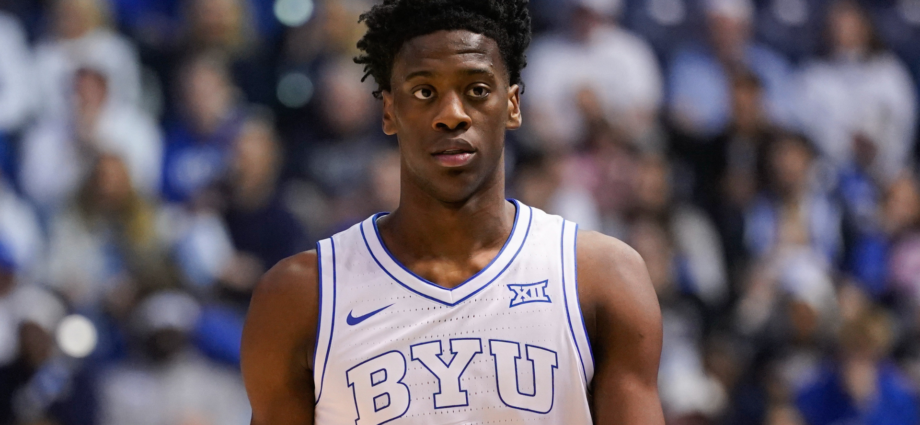
The initial reaction when the Utah Jazz jumped from No. 4 to No. 2 in Sunday’s NBA Draft Lottery was elation. From there, it didn’t take long for many to speculate whether the Jazz could take another leap and trade for the No. 1 pick.
After all, the projected top pick in this year’s class, AJ Dybantsa, is essentially a local product. Though he grew up in Massachusetts, Dybansta played his final high school season at Utah Prep before starring last season for BYU, the alma mater of Jazz owner Ryan Smith, alternate governor Danny Ainge and president of basketball operations Austin Ainge, and Smith is a major BYU donor.
CBS Sports’ Adam Finkelstein reported this week from the NBA Combine in Chicago that Dybantsa was hoping to remain in Utah. When asked about possibly trading up from No. 2 to No. 1, Smith told The Deseret News that “everything should be on the table.” The Washington Wizards hold the top pick, and team president Michael Winger told Jake Fischer on lottery day that Washington was at least open to moving down.
NBA Draft Combine intel: AJ Dybantsa-to-Washington isn’t viewed as the lock everyone assumed
Adam Finkelstein
Aside from basketball motivations here, there are long-term roster considerations at play. How often do potential stars view the small-market Jazz as a desirable destination? You never know what the future might hold, but ask Milwaukee how it feels to constantly look over your shoulder for teams trying to poach your superstar out of a smaller NBA city. The Jazz might have a chance to sidestep all of that with a trade. The stars could potentially align here, right?
Well… potentially. But this rumor cycle is getting a bit out of hand. I’m not necessarily throwing cold water all over the possibility, but am rather suggesting that the notion that Utah should throw everything it has at Washington to jump up to No. 1 is a bit far-fetched.
No, Ace Bailey shouldn’t be in your fake trades
Let’s get this out of the way first: this is not the Victor Wembanyama draft. There is not a single, unequivocal top choice in this class.
“We were surprised the broadcast made [Dybantsa to Washington at No. 1] seem like such a foregone conclusion,” a scout from a lottery team told Finkelstein.
Dybantsa is in the pole position for the No. 1 pick because he has the best combination of floor and ceiling. The highest floor probably belongs to Duke’s Cam Boozer, who is the best prospect in this class by a number of analytical models. The highest ceiling for most of their development process seemed to belong to Darryn Peterson, who entered the season as the favorite to be drafted No. 1, but his college season was filled with health concerns, nudging him out of the top spot. And then there’s Caleb Wilson, probably the best athlete in the draft, who has made it a legitimate four-man race.
Everyone has preferences. Dybantsa might be the most common one among teams picking at the top of the draft, but there’s no evidence at this stage suggesting there’s a consensus. We haven’t even had substantive reporting yet at this point that Dybantsa is ranked atop either Washington’s or Utah’s boards.
For a trade for the top pick to make sense, the Wizards either have to be willing to land someone else, or the Jazz have to believe Dybantsa is substantially more valuable than any prospect they could get at No. 2. For now, the evidence isn’t there.
The NBA Draft Lottery will change the trade market, and these five teams could all make blockbusters
Sam Quinn
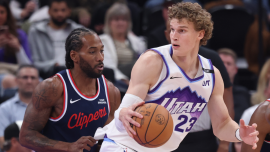
The name most commonly included in these Wizards-Jazz rumors is Ace Bailey, the No. 5 overall pick in last year’s class. The Wizards picked No. 6 last season, and Bailey seemingly did everything in his power to fall to Washington as his preferred destination. The Jazz didn’t blink, and he had a standout rookie season in Utah, averaging 13.8 points per game as a 19-year-old.
Possible stars with three years remaining on a cheap rookie deal that play the NBA’s scarcest position are worth their weight in gold. Bailey alone could probably be traded for any pick outside of the top four in this draft. Though not likely, it is not out of the realm of possibility that he has a better NBA career than whoever gets taken at No. 1 and/or No. 2. If there was a prospect at the level of Wembanyama or LeBron James, sacrificing him to make the jump might make sense. But the gap between No. 1 and No. 2 just isn’t that big.
Start scrolling through Utah’s other top trade chips and you land on similar answers. Keyonte George was just the 22nd-leading scorer in the NBA (23.6 points per game) and is also on a rookie deal. The Jazz valued Jaren Jackson Jr. at three first-round picks when they traded for him at the deadline, so offering him up to jump one spot would be akin to giving away three picks to do so. That’s what Golden State paid Orlando to jump from No. 3 to No. 1 in 1993, but draft picks were less valuable at the time because there was no rookie pay scale, and, frankly, front offices simply weren’t as savvy as they are now.
Danny Ainge has spent the past four years turning away even bigger offers for Lauri Markkanen. Speaking of Ainge…
Jazz should feel confident with Ainge running the show
There’s nothing better than trading with a desperate team. The Los Angeles Clippers were so desperate to get Paul George that they handed the Oklahoma City Thunder a dynasty on a silver platter. The Wizards know this well. Winger was their general manager when they traded away Shai Gilgeous-Alexander. The Ainges have been on the other side of that table when they traded Kevin Garnett and Paul Pierce to Brooklyn in 2013 for the picks that became Jayson Tatum and Jaylen Brown.
There just isn’t an immediate reason to believe that the Jazz are that desperate. They might become that desperate at some point in the process, and Smith’s ties to the situation pose a potential danger as overpays can happen when an overzealous owner inserts himself into negotiations. There’s just no direct reason, at this stage, to believe that is going to happen here aside from circumstantial connections. Smith, at least publicly, has placed his trust in Ainge.
“I’ve hired a pretty good team here that works with Danny Ainge and Austin [Ainge],” Smith said on The Pat McAfee Show on Monday. “They’ve got a pretty good track record of how they handle the lottery. There’s a lot of time between now and then to see how things go.”
There are general managers with aggressive enough track records to consider a hefty trade up to No. 1. That just isn’t Ainge. In Boston, he earned the somewhat derisive nickname “Almost Ainge” because of how many star trades the Celtics elected not to make. Jimmy Butler, Paul George and Kawhi Leonard were linked to the Celtics at or near their peaks. Boston, by virtue of the asset accumulation Ainge specialized in with deals like that Brooklyn blockbuster, almost always had the inside track just by virtue of being able to offer more than anyone else.
They almost always wound up operating cautiously. Even when they traded for Kyrie Irving in 2017, part of the calculus may have been avoiding a massive payday for undersized guard Isaiah Thomas, who suffered a hip injury in the 2017 playoffs that altered the course of his career.
One of the most famous moves of Ainge’s career actually involved moving down from the top of the draft, not up. He had the No. 1 overall pick in the 2017 NBA Draft, and entering the process, Markelle Fultz was the consensus No. 1 choice. The Celtics brought him in for a workout, saw something they didn’t like, and traded down for Tatum.
Jazz owner on rumor of trading up for AJ Dybantsa at No. 1 in NBA Draft: ‘Everything’ on table
Cameron Salerno

Ainge is known to have tried only once in his storied career to trade up for a single player. That came in 2015, when he, in uncharacteristically desperate fashion, tried to jump up for Duke forward Justise Winslow. He reportedly offered four first-round picks and six total selections to move from No. 16 to No. 9. Charlotte said no. Even in the moment, Ainge seemed to understand that he’d gone too far.
“Maybe we were going too hard at it,” he said. “There was a time when I thought, ‘Whoa, this is getting a little out of control.’ We’re putting a lot of eggs in one young player’s basket. So I’m not frustrated. In the long run, maybe it’ll be the best.”
Missing out on Winslow turned out to be a blessing in disguise, but the circumstances of the pursuit were very different. Boston was one of the first teams to truly recognize the league-wide shift away from small guards and slow centers and toward multifaceted wings. They just didn’t have any of them yet. The theory proved correct with Brown and Tatum over the next two drafts; Boston just targeted the wrong, specific player in Winslow.
The Jazz just aren’t in that same position. They’ve built this existing roster up over the course of four years. They have no specific need to address with this selection. There is no Dybansta-shaped hole in this lineup. He and Bailey even play the same position, though playing them together would pose no major issues. The whole goal here is to find the best overall player to slot into this rebuild. The name of the game here is talent, and there’s fortunately more than enough of it to go around in the top four.
So what would trading up to No. 1 look like?
There is not much recent precedent to work with here. Trades within the top five are a rarity. But when they do happen, the price tends to be fairly consistent:
- In 2017, the 76ers paid one first-round pick to jump from No. 3 to No. 1. It was a very valuable pick that would either come from the Lakers in 2018 if they fell between No. 2 and No. 5, or the Kings in 2019 if they didn’t, but it was only a single pick. It became Romeo Langford at No. 14 in 2019.
- In 2018, the Mavericks traded a lightly protected pick to jump from No. 5 (Trae Young) to No. 3 (Luka Dončić). The pick carried a top-five protection for two years, a top-three protection for two more and then became unprotected after that. It ultimately conveyed at No. 10 in 2019, becoming Cam Reddish.
- In 2019, the Hawks moved from No. 8 to No. 4, sacrificing the No. 17 overall pick in that same draft, Nickeil Alexander-Walker, and the No. 35 pick, Didi Louzada.
So over the past decade, we’ve had three trade-ups involving top-five picks. The basic price was the same in each of them: one first-round pick. The bigger the move, the more valuable the pick. Getting up to No. 1 cost Philadelphia one of the more valuable outstanding picks in the NBA. Jumping two spots from No. 5 to No. 3 cost the Mavericks a very lightly protected pick of their own. Jumping four spots up to No. 4 cost a mid-first-round in the same draft, plus a second-rounder.
That’s our template here. It has to be a valuable pick, but it’s only going to be one pick. It likely won’t be as valuable as that premium pick the Celtics got, but more valuable than the lightly-protected selection Dallas gave up a year later. That means an unprotected pick, but remember, the Jazz are expected to be good moving forward. They just traded several picks for Jackson, after all. Getting a pick from them isn’t all that enticing.
However, the Jazz stacked a number of picks over the years by trading players like Donovan Mitchell and Rudy Gobert. That’s where we’ll find our answer. In 2029, the Jazz are currently slated to receive the two most favorable picks between themselves, the Cavaliers and the Timberwolves, unless Minnesota’s pick lands in the top five, in which case, they get the most favorable pick only. Charlotte gets the least favorable of those picks. But three years from now is a long time.
The Jazz, Cavaliers and Timberwolves all look good in the moment. By 2029, it’s entirely possible that one or more of them have suffered some misfortune that knocks them out of the playoffs. With lottery reform coming, even a pick from a Play-In team is more valuable today than it used to be. This gives us a pretty straightforward foundation:

Jazz receive
- No. 1 pick

Wizards receive
- No. 2 pick
- Most favorable 2029 first-round pick between the Jazz, Cavaliers and Timberwolves
The game of chicken
So we’ve established a value baseline, but there’s another complicating factor here. How exactly would a trade happen?
As Finkelstein noted in his reporting, “Any potential trade talk of a 1-2 swap would likely have to be ignited by Dybantsa’s camp. Most in Chicago consider it less likely that Utah would reach out to Washington proactively.” The team that initiates trade talks is the one that signals an immediate desire to make the trade.
If Utah calls first, that signals to Washington that the Jazz want Dybantsa badly enough to make a real offer. If Washington calls first, that signals to Utah that the Wizards may not have Dybantsa No. 1 overall on their board. In that scenario, the Jazz could essentially dare the Wizards to either take a player they don’t want at No. 1 and reconvene negotiations afterward from a position of weakness, or to take the player they actually prefer, leaving Dybantsa for them at No. 2 without having to sacrifice another asset.
It’s an enormously high-leverage staring contest between two front offices making franchise-altering moves, but Ainge’s history suggests he’s not going to blink. Remember, when he traded down for Tatum, he left himself somewhat vulnerable. He knew Philadelphia wanted Fultz, but the Lakers sat in front of him at No. 2 and could have ruined everything by taking Tatum themselves. Now, granted, the Lakers didn’t exactly have a strong poker face when it came to their interest in Lonzo Ball, but Ainge nonetheless took a pretty significant risk when he didn’t simply select Tatum at No. 1.
There is, of course, the chance that either the Grizzlies at No. 3 or the Bulls at No. 4 leapfrog Utah at No. 2 and trade up for Dybansta. This is leverage the Wizards may try to exert, especially since both the Grizzlies and Bulls are operating with a draft pick surplus and Memphis has a history of moving up in drafts. But that poses far more risk to Washington, which could lose out on its second choice to Utah, than it does for the Jazz, whose circumstances wouldn’t materially change if a different team were picking ahead of them. For now, there’s little smoke behind the idea of Memphis or Chicago jumping.
There has never been a negotiation quite like this in NBA history. The No. 1 pick has never been traded for the No. 2 pick. We’ve never quite had a top four like this, either. When a draft class lacks a consensus No. 1 choice, it’s usually because that class as a whole is considered relatively weak, like 2024 was. There are almost never four prospects viewed as possible franchise-changers in the same class.
The Wizards and Jazz are doing their due diligence on all four of them as we speak. For a trade to make sense, the Jazz need to determine that Dybantsa is definitely their top prospect, and the Wizards need to determine that they either actively prefer someone else or that one of the other top three is close enough to Dybantsa that they could be swayed with an appropriate asset. We are likely at least a few weeks from either team’s board fully materializing. From that point, the posturing can truly begin.
But barring something unforeseen, the notion that Washington is going to draw some historic haul of draft picks or land another future star like Bailey seems fairly unlikely. There just isn’t a reason to believe, at least yet, that any of the Jazz decision-makers are (or should be) that much more interested in Dybantsa than Peterson, Boozer, or Wilson. If a trade happens, it will likely be based on the Wizards and Jazz having different preferences at the top of this draft, and Washington simply wanting to get something for giving Utah its prospect of choice.
