 Skip to content
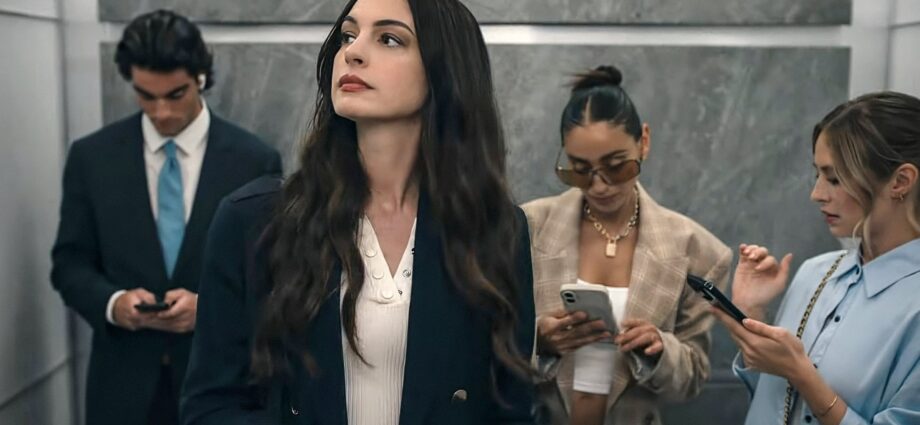
There’s so much to love about the “Devil Wears Prada 2”: the little winks to iconic lines from the original film (“that’s all”); a dazzling display of designer fashion; and, of course, the incredible core cast who can really do no wrong (Meryl Streep, Anne Hathaway, Emily Blunt, and Stanley Tucci, I’m looking at you).
Admittedly, when the sequel was first announced, I was excited but cautiously optimistic. I’ve loved the original since I saw it in theaters as a teen back in 2006 — I was awed by the glamorous world of glossy magazines, and it served as one of the many media-focused movies from that era that inspired me to become a lifestyle journalist. And, given all the disappointing reboots as of late, I tempered my expectations before seeing the much-hyped sequel during its premier weekend.
As the credits rolled, however, I found myself pleasantly satiated. It was like trying one of the specials at your favorite restaurant — not necessarily as good as your tried-and-true dish, but enjoyable nonetheless. While it doesn’t overshadow the iconic original, I was impressed by just how much “Devil Wears Prada 2” got right. For one, there’s the fashion, of course, which not only provides incredible stunning visuals, but also acts as its own form of storytelling.
The movie also offers an accurate (and, at times, triggering) depiction of the precarious state of media and journalism as a whole. And, most of all, I really appreciated that the character arcs all felt organic and believable. In fact, one aspect I really appreciated about Andy Sachs’ character (Hathaway) is how she is confidently, unapologetically on her own path — one that might look different from what society often deems the “correct” stage for a woman in her early 40s.
When we catch up with Andy, it’s been 20 years since her time as Miranda Priestly’s (Streep) assistant at the prolific fashion magazine Runway. During this time, she seemingly built a successful career as a newspaper journalist, reporting on the kind of meaningful topics she’d hoped to cover as a budding writer in the first film. She’s a more confident, self-assured version of the Andy we knew from the early aughts — and, while it’s not rooted in any kind of rejection of norms or sacrifice, she just so happens to be single and childless.
In a scene where she’s catching up with former colleague Emily (Blunt), Andy nonchalantly shares: “I’m not married. Never found the right person. And my kids are at a doctor’s office on 85th. They’re frozen eggs right now, but I like to think of them as my little ones, Siobhan and Esther.” The tone is casual and lighthearted. It’s very clear the film isn’t implying Andy chose her career over having a family, the all-too-familiar trope we often see thrust upon driven female characters — rather, it simply shows that she’s been doing her own thing. The writers seem to be making it clear they’re not celebrating or condemning this fact. It simply is.
Similarly, the romantic storyline in this film is very much a footnote. Andy ends up hitting it off with a contractor, Peter (Patrick Brammall), while touring a new apartment, and the two begin a sweet yet simple courtship. I personally appreciated that on their first date, he actually made an effort to read some of her most recent articles (as any writer will tell you, this is our love language), and they spent the dinner engaged in fun banter. I’ve seen some criticism about the inclusion of this love interest, claiming the writers could have removed the character entirely without it having any bearing on the story. While that’s almost certainly true, I actually really appreciate this innocuous romance.
To me, it was nice to see an example of a kind, supportive partner who wasn’t threatened or irritated by Hathaway’s dedication to her job. His very existence in the film was a lovely reminder that ambitious women don’t need to choose one of two paths: dim their light to appease a needy partner, or girlboss in perpetual solitude. It’s the perfect foil to the first movie, where Andy’s boyfriend Nate (played by Adrian Grenier) seems to be perpetually irked by her job at Runway; he is wildly unsupportive and even encourages her to quit, despite knowing very well that this grueling job was an important means to an end for Andy’s career. It’s frustrating to watch, and has forever cemented Nate as a villain for many fans of the film, myself included.
In contrast, the only conflict that occurs between Andy and Peter is in a moment of heated work stress, where she snaps at him, saying her work is actually meaningful and implying he doesn’t understand. He appropriately offers her some space — not in a nasty or passive aggressive way, but as someone who is choosing to set appropriate boundaries. At this moment, my husband turned to me and said, “I don’t know enough about this character to care if they make up.” Again, I feel like that’s kind of the point here: Peter seems like a very nice guy, but the movie isn’t centered on this relationship. He might be someone Andy ends up with long-term, or he might just be someone who brought her some joy for a few months — either way, it’s totally fine.
Miranda, similarly, is paired with a kind partner in this movie (played by Kenneth Branagh), who — unlike the husband we see in the first film — isn’t irritated by the attention she pays her job over him. Instead, he seems like a fully self-actualized human, happy to share his life with Miranda. He offers her an ear when she debates a career transition, and never once tries to influence her decisions based on his own desires.
“In decentering romantic relationships, the movie frees up space to focus on other types of bonds.”
In decentering romantic relationships, the movie frees up space to focus on other types of bonds — namely, female friendships. As circuitous as it was, I loved watching Emily and Andy’s relationship evolve onscreen. And, of course, there was something very special about the dynamic between Andy and Miranda’s characters — particularly as the film came to a close, and there’s a newfound mutual respect between the two.
Towards the end of the movie, we get a poignant conversation with the pair, in the backseat of a car (a clear parallel to the “don’t be ridiculous Andrea, everybody wants this” scene in the original movie). I won’t give away this speech, but one part that stood out to me is when Miranda mentions that there’s always a cost to success. I appreciated this sentiment, because despite the happy ending of the movie, the writers aren’t trying to leave you with the watered-down notion that, “Yes, you can have it all.” Choosing to focus energy on one goal or area of life inherently limits the others, that’s simple math. However, the story makes it clear that women’s options extend far beyond the binary of a thriving career or a happy home life.
This message wasn’t forced or stuffed into the plot. It was simply woven into the stories of the strong, powerful women onscreen. And, as a 30-something journalist who has often felt “behind” in life, I have to say, this thoughtful portrayal of three motivated ladies was wildly refreshing to see onscreen.
Kristine Thomason is a lifestyle writer and editor based in Southern California. Previously, she was the health and fitness director at mindbodygreen, and the fitness and wellness editor at Women’s Health. Kristine’s work has also appeared in PS, Travel + Leisure, Men’s Health, Health, and Refinery29, among others.
