 Skip to content
(Image credit: Matt’s Guitar Shop)
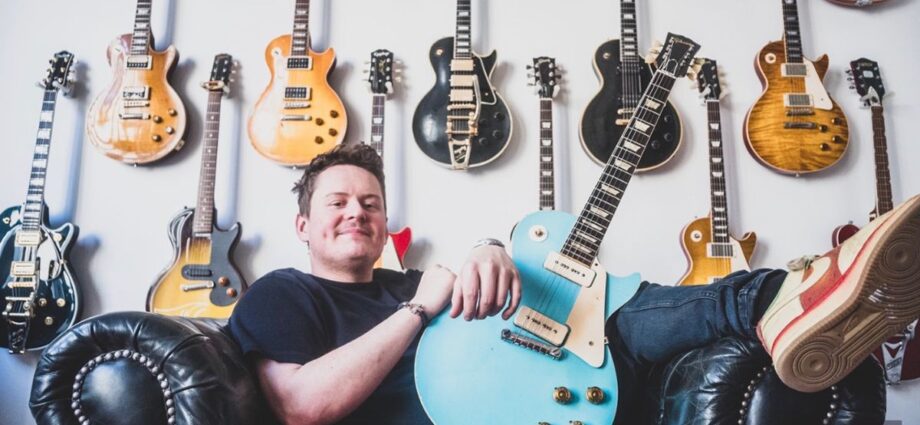
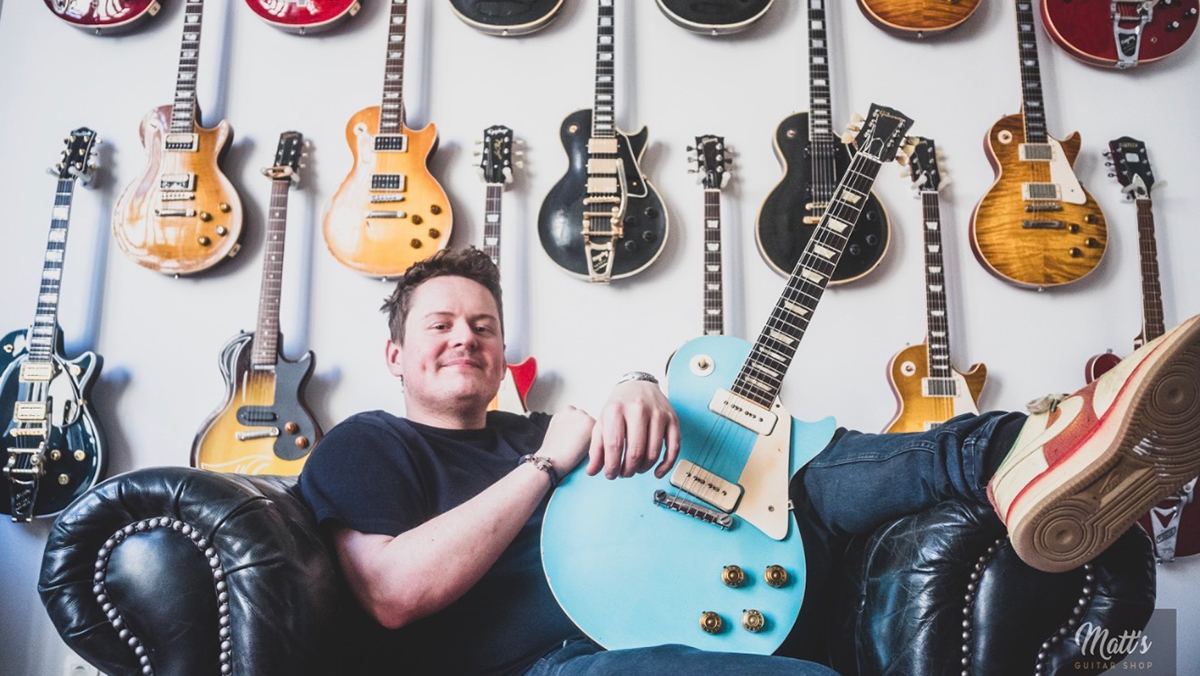
At just 32, Matthieu Lucas has managed to build something extraordinary.
The entrepreneur, guitarist, and music enthusiast has painstakingly chipped away at building the emporium that is Matt’s Guitar Shop from the ground up, attracting A-list clients from all four corners of the globe.
Article continues below
“It was not easy because you just show up at a store, and you look like a baby, and somehow, you start talking big dollars to very reputable dealers or collectors, and some of them were like, ‘How is this possible… this guy is selling drugs somewhere,’” he quips, as he recalls the early days of his ambitious venture.
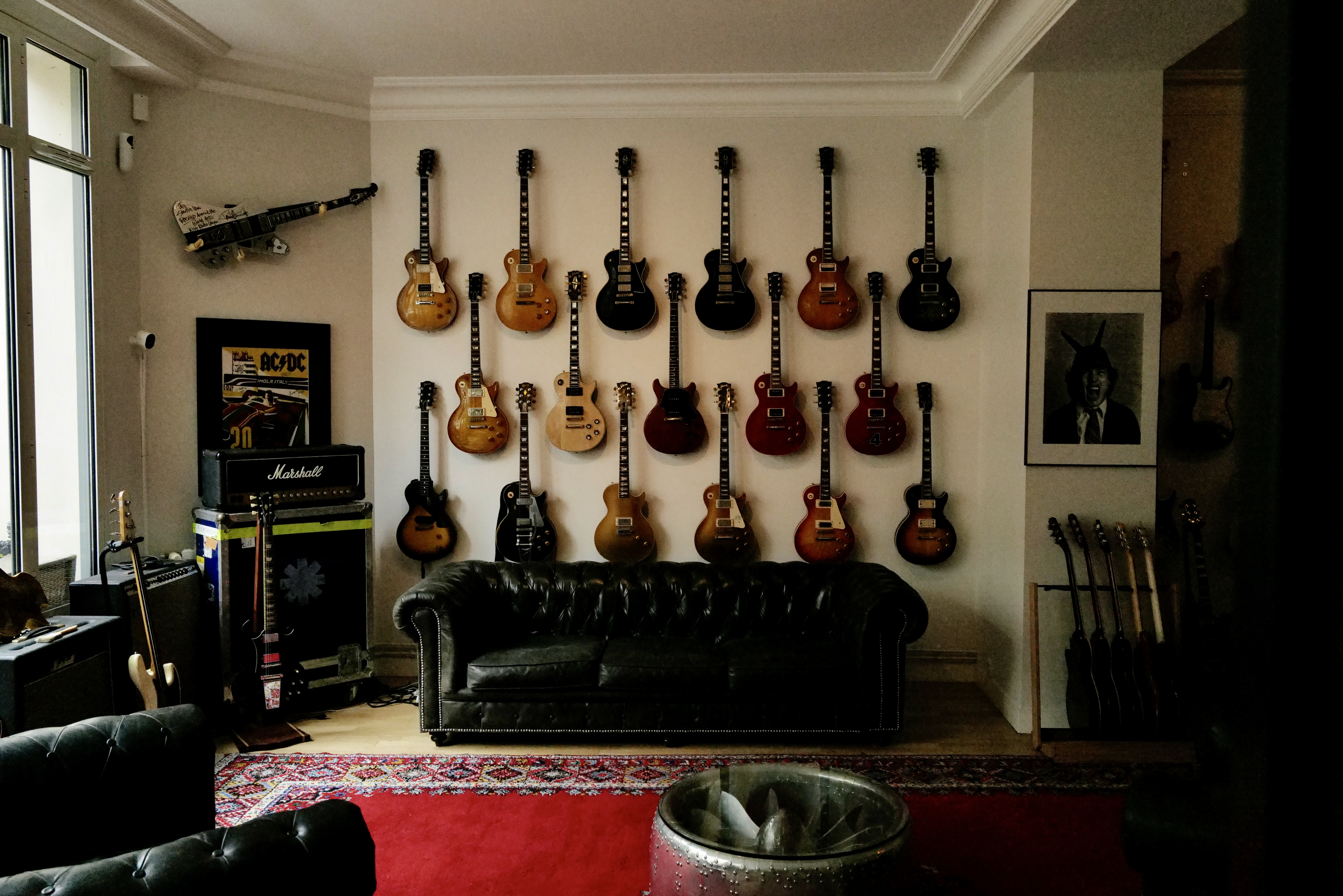
However, it’s perhaps Lucas’ marketing prowess and ethos – that even the most prestigious of guitars are meant to be played on stage – that has transformed him into the go-to guy for artist guitars, with players such as Marcus King, Craig Ross, Billie Joe Armstrong, Myles Kennedy, and Yungblud all getting in on the action.
“I was very inspired by banks and huge associations buying Stradivarius [violins] very early on and lending them to musicians on tour playing classical music,” Lucas says.
“Guitars need to be shared with the world. That’s my theory. That’s why we lend ours on stage all the time, and that’s always going to raise the value. They’re really artifacts of a very specific period when the guitar revolutionized everything.”
What inspired you to start Matt’s Guitar Shop in the first place?
It’s been a little bit more than 10 years, actually. Time flies! [However], it all started when I was 15 years old.
I was not really interested in music or guitar in general. I was just playing video games with a friend of mine. His father showed up in the room and he said, “Guys, you need to listen to AC/DC.” And then I said, “Okay, [I’ll] give this guy five minutes with his old band and then I’m going to be finished with him.”
And we listened, and Angus Young was really the guy who penetrated my brain, and my passion for guitar started there. Six months later, I was seeing AC/DC in a stadium and buying an SG copy, and that started it all. And then I just wanted to buy more and more guitars because I started to discover bands.
Step by step, I went to Paris guitar stores. I was hanging out in a store called Guitar Store in Paris, and the guy was nice to me, and he let me discover the world of guitar sales – buying, selling… the daily life of a guitar shop.
I was already buying and selling privately. So it [Matt’s Guitar Shop] started in an apartment in Paris – a very small apartment. Three years, maybe four years later, we had the opportunity to get the place here, and that was it.
What were some of the initial challenges, especially as a young businessman?
They really put you in boxes initially, and that was not easy, but step by step, we met people that trusted me, and I knew who I wanted to work with over time.
I don’t come from a musical family myself. So I was mainly listening to those guys in my headphones when I was younger. I was listening to Lenny [Kravitz] and Craig [Ross] quite a lot because I have deep respect for that duo and what they represent.
One day, I show up at Rudy’s Music [in New York], and Rudy just traded me one of Craig’s main touring guitars, which was his 1964 ES-345.
I didn’t have the money back then, so I said, ‘Give me three months. I’m going to buy and sell in France, and I’m going to come back and pick it up.’ And my friend, who was with me at this time, told me, ‘Are you crazy? This guitar is way too much money.’
It was a time when social media was different. I just sent a message to Craig on Facebook, and two weeks passed by, and I was like, ‘Okay, this guy is busy. He’s never going to reach me.’ And, suddenly, my phone is popping off, and Craig Ross just answered me, and he was so kind. [He was like,] this guy is 22 or 23 years old, he just made a huge purchase for himself, compared to his capacity.
So when I bought this guitar, we met at L’Olympia in Paris, and we got that connection going. So, for me, just meeting him was great because Craig really proves that you can’t buy class. I met Lenny later, but with Craig, it’s been like 10 years and I still have that connection with him.
I said, ‘Give me three months. I’m going to buy and sell in France, and I’m going to come back and pick it up.’ My friend told me, ‘Are you crazy? This guitar is way too much money’
Which artists’ guitars command the most demand and attention?
It’s quite mixed. We have John Frusciante‘s 1961 [ES-]335 that he played on stage. We have, of course, Paul Kossoff’s 1955 “Black Beauty”, which was also used by Eric Clapton during Cream because they used to trade guitars quite a lot.
I’ve had this guitar for almost 10 years now, and I don’t regret buying it. Another interesting one is Steve Lukather’s 1951 Esquire. We [also] have AC/DC’s Cliff Williams’ bass – we have number three, which was toured all around the world for four years with AC/DC.
How has your vision for the showroom evolved, compared to when you first opened the doors?
When I started this business with artists’ guitars, I had two kinds of people: the people who believed in it and the people who were laughing at me.
Now, I was very proud when I was assisting at the [Jim Irsay] auction in New York City because I think that the guitar changed the world, and that the guitar will still be listened to in 1,000 years, and all those guys will be gone, and what’s left is the music and their instrument. [When you buy that guitar,] you are the owner of their legacy.
So we feel kind of amazed at the shop every day because I really believed in that market when it was not fancy.
What made the Jim Irsay auction different?
Everybody was waiting for that auction. That was, after all, the greatest collection [that ever existed] of artists’ guitars.
People are starting to understand that there are good aspects to buying a guitar – whether it’s for the investment or whether you’re a guitar player – but if you choose wisely, those guitars will never go down [in price] because there is always somebody richer than you who wants to have that guitar.
Why have the Jim Irsay guitars leapt in value in such a short time span?
It depends on the auction house you’re dealing with, the place you’re buying the guitar from, and the marketing around that.
Marketing is key when you want to sell a pricey instrument like that, and I think Christie’s did a great job. They went everywhere, and when you’re doing that, you just attract the best buyers because they don’t have any doubt about what they’re buying.
Everything went through the roof because those buyers were brought together by Christie’s in one room. They could have been telephone bidders. They could be room bidders, or internet bidders, but they were all together in one room for this collection, which was exceptional.
If Jimmy Page’s “Number One” was in that room that day, that would be between 20 and 30 million dollars easy
I see that with the shop. I don’t have a single customer older than 60, and usually my customers are between 25 and 50, so it’s a new generation who just discovered the world of guitars, and those people are working hard to get those guitars.
When you put them in one room, I can guarantee you that you will see new world records. If Jimmy Page’s “Number One” was in that room that day, that would be between 20 and 30 million [dollars] easy.
But who are these people? What are their backgrounds?
I can give you an example of one person I know: Bobby Tseitli in Chicago. Bobby is a good friend of mine – those guys are really amazing, and they’re putting together a collection called Family Guitars.
I knew they wanted [Jerry Garcia’s] “Tiger” so much. I gave him a huge hug when he bought that guitar, and I can guarantee you that this guy probably cried like a baby in his room sleeping next to the guitar that night, and that everybody in the room was feeling amazed because he was bidding with all his heart. The night after, Derek [Trucks] played it on stage. I mean, what’s better than that?
I think we should be thankful for those guys who believe in the market and make it dynamic because they’re not only buying guitars; they are making the shows more attractive. Everybody in the room will remember the day they saw Jerry Garcia’s guitar in the hands of Derek Trucks. [In terms of the buyers’ backgrounds], I never ask too much unless they talk about themselves.
For sure, at Christie’s, we saw hedge fund guys, tech guys, cryptocurrency guys… so it’s new money, in a good way, not in a bad way. From what I can tell, we have more and more young people who are just working hard, and they could be in tech, they could be in sports, whatever… we have so many kinds of buyers, and that’s the beauty of this job.
Do you think we’re going to see David Gilmour’s Strat one on stage anytime soon?
I know by name the guy who bought it. I don’t know him personally. If he reads the interview, [I would say] I think you should put that guitar on stage. But I hope all those guitars [from that auction] are going to be on stage soon.
How do most of these clients find you?
Social media helps. You put the guitars on stage, and people are always filming. The audience recognizes the guitar, and I get texts or messages on Instagram.
So, I think it’s a win-win-win because the crowd is winning because they get to see a very special guitar that day. Marketing-wise it’s great for the shop, and it’s also great for the artist because when this is going to the press, the tour is gonna get some marketing.
When Marcus King was touring in Paris 10 years ago, he was playing in clubs [in front of] 20 people, and we were there already, and now he’s more famous, of course. And he still loves to play that Paul Kosoff guitar. Every time he’s in Paris, he plays that guitar on stage, and it’s one of his favorite guitars to play.
It wouldn’t surprise me in the near-future if we see a guitar sell for $30-40 million
What trends are you noticing in the types of guitars that command the highest prices in today’s market?
When I started, nobody really wanted a guitar from Green Day, for example. Now, I’m getting asked more often.
I think it’s a generation thing – Green Day are getting bigger because the older they get, the bigger their legacy. When the band is getting older, their fans are also getting older, and they have more capacity to buy the items of their dreams. When artists pass away, sometimes you get a bit emotional. So, of course, people are missing them so much that they want their guitars.
But I would be curious to have one of those big “dinosaur” guitars on stage [at an auction]. After the success of the Gibson Keith Richards signature, [I would be curious to have] one of Keith’s guitars going on stage, the black [ES-]355, the “Micawber” Tele… or Jimmy Page’s guitars or Brian May’s guitar or Paul McCartney’s bass – those legendary guitars that are still used by them.
I think we would be surprised by the price they fetch because records are made to be broken and are made to be set higher every time. And again, it wouldn’t surprise me in the near future if we see a guitar [sell for] between $20 and $30-40 million.
Do you see any risks or misconceptions for new buyers entering the vintage guitar market, especially those treating it as an investment?
I would suggest that you check the provenance of the instruments. You have to choose wisely. If you’re advised wisely and if you decide to buy the guitar at the right price, that’s great.
To give you an example, when I bought Steve Jones’ guitar, I knew there were rumors of Steve selling the original one 14 times to different people.
So we checked the mother-of-pearl inlays. We checked all the dings and marks. We scanned the pictures of the guitar today, and we matched those mother-of-pearl inlays. When [there are] three matches, then you know.
Beyond the monetary value, what makes a guitar collectible?
The more provenance you have and the more history you have with the guitar [the better]. For example, if Keith Richards just played one guitar one time on the sofa two minutes backstage and signed it, that doesn’t really make sense to me. But what matters to me is if he played it on stage. Why did he choose that particular one for his personal collection? Was there a reason sound-wise?
I don’t agree with comments on the internet that say that, ‘Oh well, David Gilmour modified the Black Strat like 700 times over time…’ [If you want a pristine guitar,] then just buy a vintage guitar. Don’t even look at an artist guitar.
I understand that it doesn’t make sense for some people to buy a $15 million guitar, but I think the more modifications it has, the more personal the instrument becomes – and that’s what makes its value even higher.
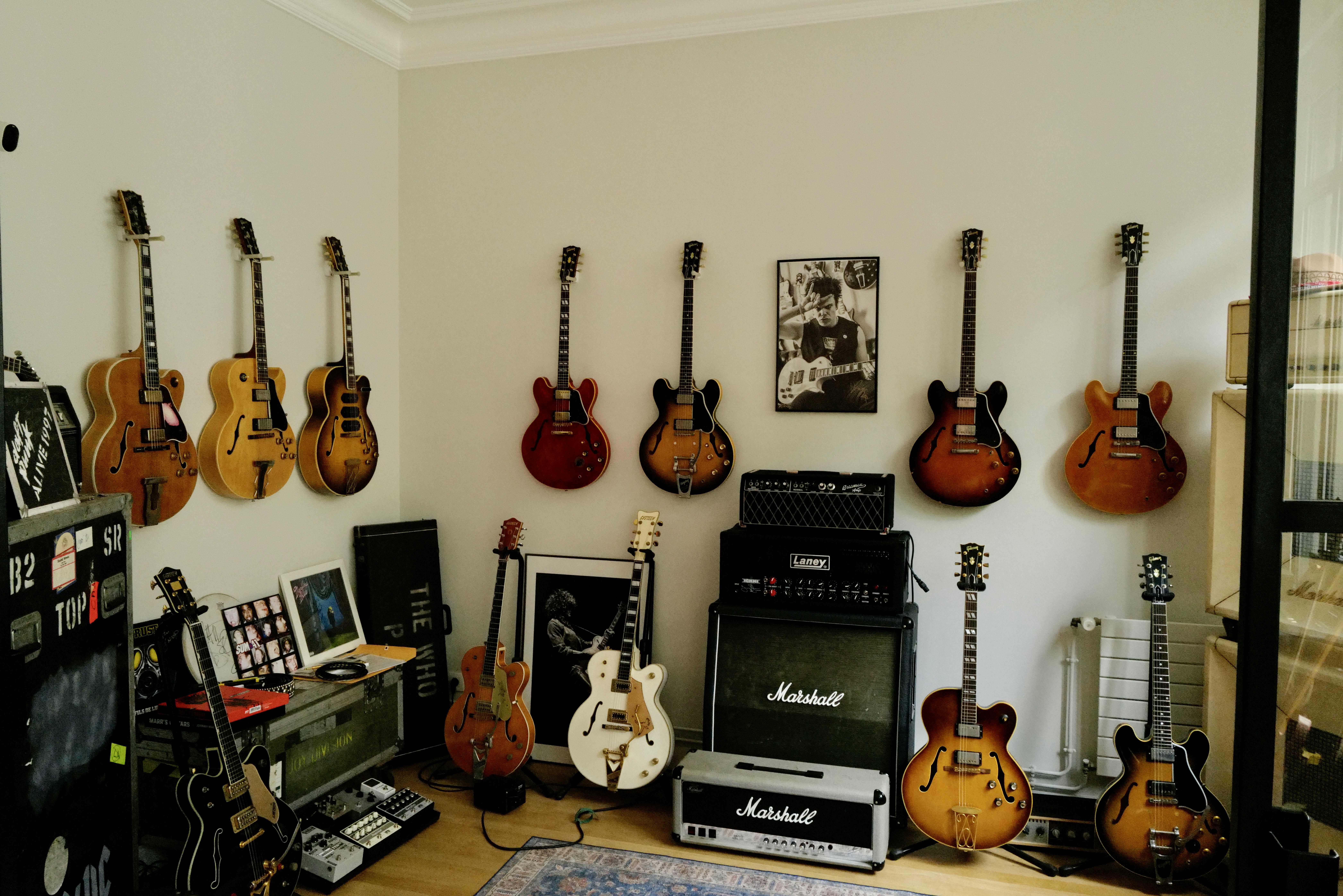
There’s been a lot of criticism over the amounts spent at the Jim Irsay auction. What would you say to people who feel that collectible guitar prices have lost touch with reality?
I think we are living in a world where records are made to be broken.
I would get [that comment] from the perspective of somebody earning a medium salary. That’s understandable, because for some people, it’s just hard to feed their children, and then you see on the news that somebody just bought David Gilmour’s guitar for $15 million.
But I would say it has been like this forever, in sports, the arts… let’s not even talk about the football world. I think the world is discovering guitars with these auctions, with these pieces of history, [and] with the new players as well. The rich will always be richer. We can’t control that. If they want the David Gilmour Strat for $50 million one day, that’s it.
If I told my young self, who was listening to Lenny Kravitz and Craig Ross, that one day I would have Jeff Beck’s guitar and then Craig would play it on tour, I wouldn’t believe it
What’s been your proudest moment of seeing one of your guitars being played on stage?
I lent Myles Kennedy Jeff Buckley’s guitar on stage in Paris a few years ago. That was the final show I assisted before Covid, but that was a moment because it was at L’Olympia [in Paris].
It was full of symbolism. We were preparing for that day for four months. Myles was the perfect guy to sing Hallelujah on stage with the very guitar that Jeff recorded the song with. I still get chills talking about it.
[Another standout moment was when] I saw Craig Ross playing [Jeff Beck’s] Yardburst in Paris.
If I told my young self, [who was] listening to Lenny Kravitz and Craig Ross, that one day I would have Jeff Beck’s guitar and then Craig would play it on tour, especially in Paris, my hometown, I wouldn’t believe it. It was really a full-circle moment.
- Learn more about Matt’s Guitar Shop.
” data-join-the-conversation-text=”Join the Conversation”>
You must confirm your public display name before commenting
Please logout and then login again, you will then be prompted to enter your display name.
